
Hızlı Git
There is this thing called taflan, right—sometimes everyone understands something different. When I first started out, I used to say “taflan, you know, the hedge one” and move on. Then I realized that in Türkiye, when people say taflan, it’s almost like two different plants end up under the same name. So let me get the confusing part out of the way at the beginning and be done with it.
In most housing estates and in front of apartment buildings, the “dense-leaved, turns into a wall when you prune it” taflan is usually Euonymus japonicus. But in the Black Sea region and similar places, when people say “taflan,” many actually mean cherry laurel (Prunus laurocerasus).
What is Taflan (Euonymus japonicus) used for?
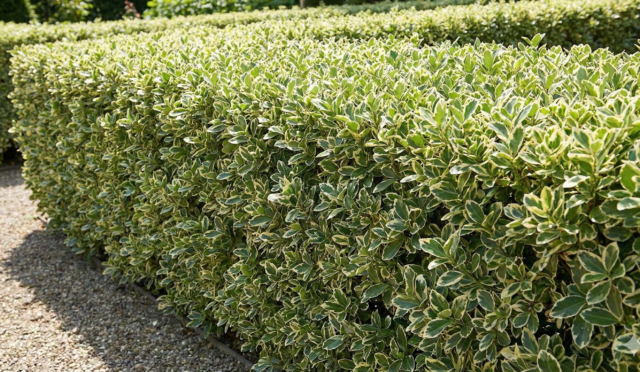
This plant’s main job is: drawing boundaries. Separating one part of the garden from another, organizing a walking path, blocking the view toward a neighbor’s balcony… in design terms it works like a “background,” but sometimes that “background” ends up playing the lead role too. It is strong as a hedge because it tolerates pruning, does not drop its leaves (most of the time), and stays green in winter.
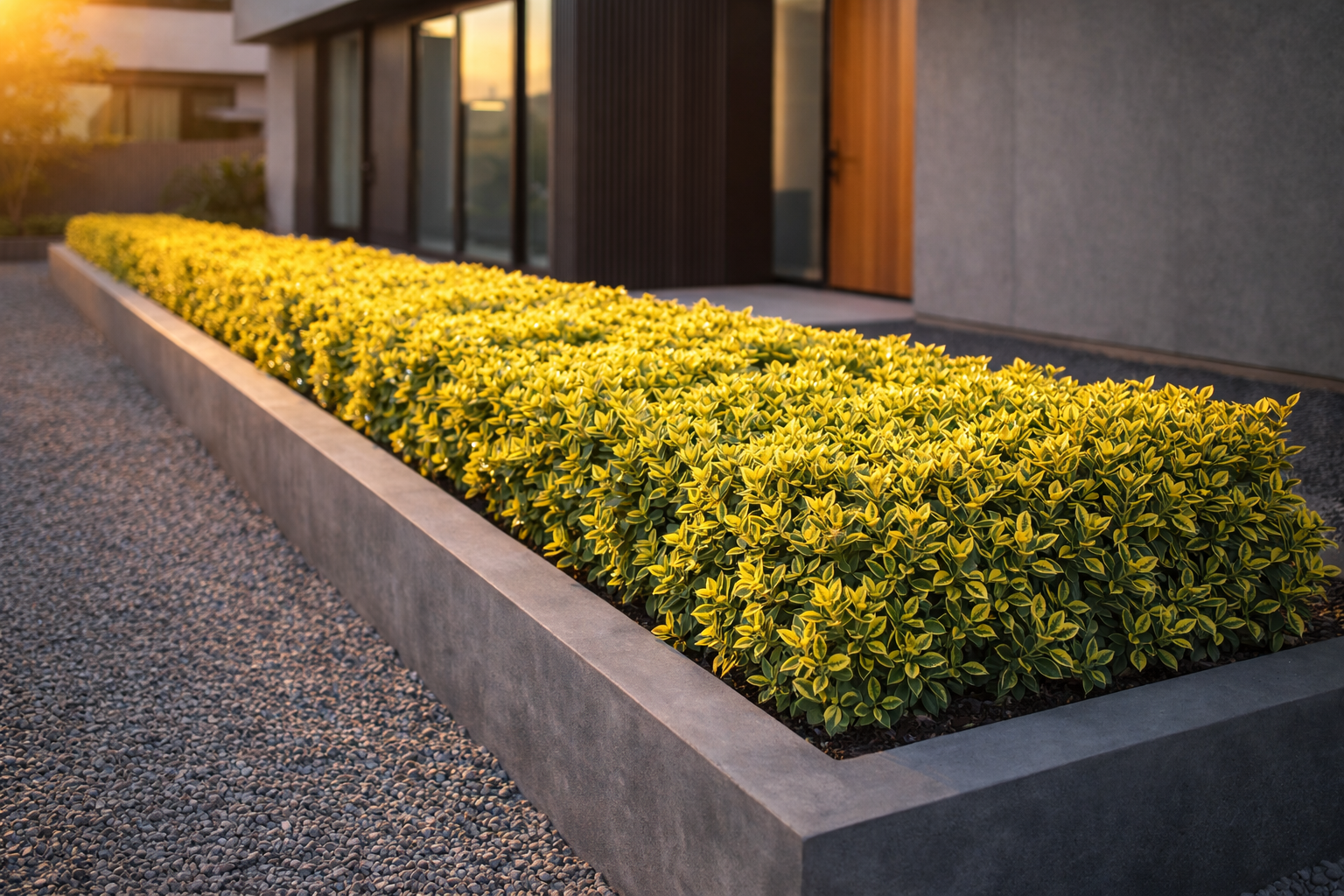
Some people also say it is hardy in cities—meaning it “does okay” with exhaust fumes, wind, a bit of salty air, and similar stress. Of course, it is not a miracle everywhere.
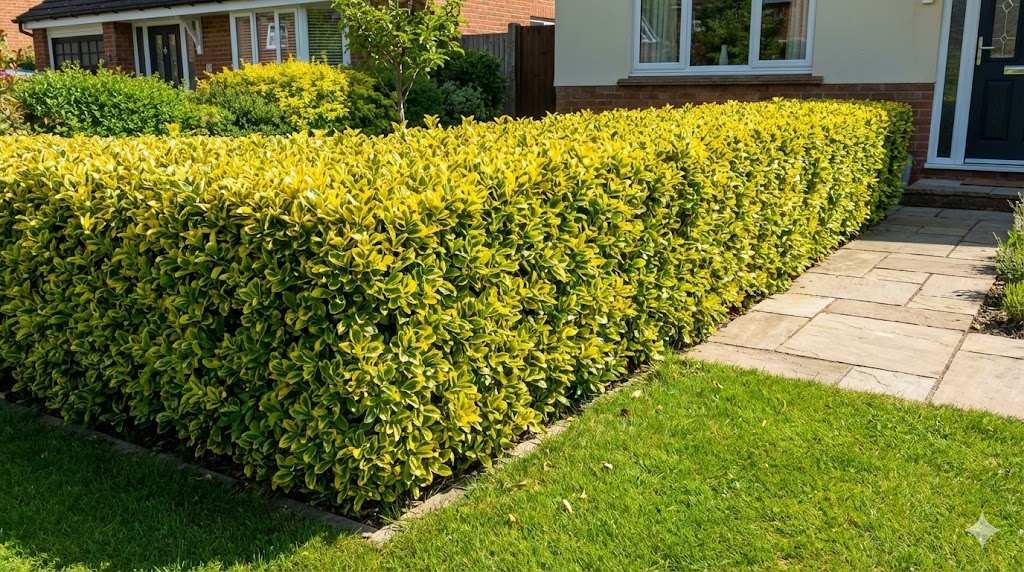
Golden taflan (Euonymus japonicus ‘Aureomarginatus’)
Golden taflan (Euonymus japonicus ‘Aureomarginatus’) is an excellent choice for home-garden hedges. The bright yellow margins on its evergreen leaves add color and liveliness to the garden in every season.
Advantages of a Golden Taflan Hedge:
- Visual appeal: Its yellow-green variegated leaves brighten the garden—especially in sunny areas—and create an aesthetic look.
- Privacy and protection: Thanks to its evergreen structure, it cuts the wind and blocks outside views throughout all four seasons.
- Durability: It is quite resistant to different soil types, seaside conditions, and air pollution. Its drought tolerance is high.
- Easy maintenance: It is very suitable for shaping and can be pruned easily to the desired height and form. Since its growth rate is moderate, it does not require very frequent pruning.
Planting and Care Tips:
- Location: It shows its best coloration in sunny or partially shaded areas. In full shade, the yellow tones may become dull.
- Soil: It can grow in any well-drained garden soil.
- Planting spacing: To create a dense hedge, you can plant the saplings 30–50 cm apart.
- Watering: Regular watering is important in the first year. After the plant is established, it is drought-tolerant, but watering can be helpful during extreme heat.
- Pruning: With pruning in spring and again toward the end of summer, you can keep the hedge in shape and encourage it to become denser. Sometimes fully green shoots appear; to preserve the variegated character, you should cut those shoots off from the base.
In short, golden taflan is a great hedge plant: low-maintenance, durable, and it keeps your garden looking good all year.
Does it need light? Will it handle shade?
Taflan becomes denser and “pulls itself together” better in the sun. It can also grow in partial shade, but sometimes it stretches out, gaps open up, and it kind of sits there like “why am I even here.” If you put it in full shade—will it survive? It will, but it’s like survival is not really living.
In some gardens, the hedge line falls into full shade. Taflan is used there too, but then pruning and patience demands increase—so it stops being the “easy hedge” option.
Soil and water: people usually overdo it here
People say it is not picky about soil, but it actually is. Especially in heavy soils that hold water, taflan can suddenly decline—you see yellowing leaves, base rot, that kind of thing. Many people think “it dried out” and give more water, and then it gets even worse. It’s a bit of a backwards story.
After planting, taflan needs water at first. But constant “a little bit every day” watering is not really sensible. If the soil is already staying wet, the roots cannot breathe. In my experience, deep watering and leaving days in between works better. Sometimes even not watering at all and just checking is more correct (that sentence came out a bit odd, but what I mean is: reduce the watering reflex).
If drainage is poor—if water pools—taflan can tire you out there. Not because “taflan is bad,” but because the site is bad.
Pruning: the hedge’s shape is “taught” through pruning
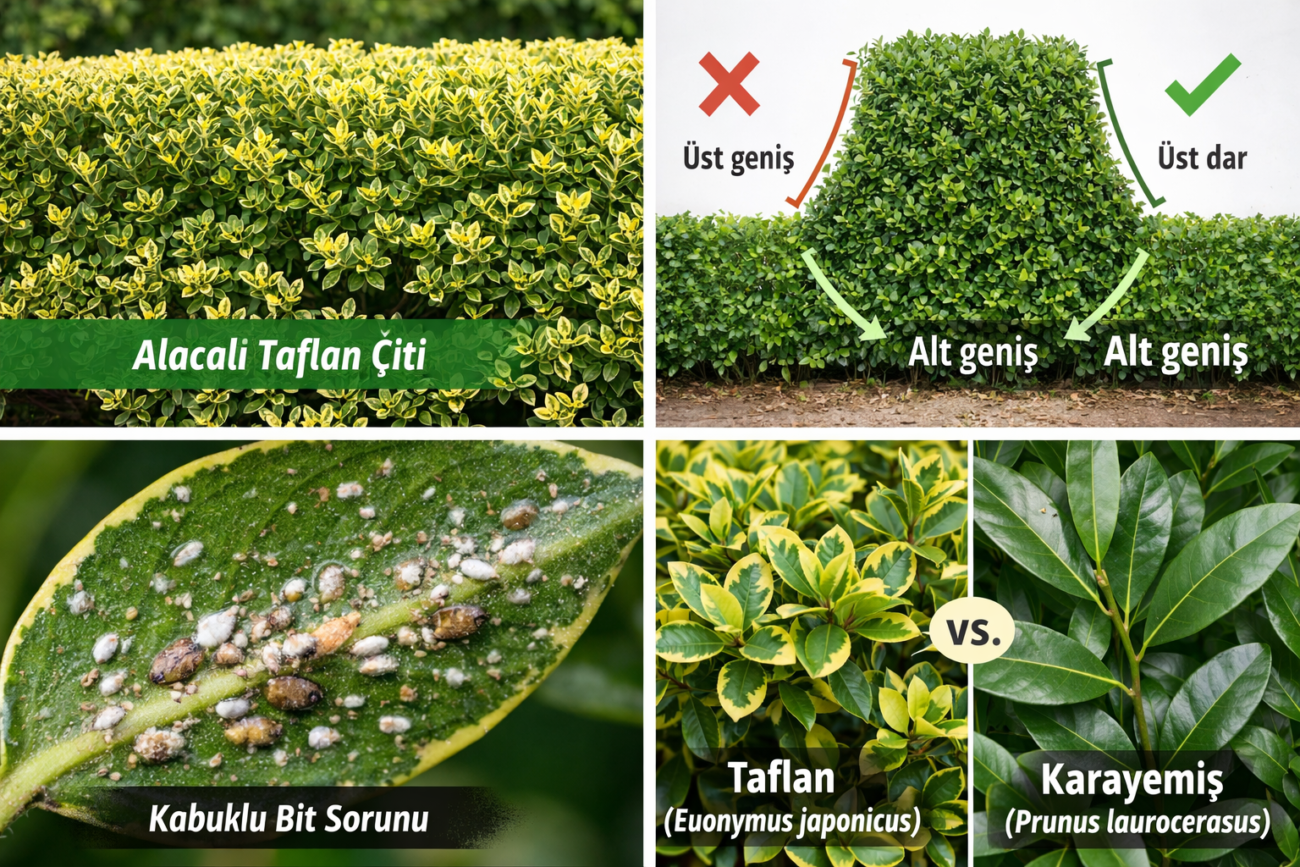
When you prune, taflan responds and fills in, which is good. But if pruning is wrong, the bottom of the hedge opens up. This mistake is very common: the top is left wide, the bottom stays narrow. The lower part ends up in shade, then leaf density decreases, and the base becomes bare.
If the bottom of the hedge is slightly wider and the top slightly narrower, light can reach down and the lower part stays full. It’s simple, but most people never think about it—then they ask “why did my taflan turn completely bare.”
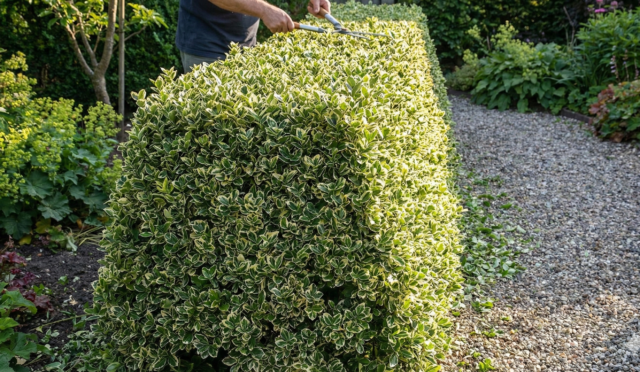
Timing of pruning is also not super clear. I generally find that pruning around late spring works better. If you prune too late in autumn, new shoots can emerge and get caught by winter, and then the leaves look kind of scorched. I did not fully nail the sentence, but I think it makes sense.
In variegated taflan, sometimes a plain green shoot appears. Over time, those plain green shoots “overpower” the variegated leaves. You need to remove those shoots from the base as soon as you notice them, otherwise the plant turns into a single color.
If you push too much fertilizer on taflan, it can grow fast, yes. But fast-growing shoots become weaker, snap in the wind, get winter scorch, attract more insects—something like that happens. So there is growth, but not quality. Let me not get too technical: give little, give only as needed.
If the hedge is pruned very often and the plant keeps producing new shoots, a light nutrient support in spring can make sense.
Some people also bother with seeds, but I have not really seen it much. Propagation by cuttings is more practical: in summer, people take a semi-hardwood shoot and place it in a rooting medium. Not every cutting takes—sometimes it takes, sometimes it sits there like “nothing happened.” If humidity is off it rots, if it is too dry it dries out. So it needs to be exactly right, and who decides what “exactly right” is… not very clear.
Disease and pests: what knocks taflan down most is something like “scale insects”
In taflan hedges, small scale-insect issues happen. When you look under the leaves, you see tiny white-brown shell-like bumps; then the leaves go dull, yellow, and the branch weakens. Sometimes people think it is “dust” and try to wipe it off… but wiping does not solve it.
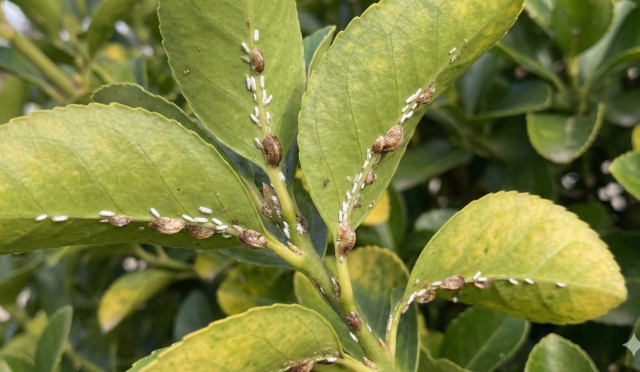
The most important thing here is: catching it early. If the hedge is very dense and does not get air, it seems to increase even more. Air flow, correct pruning, reducing overcrowding—those kinds of things help. I will not go into chemicals because everyone applies something different and I do not want to mislead.
And if drainage is poor, root diseases can also occur. So if leaves turn yellow, do not look only from above—check the root side too.
Where should I place taflan to get the best results?
Taflan works best in these spots:
- Hedge planting (garden boundary), in front of walls, along walking paths
- For creating a privacy screen on the neighbor’s side
- In front of apartments, like a “neat green band”
But let me also say this: when taflan gets placed everywhere, everything starts to look “the same.” That happens. So think of taflan like a material in design—when you overuse it, the space does not exactly look plastic, but it becomes monotonous.
A tiny note for those who call cherry laurel “taflan”
If what you call taflan has large, glossy leaves and grows more like a small tree, it is probably cherry laurel. It can be a hedge, it can be a screen—actually it can be an even stronger screen. But the care logic is a bit different: it seems to like water more, seems more tolerant of shade, but of course we still cannot say “let it sit in water.”
Toxicity is discussed for both plants. In situations like children tearing leaves and putting them in their mouth, or pets chewing, being cautious is more appropriate. Do not say “it’s just a green plant, what could happen”—sometimes it does happen.
Quick answers: the most asked questions
Does taflan look better in the sun?
Yes, most of the time. It can also grow in partial shade, but achieving a dense form becomes harder.
Why is my taflan turning yellow?
Overwatering plus poor drainage, or pests like scale insects. Sometimes both at once.
Why is the hedge opening up from the bottom?
The top is left wide and the bottom stays in shade. The pruning shape is often the reason.


