

The concept of urban justice refers to the equal, fair and accessible provision of urban life and urban opportunities for all city residents. Understanding whether a city is just does not always require big data or complex analysis. Sometimes one question is enough: who can truly exist in this city? For whom is the city genuinely a place to live, and for whom is it merely an obligation to endure?
Henri Lefebvre’s idea of the right to the city, introduced many years ago, still remains highly relevant today. Yet in our country, it is unfortunately moving further away from being a right enjoyed equally by everyone. People living in the same city often cannot experience spaces with the same perception because of differences in social and economic status.
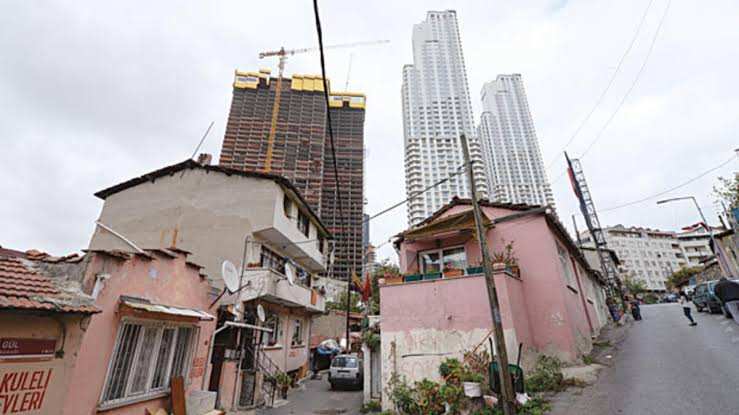
The distribution of spaces within the city is often far from neutral. The location, quality and continuity of green areas are frequently connected directly to economic and social status. In neighborhoods where higher income groups live, larger, better maintained and more continuous green spaces are more common. In neighborhoods where lower income groups are concentrated, fragmented, neglected or difficult-to-access areas are more visible. This does not create only a physical difference; it also shapes everyday habits, freedom of movement and the relationship people establish with space.
Imagine two people leaving home at the same hour in the morning. One walks to work under the shade of trees. The other moves along narrow sidewalks, weaving between vehicles. Both live in the same city, but they do not experience the same city. This difference is exactly what we mean by urban justice.
Even the plant species used in higher income districts, or the material of a single bench, can often be different. Public spaces feel as valuable and carefully considered as private spaces. In new projects, progress is made in line with the needs and expectations of the surrounding community. In districts where lower-middle income groups live, however, we are often met with careless projects built merely to exist, urban furniture made from the cheapest materials, insufficient safety, inadequate equipment and even poorly selected planting. For this reason, the way two people with different social statuses perceive the same city, and the emotions the city evokes in them, are unfortunately often very different.

In many European cities, public spaces appear not only as designed places, but also as places that have been considered, tested and improved through user experience. These countries treat public space not merely as a physical void to be produced, but as a system from which different user groups can benefit equally. Pedestrian-priority mobility, accessibility standards, lighting systems designed with night-time use in mind and continuity of maintenance all help these spaces become genuinely usable. In Europe, a luxury villa and an apartment can generally benefit from the same public space in an equivalent way.
In Turkey, however, the relationship between the production of space and the everyday practices of using that space is often not established sufficiently. Parks are built, but there is no systematic evaluation of who can use these parks, at what hours and to what extent. As a result, some places may be “public” on paper, but in practice they become more open to the use of certain groups.
At this point, it is not enough to understand the city only as a physical whole. The city does not carry the same meaning for everyone. The same city is the sum of very different experiences for different people.
When Istanbul is mentioned, one person’s mind may fill with walks along the Bosphorus, broad and well-maintained parks and pleasant public spaces. For another person, the same word may bring crowding, noise, heavy traffic and distances that must constantly be overcome. For one person, the city is a place to explore; for another, it is a burden to endure.
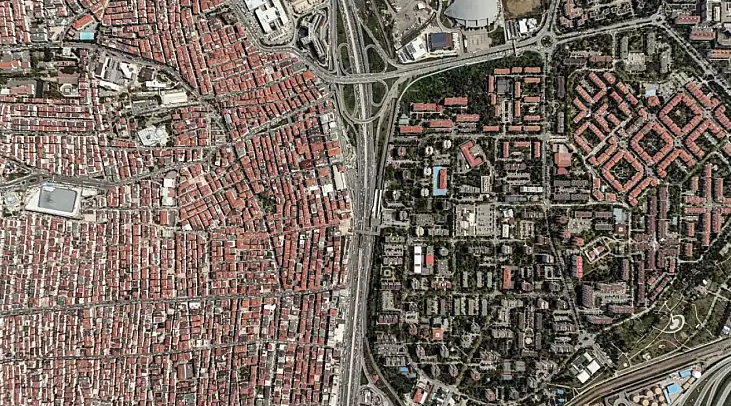
This difference cannot be explained only by individual preference. On the contrary, it is directly related to how economic and social status determine a person’s relationship with the city. For a user from a higher income group, the city may offer options, easy access, saved time and often a comfortable experience. For a user from a lower income group, the city can become more limited, more exhausting and more exclusionary.
This is exactly why the debate on urban justice matters. The issue is not only access to the city, but how we experience that city. The way we experience the city is often shaped by economic means, the neighborhood we live in, transportation opportunities and everyday life practices. Therefore, “living in the same city” does not always mean “living the same city.” The city does not offer an equal ground for everyone. On the contrary, it can become a structure that reproduces and makes existing inequalities visible. Urban justice does not mean that everyone living in the same city sees the same places; it means that everyone can exist in those places equally.
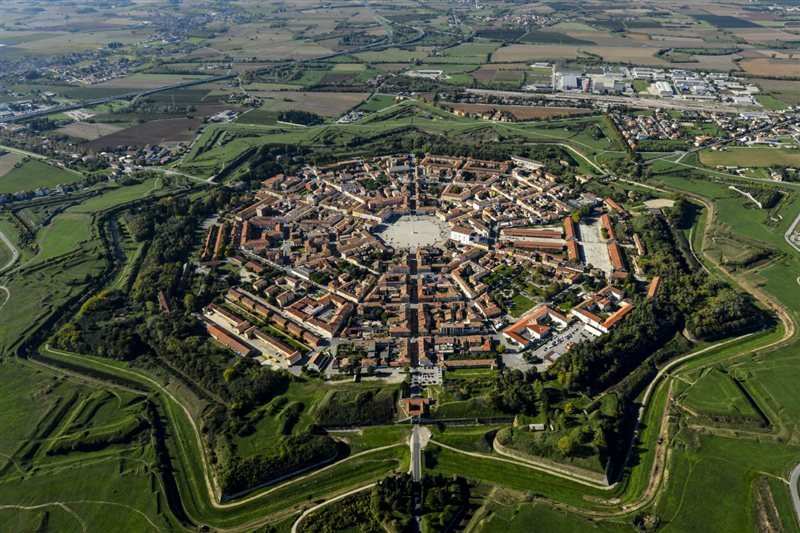
Urban justice is not only the result of planning decisions or design approaches. It is also an indicator of who can occupy how much space in the city. Cities become fair not merely through the opportunities they offer, but through how those opportunities are shared among people. What needs to be done today is to notice, before producing new spaces, whom existing spaces include and whom they leave out. A city truly becomes a city only when it becomes equally livable for all its users. Otherwise, it continues to be the sum of different worlds that exist within the same boundaries but never truly touch one another.
For this reason, when thinking about and evaluating urban justice, the question we must ask is not only “what exists in this city?” but “for whom, and how, does this city exist?”


