

Hızlı Git
Is it enough to design a city together with nature by reducing nature only to green spaces allocated at ground level? Does the limited availability of land for creating green areas in cities mean that the possibilities of planting design have been exhausted? In today’s cities, where dense urban development dominates, it has become almost inevitable to consider architectural surfaces as part of planting design. In this context, the espalier technique stands out as an alternative and effective design approach that integrates nature with architecture in limited spaces.
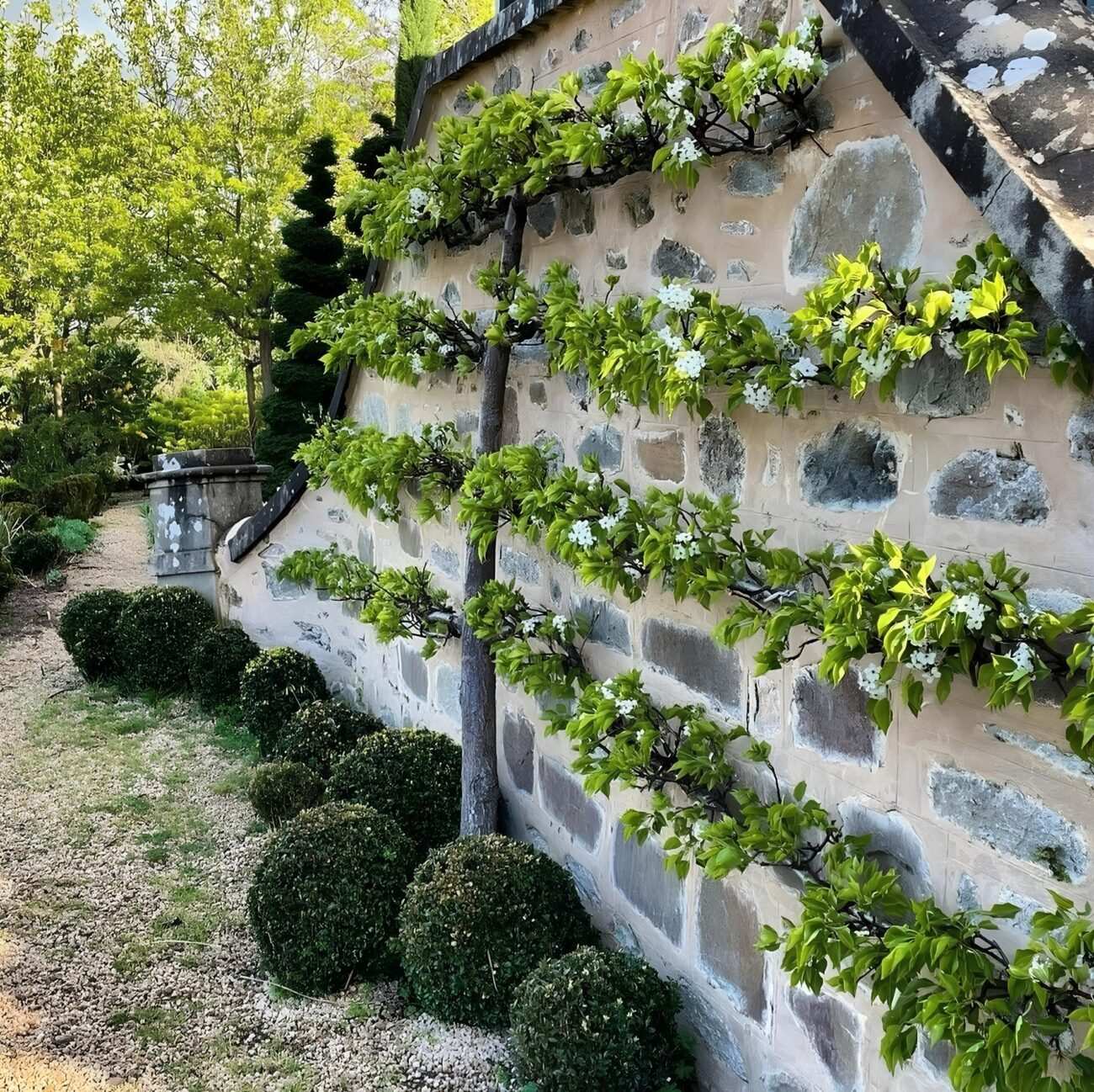
Theoretical and Spatial Framework of the Espalier Technique
The espalier technique is a traditional cultivation method based on guiding plants along a specific plane, with its origins extending back to European garden art. Historically developed especially for fruit trees to make more efficient use of sunlight and increase yield, this technique has today moved beyond being merely an aesthetic garden practice. It has become a contemporary design approach that establishes spatial continuity between architecture and landscape. Particularly in narrow and limited areas, turning vertical planes into active components of landscape design offers significant advantages in softening façade effects, improving microclimatic conditions, and supporting fruit production potential.
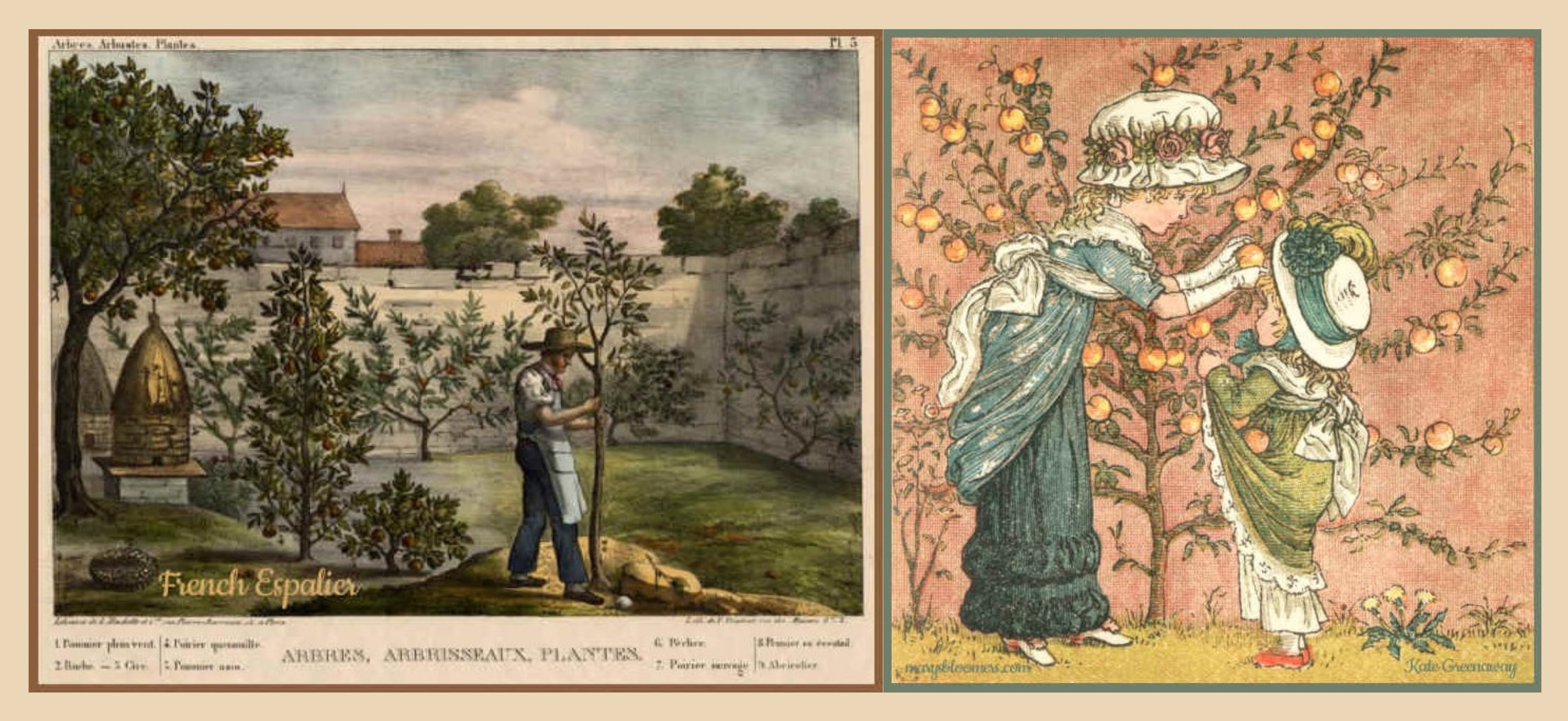
Historical Development of the Espalier Technique
The origins of espalier practices date back to medieval Europe. First used in palace gardens in France and Italy to increase the productivity of fruit trees, this technique provided microclimatic advantages by benefiting from the heat-retaining properties of stone wall surfaces. In the 17th century, with the development of geometric order in French garden art, espalier systems gained an aesthetic character and were widely used in the gardens of the Palace of Versailles.
Today, the espalier technique is gaining renewed importance as a planting approach reconsidered both in the conservation of historic gardens and in contemporary urban landscape design.
Spatial and Design Characteristics of the Espalier Technique
Espalier practices represent an important design approach that contributes to spatial organization by integrating plant elements with architectural surfaces. Through this technique:
- the capacity of plantable surfaces can be increased by incorporating vertical planes into landscape design in limited spaces, thereby supporting green continuity in urban areas,
- the dominant visual effect of hard-surfaced urban fabric can be reduced, while spatial comfort and environmental perception quality can be improved,
- the perceived scale of building façades can be balanced, allowing a more integrated spatial relationship between architectural mass and landscape elements,
- spatial continuity can be strengthened through a planting organization that is not limited to the horizontal plane, increasing the layered legibility of the urban landscape,
- microclimatic conditions can be improved by playing a regulating role on solar radiation, wind effect, and surface temperatures,
- vertical greening can contribute to reducing the urban heat island effect, improving the thermal performance of façade surfaces, and supporting urban ecology,
- opportunities can be created to increase biodiversity in limited areas by forming alternative habitats for birds and pollinator species.
In this respect, the espalier technique is not merely a method of guiding plant growth; it is also regarded as a multilayered design tool that establishes an integrated relationship between architecture and landscape while supporting the ecological, visual, and microclimatic performance of urban space.
Classification of Espalier Form Types
The form types used in espalier practices show different geometric organizations depending on the growth direction of the plant, the arrangement of the support system, and the design objective. These forms not only guide plant development but also act as important design tools that define the aesthetic character of the spatial composition.
Among the most commonly used espalier systems in the literature are cordon, palmette Verrier, candelabra, fan, Belgian fence, and informal form types.
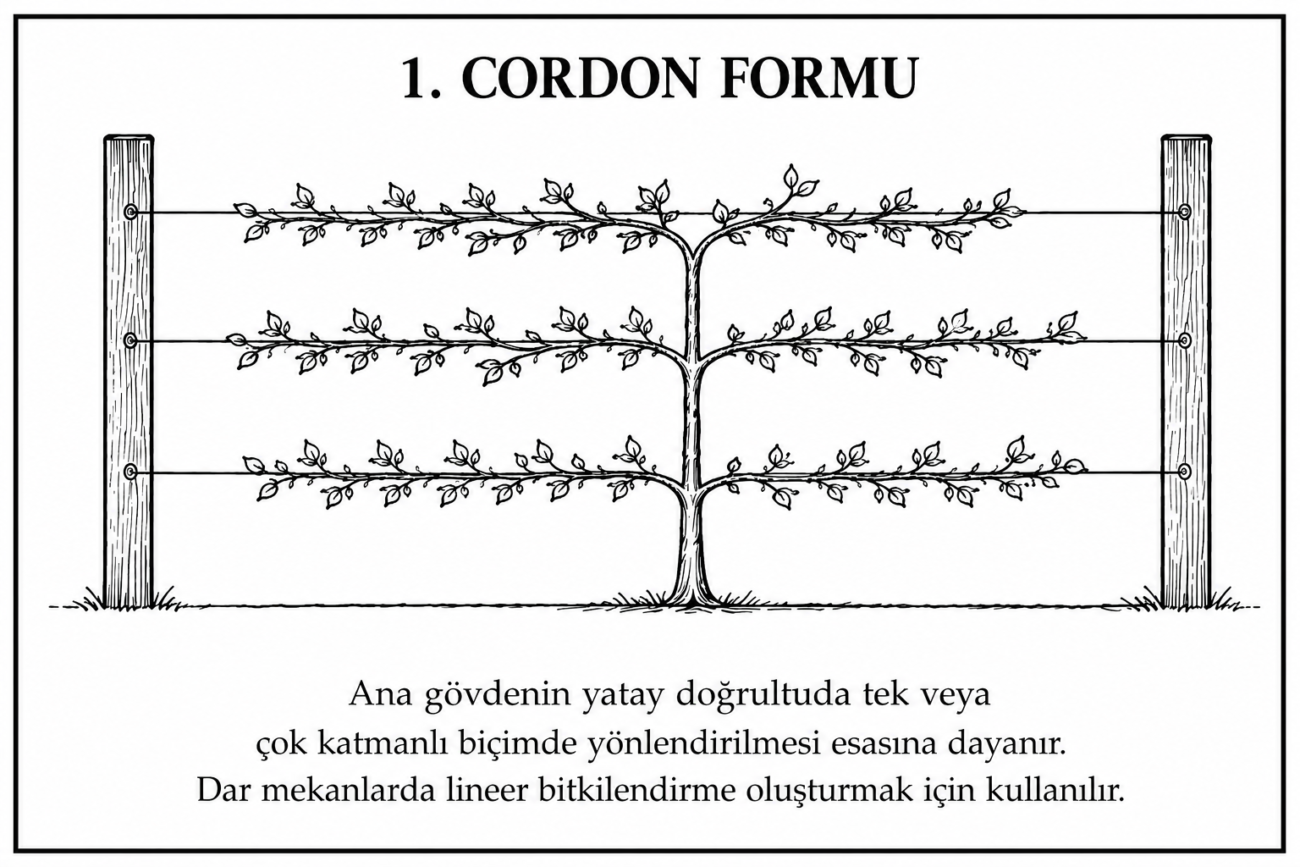
Cordon Form
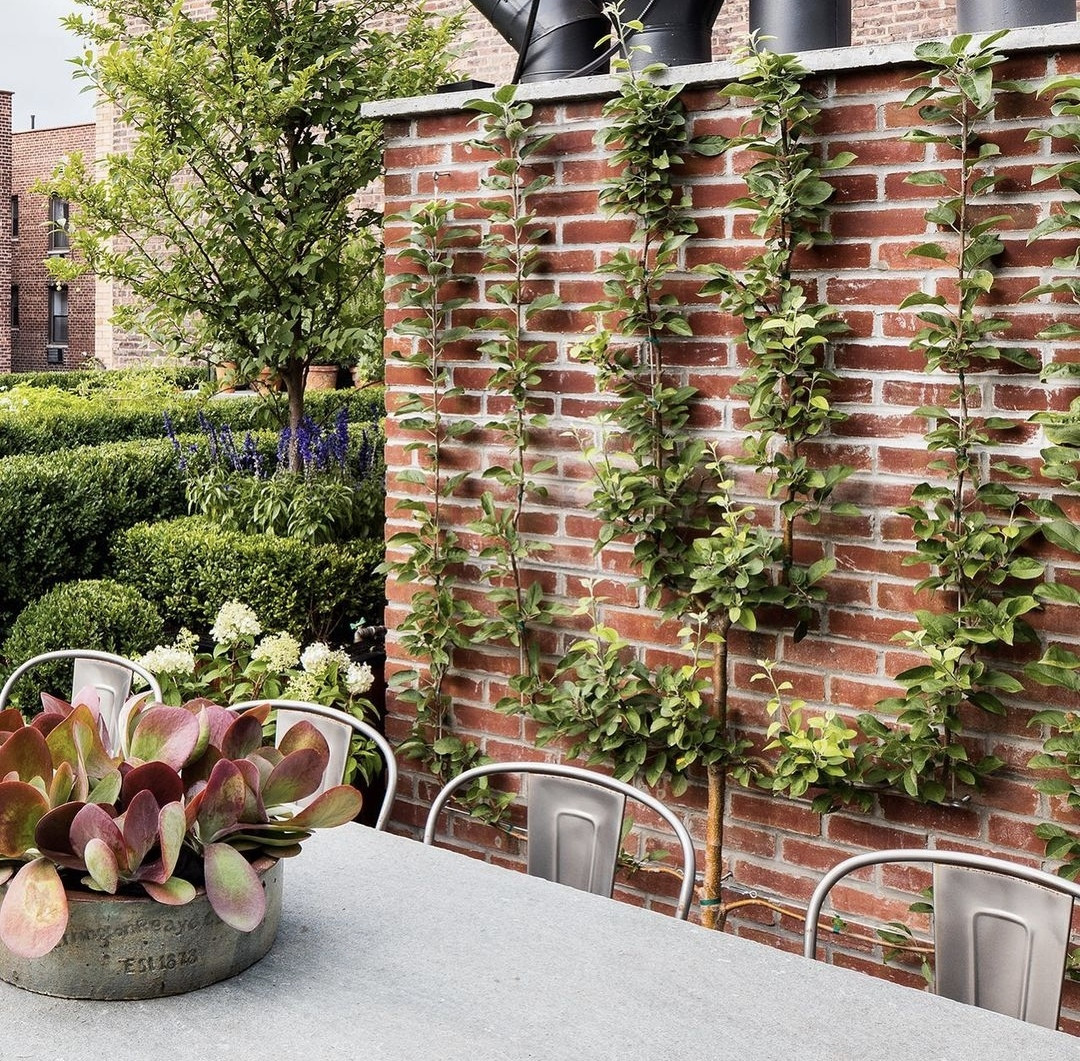
This form is based on guiding the main trunk horizontally as a single line, known as a single cordon, or as multiple parallel layers, known as double or multiple cordon. It is especially preferred in narrow spaces to create linear planting. By providing horizontal continuity along the façade, it strengthens spatial orientation and offers efficient surface use in limited areas.
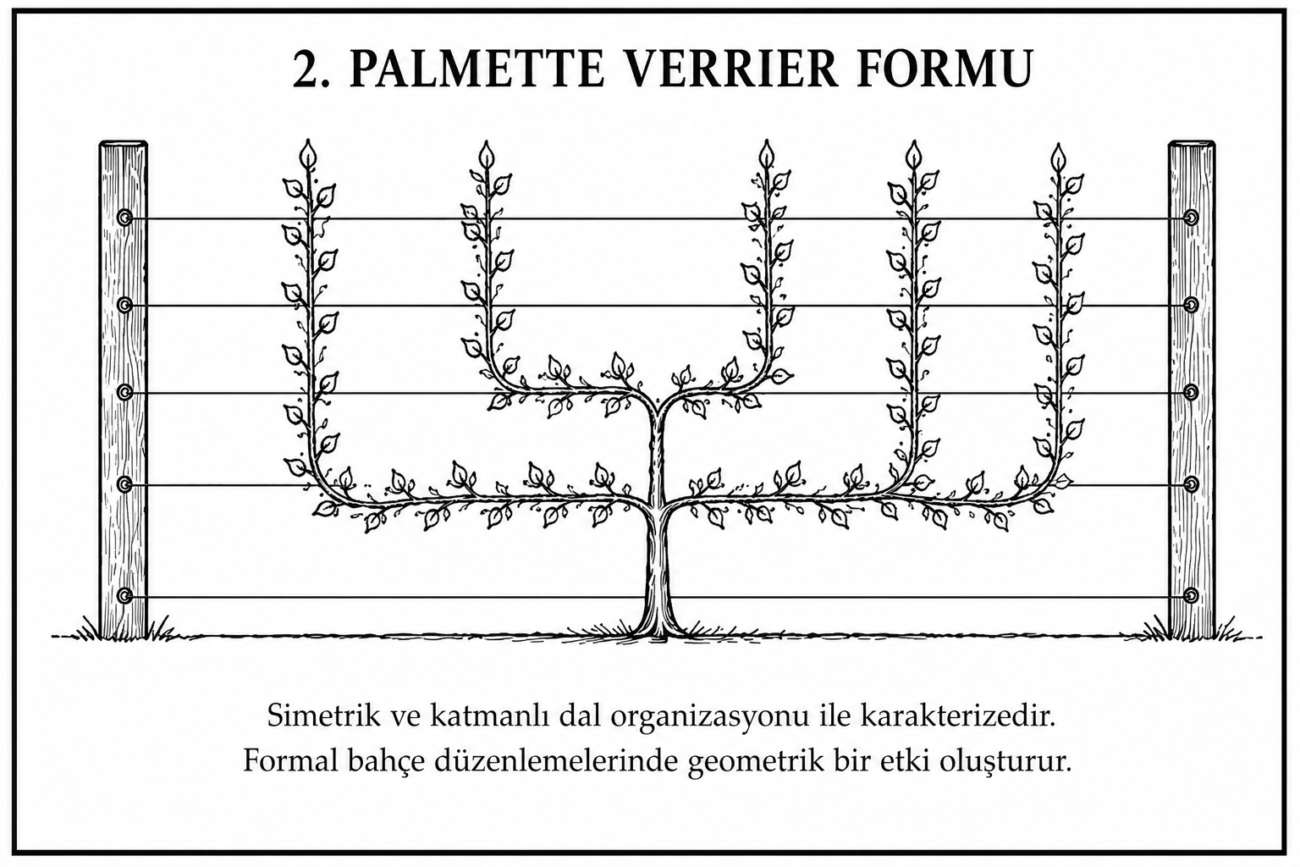
Palmette Verrier Form
This is a classical French espalier form characterized by a symmetrical and layered branch organization. Lateral branches emerging from the main trunk are regularly guided at specific angles, creating a geometric structure. It produces a strong axial effect in formal garden arrangements and provides an integrated composition with architectural façades.
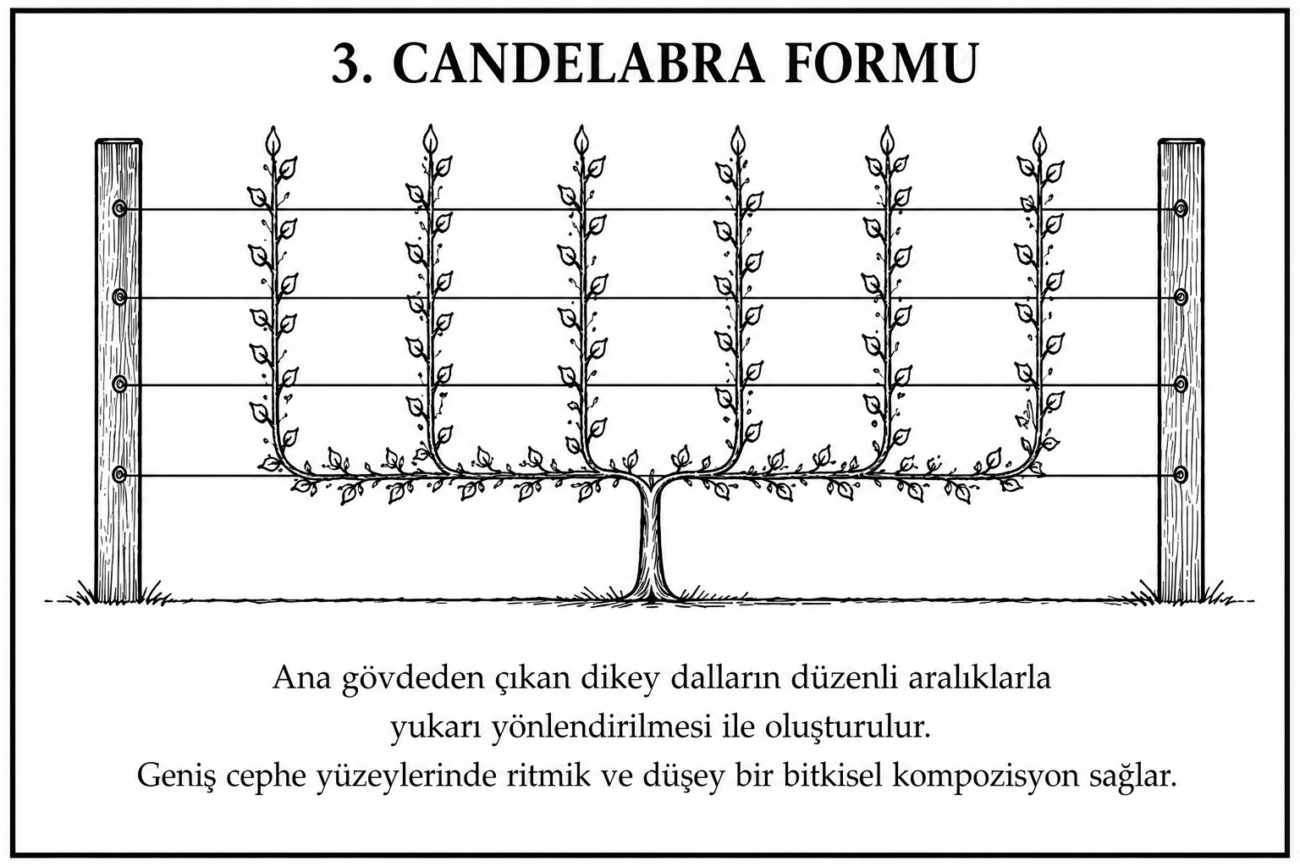
Candelabra Form
This form is created by directing vertical branches emerging from the main trunk upward at regular intervals. Through its repeated vertical branch structure, it forms a rhythmic and orderly plant composition on façade surfaces. It is especially preferred on broad wall surfaces and in the spatial definition of public areas.
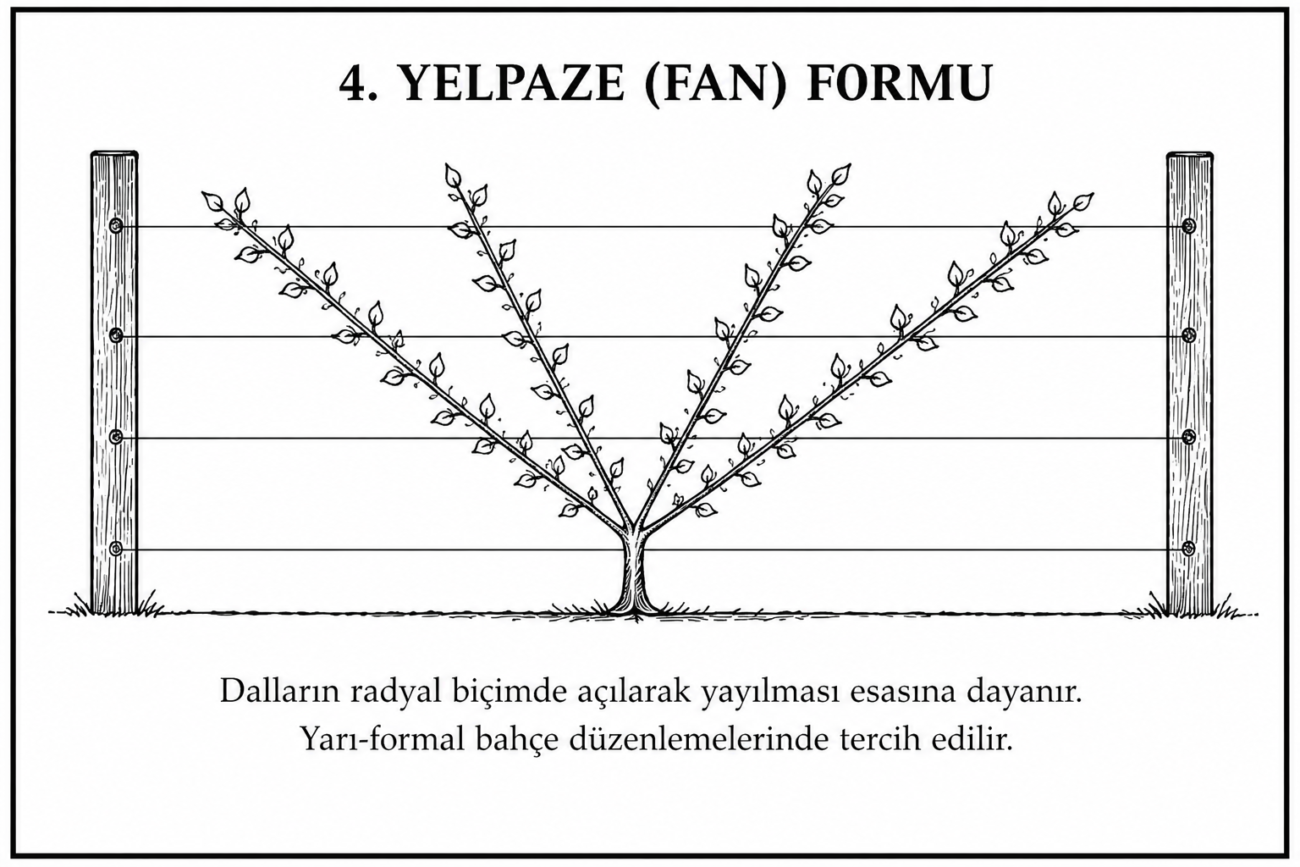
Fan Form
This form is based on the radial spreading of branches emerging from the main trunk. It supports plant development by creating a balanced distribution of light and produces an aesthetic transition effect in semi-formal garden arrangements. It is frequently used in small-scale gardens and courtyard walls.
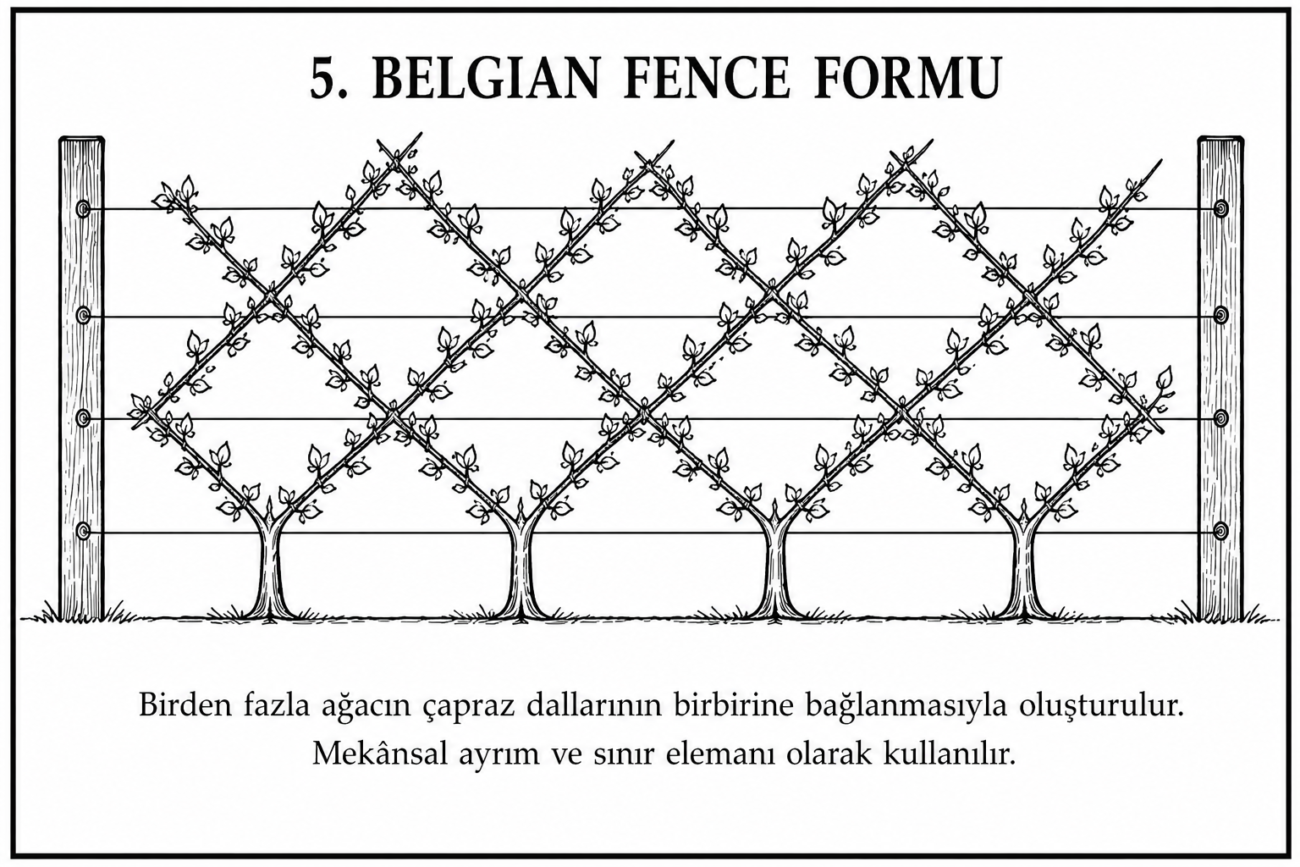
Belgian Fence Form
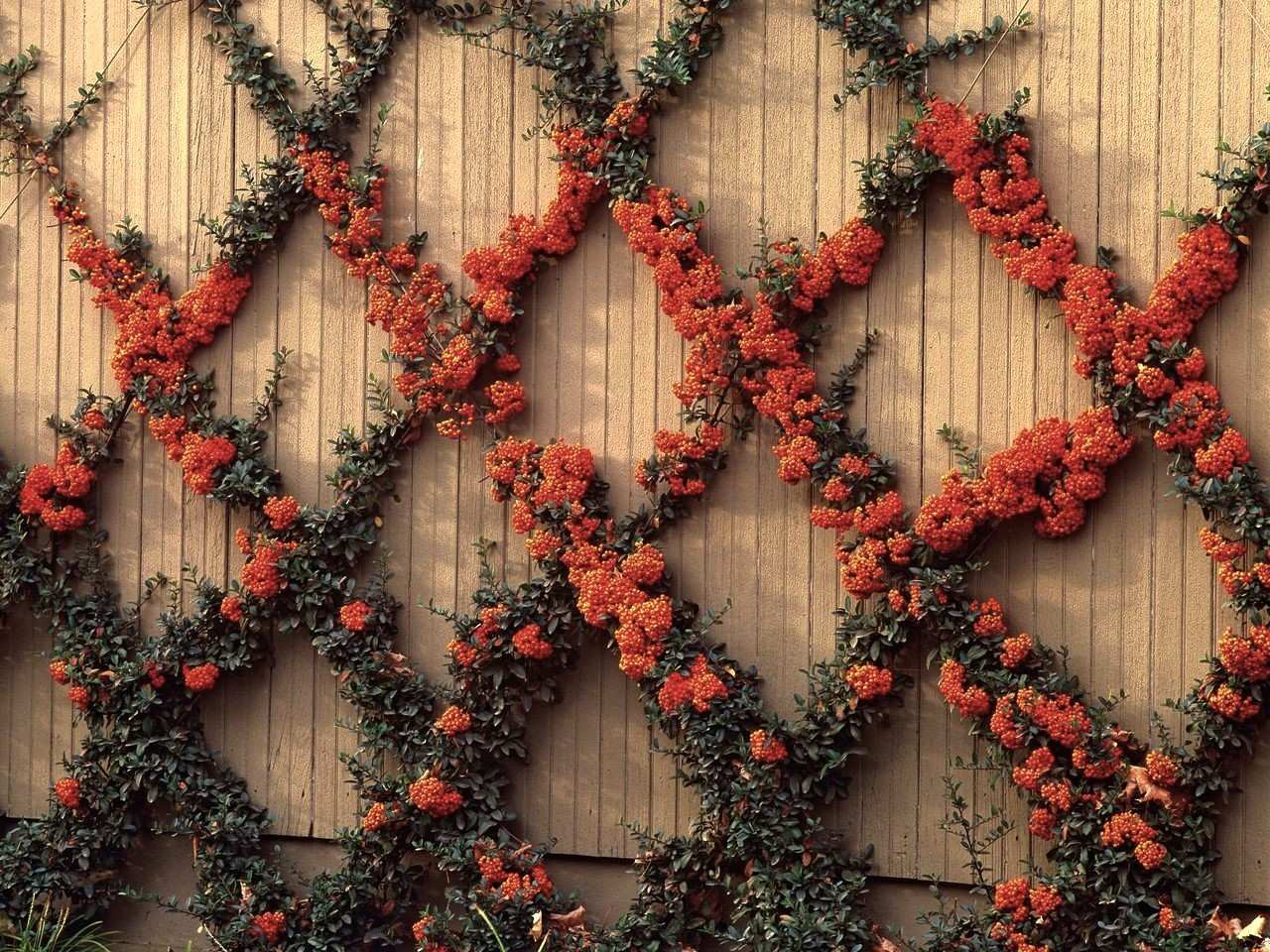
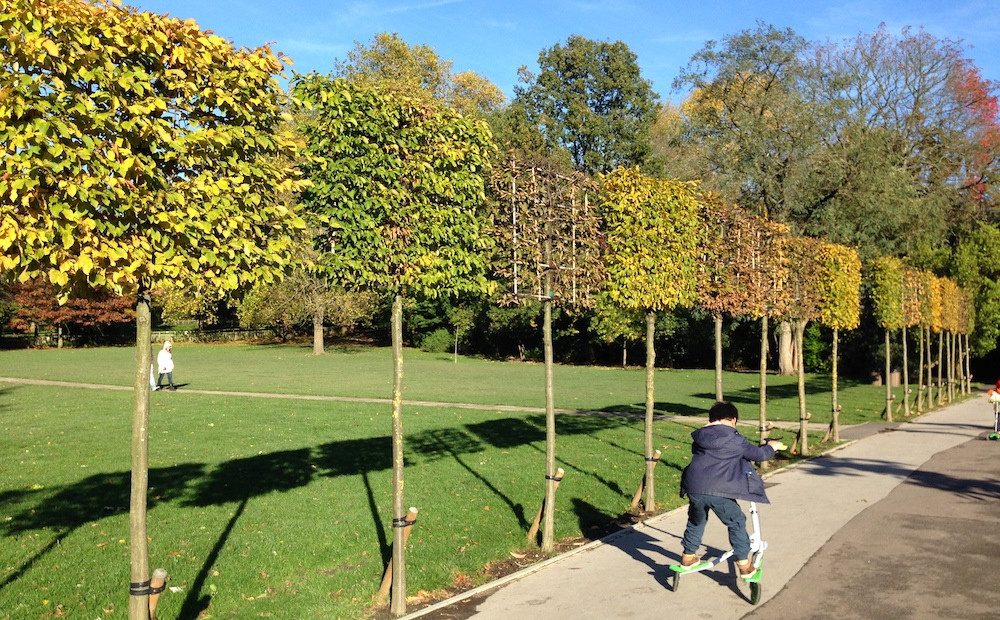
This is a woven system formed by connecting the diagonally guided branches of multiple trees. It is used to create a semi-permeable plant boundary element and provides spatial separation, direction, and visual continuity. It is widely applied in parks, pedestrian axes, and garden boundaries.
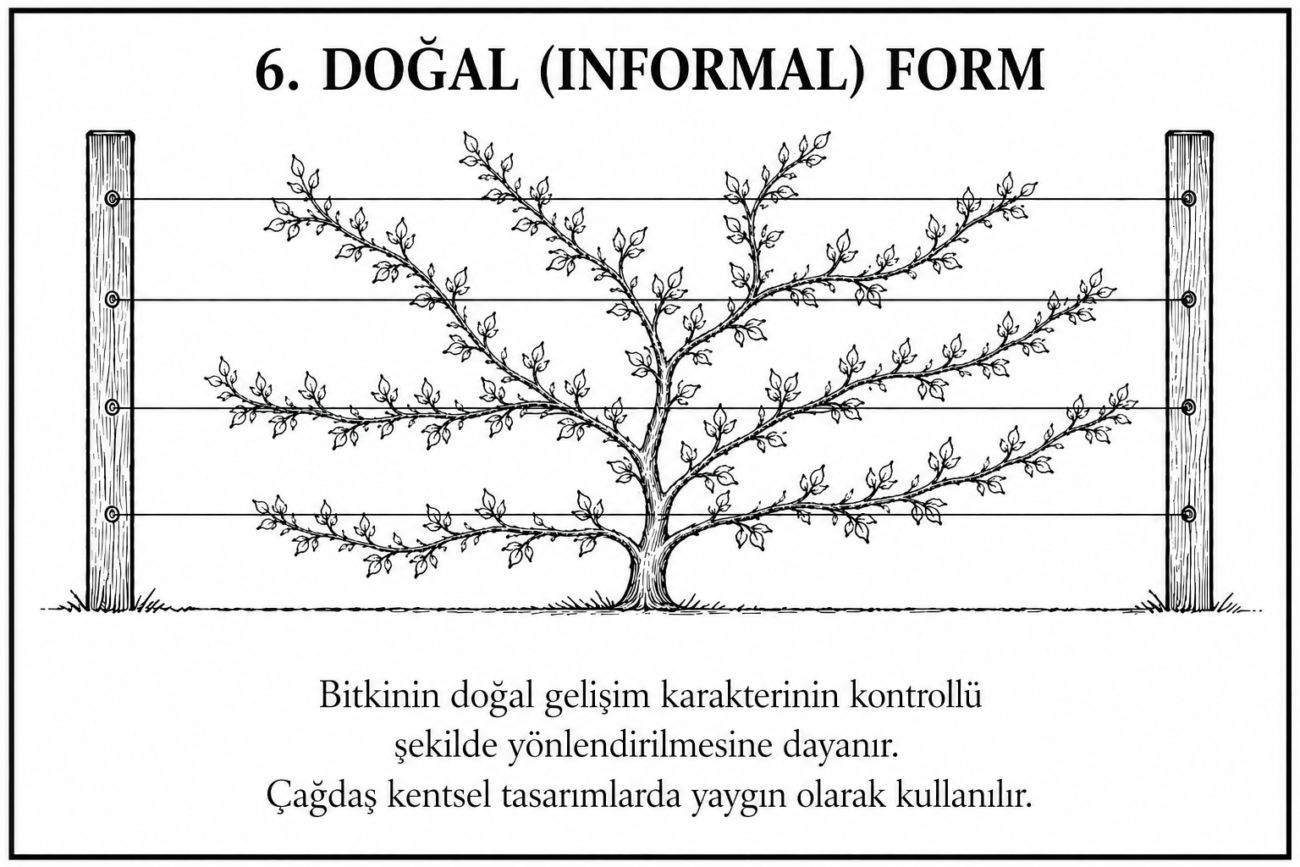
Informal Form
This is a flexible espalier system based on guiding the plant in a controlled way without completely suppressing its natural growth character. Since it creates a more organic and natural appearance, it is preferred in contemporary urban landscape designs. Its maintenance requirements are lower than those of other formal systems, and it adapts well to sustainable design approaches.
The Effect of Espalier Form Types on Spatial Perception and Façade Organization
Espalier form types should not be considered merely as technical pruning methods that determine the direction of plant growth. They also function as design tools that play a decisive role in shaping spatial perception and defining the character of the relationship established with architectural surfaces. The geometric order, rhythm of repetition, and orientation pattern of the selected form influence the way façade surfaces are perceived and allow visual continuity to be established between architectural mass and plant elements. For example, cordon and palmette Verrier systems, which show linear and layered organization, create horizontal continuity and a sense of order along the façade, while candelabra and fan forms generate stronger vertical emphasis and contribute to redefining the scale of the surface. The Belgian fence system, on the other hand, can function as a semi-permeable spatial boundary, acting as both a separating and guiding landscape element. In this context, the choice of espalier form should not be treated only as a botanical preference related to the growth character of the plant, but as an integrated design decision that directly affects the perceptual impact of the architectural surface, spatial organization, and user experience.
Plant Species Used in Espalier Practices
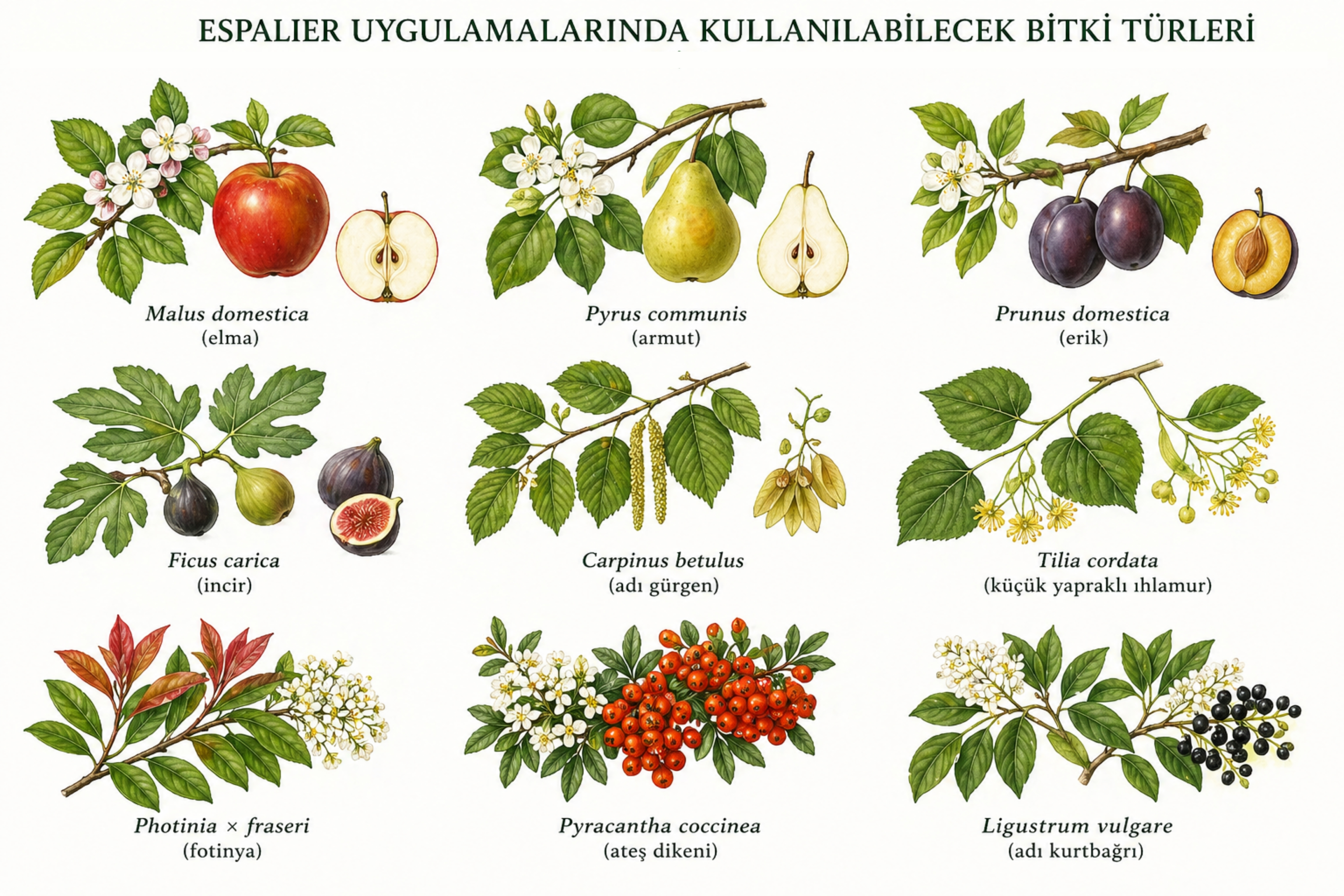
The plant species to be used in espalier practices should have flexible branches, be tolerant of pruning, and possess a growth habit suitable for training. In addition, having a high shoot-producing capacity, being suitable for form development, and being able to adapt to regular long-term maintenance interventions are among the main criteria that directly affect the success of the application. Species selection should also be evaluated together with the scale of the space, façade orientation, climatic conditions, and design objective. In this context, the most commonly preferred species in espalier practices are listed below:
- Malus domestica apple
- Pyrus communis pear
- Prunus domestica plum
- Ficus carica fig
- Carpinus betulus common hornbeam
- Tilia cordata small-leaved linden
- Photinia × fraseri photinia
- Pyracantha coccinea firethorn
- Ligustrum vulgare common privet
These species allow balanced aesthetic, functional, and ecological solutions to be produced in espalier systems thanks to their formability and flexibility of use at different spatial scales.
Application and Pruning Principles in Espalier Plants
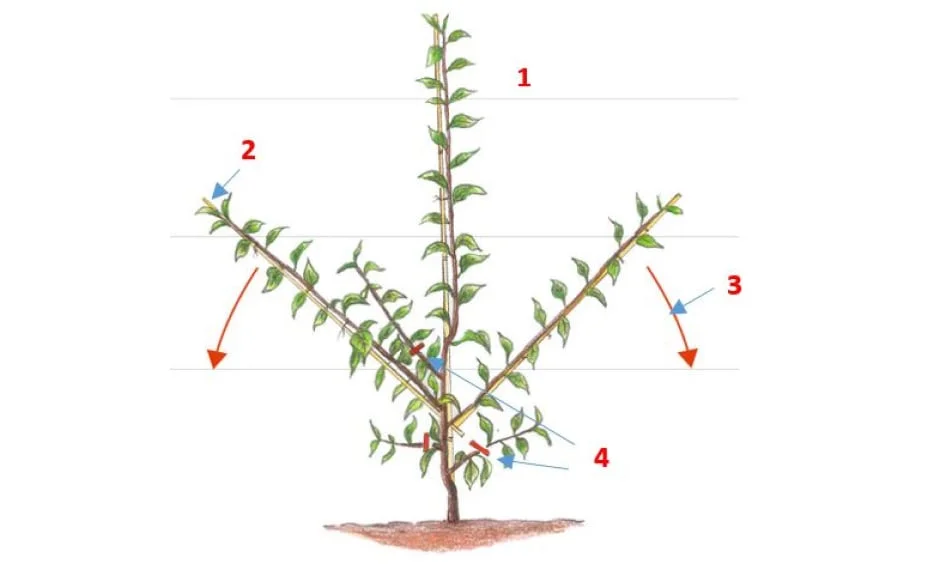
Espalier application is a planned process based on the controlled direction of plant growth. In the first stage of implementation, an appropriate species should be selected, and the sunlight exposure, wind effect, and spatial conditions of the surface where the plant will be placed should be evaluated. Then, a support system consisting of wires, anchors, and connection elements should be installed to support the plant’s development, and the young sapling should be planted in a position suitable for this system. Regular training interventions carried out in the first years play a decisive role in forming the desired shape by enabling the main structural branches to develop in the intended direction.
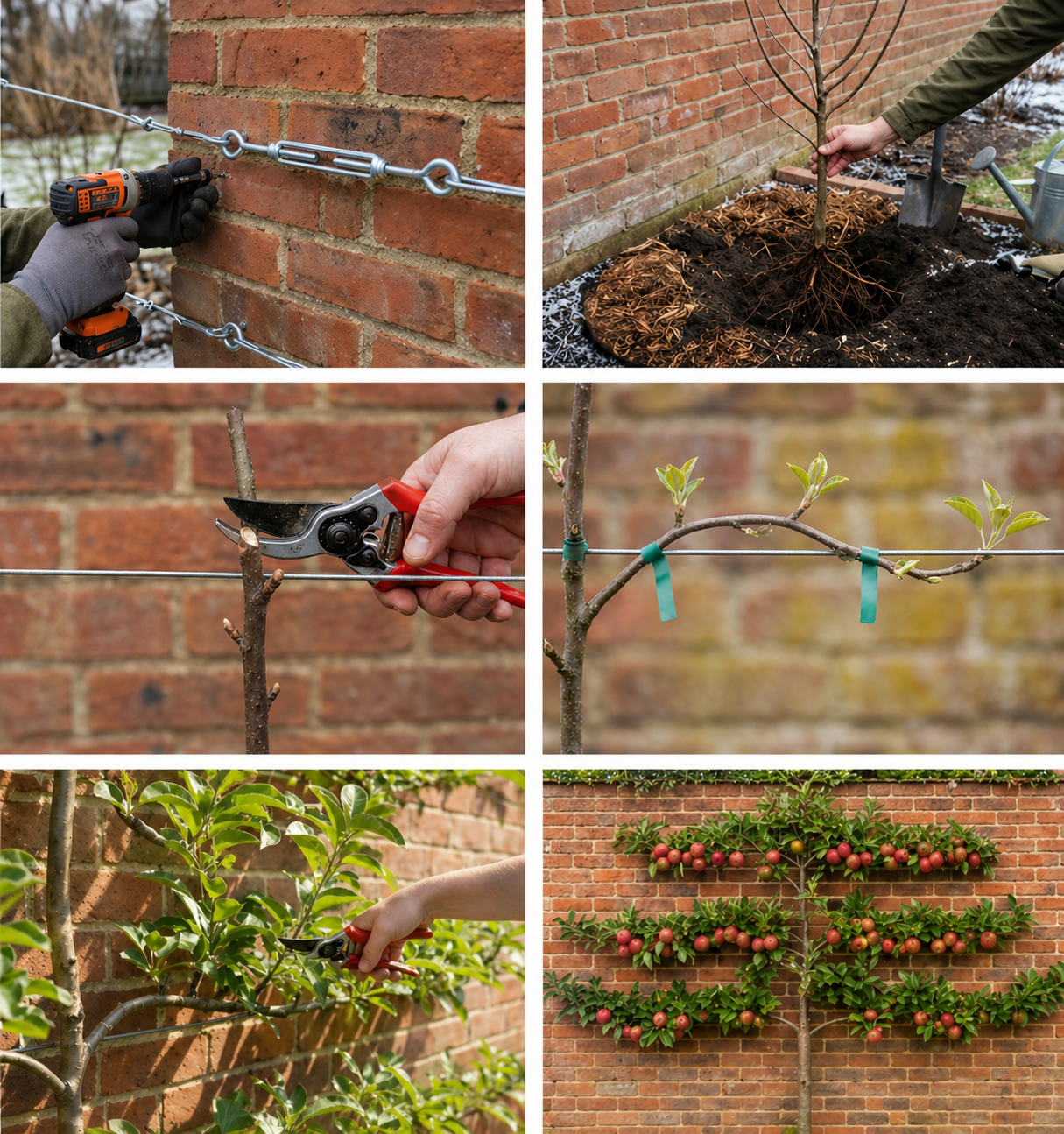
Regular maintenance practices are of great importance for espalier plants to maintain healthy growth and preserve the established form. The foundation of this maintenance process is periodic pruning, in which the main structural branches are preserved while side shoots that disrupt the form are brought under control. Summer pruning supports the continuity of the form, while winter pruning strengthens the plant’s structural framework. In addition, guiding shoots according to the support systems, regular irrigation, balanced fertilization, and periodic inspection of support elements are among the basic maintenance steps that determine the long-term success of the application.
Use of Espalier in Urban Landscape Design
Espalier practices stand out as an alternative planting strategy, especially in urban areas dominated by dense development. Narrow sidewalk sections, building façades, courtyard walls, boundary elements, and semi-permeable spatial dividers are among the most common areas of use for this technique. In addition, it allows vertical surfaces to be incorporated into landscape design in interior courtyards, public pedestrian axes, square surroundings, school gardens, and semi-public transition spaces of residential settlements, contributing to the strengthening of spatial continuity. It is also regarded as an effective design tool for reducing the visual impact of technical infrastructure elements, spatially defining service areas, and creating controlled plant organization in urban open spaces with limited plot depth. In this respect, espalier systems gain importance as part of a green infrastructure approach integrated with architectural surfaces and supporting landscape continuity in hard-surfaced urban environments.
Microclimatic Contributions
Espalier practices are regarded as an effective landscape strategy that contributes to improving the urban microclimate through the controlled relationship established between building surfaces and plant elements. Plant layers guided along vertical surfaces reduce the direct effect of solar radiation on building façades, help balance surface temperatures, and contribute to limiting excessive heating, especially during the summer months. At the same time, they allow more comfortable microclimatic conditions to form around buildings by regulating wind movement, preserving surface moisture balance, and increasing the shading effect.
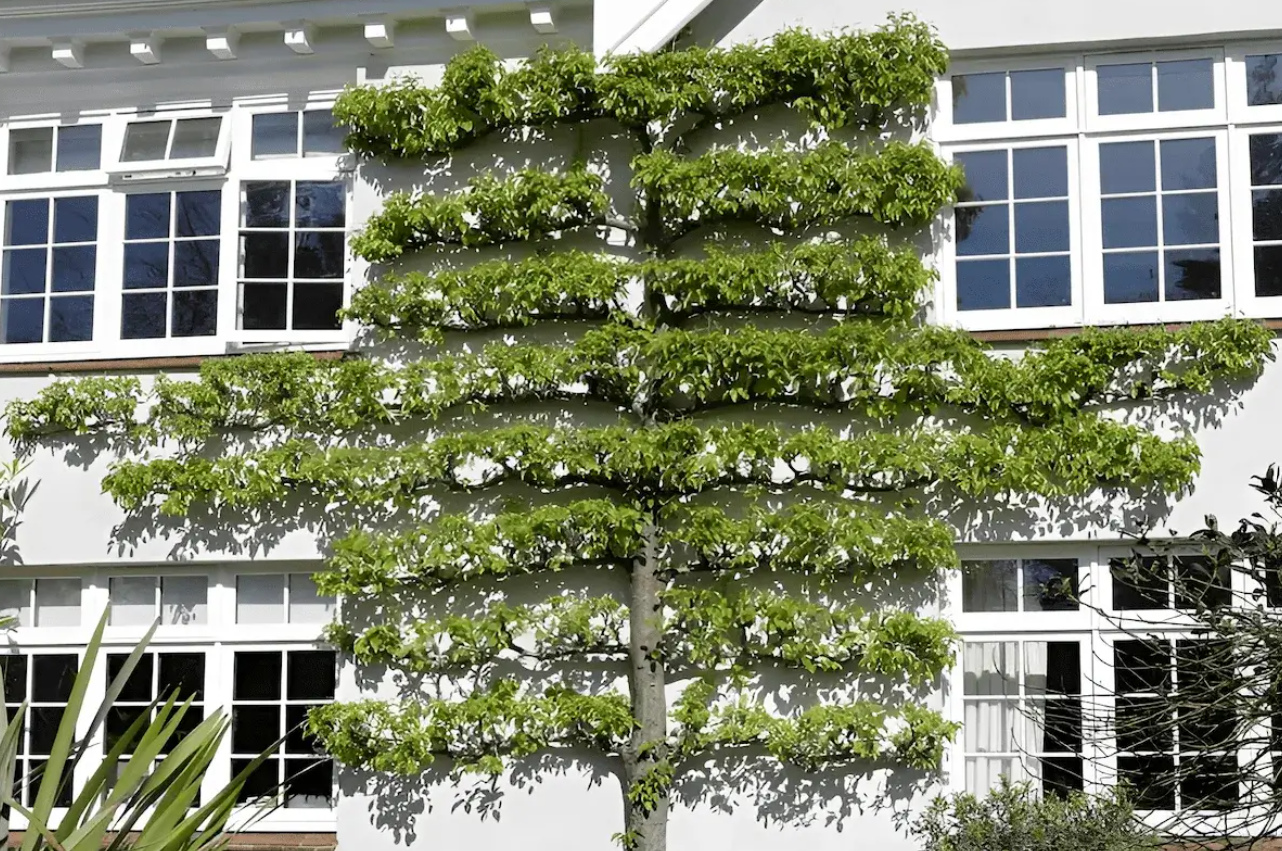
Espalier applications, especially on south-facing façades, support the controlled use of solar energy, accelerating plant growth and contributing to earlier flowering and increased yield in fruit trees. In addition, plant surfaces created along façades help reduce the urban heat island effect; they also provide environmental benefits such as improving air quality, capturing dust, and reducing surface reflections. In this sense, espalier systems stand out as one of the important components of climate-sensitive urban landscape design, beyond their aesthetic and spatial contributions.
Nature Limited by Surface, Integrated with Space
In increasingly dense cities, the designer’s relationship with plants is also changing. The issue is no longer only about placing trees in empty spaces; it is about transforming limited surfaces into living infrastructure. In my view, the espalier technique emerges precisely at this point as an important design tool. This approach makes it possible to turn nature from an element gradually pushed away from the city into an active part of architectural surfaces.
Today, in cities, it is possible to rethink the trees for which we often cannot find enough space by considering them on surfaces. On a façade, in a courtyard, along a narrow street, or on a boundary wall… Espalier gives us the opportunity to treat a tree not merely as a landscape element, but as a design component that creates space. Therefore, espalier is not only a technical cultivation method; it is a powerful approach carrying clues for a more integrated, more sensitive, and more contemporary urban aesthetic between architecture and landscape.
References
Appleton, J. (1996). The experience of landscape. Wiley.
Chalker-Scott, L. (2015). How plants work: The science behind the amazing things plants do. Timber Press.
Dunnett, N., & Kingsbury, N. (2008). Planting green roofs and living walls. Timber Press.
Francis, R. A., & Lorimer, J. (2011). Urban reconciliation ecology: The potential of living walls and vertical gardens. Journal of Environmental Management, 92(6), 1429–1437.
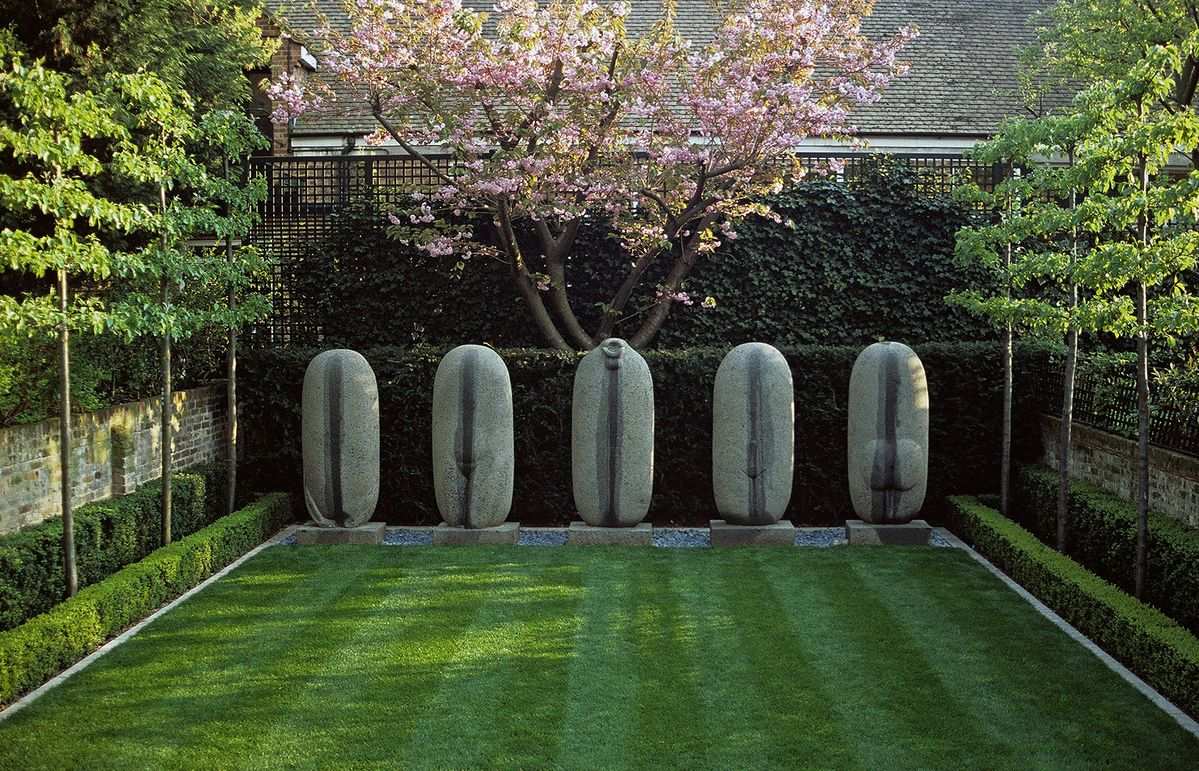
Giubbilei, L. (n.d.). Kensington Gardens. Luciano Giubbilei Studio. https://www.lucianogiubbilei.com/work/completed/kensington-gardens
Harris, R. W., Clark, J. R., & Matheny, N. P. (2004). Arboriculture: Integrated management of landscape trees, shrubs, and vines (4th ed.). Prentice Hall.
Hobhouse, P. (2004). The story of gardening. Dorling Kindersley.
Jellicoe, G., & Jellicoe, S. (1995). The landscape of man (3rd ed.). Thames & Hudson.
Köhler, M. (2008). Green facades—A view back and some visions. Urban Ecosystems, 11(4), 423–436.
Perini, K., Ottelé, M., Haas, E. M., & Raiteri, R. (2011). Vertical greening systems and the effect on air flow and temperature on the building envelope. Building and Environment, 46(11), 2287–2294.
Rackham, O. (2001). The history of the countryside. Phoenix Press.
Royal Horticultural Society. (2018). Pruning and training plants. RHS Publishing.
Thomas, G. S. (1983). Ornamental trees for garden and landscape. Timber Press.
Toogood, A. (Ed.). (1999). The American horticultural society pruning and training. DK Publishing.
Tree Plantation. (n.d.). Espalier fruit trees: Training, pruning, designs & small-space growing. https://treeplantation.com/espalier-fruit-trees
Urban, J. (2008). Up by roots: Healthy soils and trees in the built environment. International Society of Arboriculture.
Ware, G. H., & Beatty, R. A. (2007). The planting design handbook (2nd ed.). Routledge.


