

Hızlı Git
Planting a fruit tree in the garden is actually like a small “investment in the future.” That thin little stem you hold in your hand as a sapling today turns, a few years later, into something that drops its morning shade onto your table and changes the rhythm of the home with its fruit. That’s why it makes more sense to expand the question from “which tree is prettier?” to “which one will live better in my garden?” Türkiye has a wide range of climates; even within the same city, a windy slope and a sunny backyard are not the same. In this article, among fruit trees you can grow at home, I describe 5 species that can adapt in many regions and are commonly preferred in home gardens—using practical criteria such as ease of care, space needs, and productivity.
1) Apple Tree (Malus domestica) – The “forgiving” garden tree
Apple can be considered one of the most “mistake-tolerant” fruit trees for a home garden. The reason is its ability to adapt to very different soils, and—when the right cultivar is chosen—its relatively high cold tolerance. Especially in places like Eastern Anatolia where winters are harsh, apple can be a safer choice than apricot or peach; you still need to watch for late frost risk, but apples generally don’t surprise you in ways that make you give up completely.

The most critical point in apple care is pruning and canopy management (the branching structure at the top of the tree). If you never prune, the tree grows, but yield may fluctuate; if you prune too hard, the tree “puts its effort into wood,” and fruiting can be delayed. There is a small balance here: shaping with winter pruning, then letting sun into the crown with light thinning in summer works well in many gardens. Apple is also flexible in terms of space: dwarf rootstocks can be grown even in small gardens; classic seedling (more vigorous) rootstocks need more room. Another advantage is how the fruit can be used: fresh eating, drying, compote, vinegar… If you choose cultivars suitable for storage, it becomes possible to keep “garden produce” on the table in winter too.
Quick selection note: If your garden is windy, supporting a young sapling with a solid stake for the first 2–3 years can help; apples can be a little delicate while rooting in windy conditions.
Suitable for a small garden?
Very likely. The key issue here is not “apple,” but the rootstock the sapling is grafted onto. Dwarf and semi-dwarf apples can be managed even in tight spaces; in fact, some gardens create a mini-orchard with 2–3 trees. Traditional seedling rootstocks that want a big crown, on the other hand, eventually dominate a small garden and swallow the space.
Hard for beginners?
Generally beginner-friendly. Even if your pruning is not perfect, apples usually don’t sulk. But the “I won’t prune at all” approach can turn into a problem after a few years—branches get crowded and fruit in the inner crown doesn’t see enough sun.
Most common mistake
Choosing the planting location in a hurry. Apples love sun; they can live in partial shade, but yield and fruit quality may drop. Another common mistake is planting too deep. If the graft union ends up under the soil, the tree can take on a completely different character.
2) Pear Tree (Pyrus communis) – Elegant, but a species that wants planning
Pear creates a beautiful silhouette in the garden; if the crown structure is managed well, it provides shade and strongly carries that “fruit tree” feeling into the space. But pear tends to need a bit more planning than apple. Some pear cultivars ripen late, meaning they demand patience. Pollination and cultivar choice are also important: some cultivars may struggle to set fruit on their own. Having two compatible cultivars in the same garden can noticeably increase yield. (This is not 100% identical everywhere, but it’s a common issue in home gardens.)


Pear generally prefers deep, well-drained soils (soils that don’t hold water and turn into mud). Waterlogging can create problems in the root zone. In regions with hot summers, it needs regular irrigation; especially during fruit sizing, if water is given inconsistently, fruit deformities and cracking can occur. One of the most critical management points in pear is branch angle. If branches grow too upright, the tree “works upward” and fruiting can be delayed. For that reason, opening branch angles in the young stage (with simple tying methods) both improves form and helps the tree come into bearing sooner.
Quick selection note: If you have a small garden, look for dwarf/semi-dwarf pear saplings; the idea that “pears grow huge and take over the garden” is often about rootstock choice.
Suitable for a small garden?
Partly—again, rootstock is decisive. Semi-dwarf pears can be managed in a small garden; but compared to apple, pear often carries a “taller intention.” So if you choose pear for a small garden, you need to be a bit more careful in establishing its form early on.
Hard for beginners?
It may feel one notch harder than apple. Because branch angles, light penetration, and—in some cultivars—pollination matter more. Still, in the right place with the right cultivars, pear is a very enjoyable tree; it’s just that “I left it alone, it will fruit” sometimes ends up being wishful thinking.
Most common mistake
Planting a single pear cultivar and then being surprised for years when it doesn’t set fruit. Not always mandatory for every pear, but in many gardens a compatible second cultivar clearly increases yield. Another issue is either too little watering or, on the contrary, constantly wet soil… Pear roots need “air”; it likes water, but it doesn’t like drowning.
3) Plum Tree (Prunus domestica / Prunus salicina) – The quickest herald of spring
Plum brings an early liveliness to the garden, especially with its spring flowering. Because some types bloom very early, they require caution in places with late frost risk; but with the right cultivar selection, plum can be a very enjoyable home-garden tree. With plums, there are almost two main worlds: European plum (often hardier, with some late-blooming cultivars) and Japanese plum (earlier, juicier, and with larger-fruited cultivars). In Türkiye, both are found depending on climate and region.

The nice thing about plum is that it often comes into bearing quickly. Under suitable conditions, you can see fruit within a few years of planting. In terms of care, the main point is managing fruit load. Plum can set so heavily that branches come close to breaking; in that case, thinning fruit early is beneficial both for branch health and fruit quality. It may look like it isn’t picky about soil, but it likes water; if it experiences drought while sizing fruit, the fruit can remain small.
Quick selection note: If your garden is a cold pocket prone to frost, avoiding very early plums can make sense; they can “think spring arrived early,” bloom, and then get chilled.
Suitable for a small garden?
Moderately. Because plum can grow fast, crown control becomes necessary in a small garden. It can be managed with semi-dwarf cultivars and regular thinning pruning; but plum behaves like a tree that insists “I’m going to grow,” and you need to plant it with that in mind.
Hard for beginners?
Usually easy. That’s why it’s so loved in home gardens; the tendency to fruit early gives motivation. Still, if fruit load is excessive, branches can break—when beginners experience this for the first time, it can be a bit discouraging.
Most common mistake
Planting an early plum in a spot with high late-frost risk. Then every year you get beautiful blooms, but no fruit… Another very common thing: not thinning fruit. When the tree sets a lot, people say “how nice,” but that load both tires the branches and makes the fruit smaller.
4) Sweet Cherry Tree (Prunus avium) – Patient, but the reward is big
Cherry is one of the dream fruit trees for many people; because a well-cared-for cherry tree offers both an aesthetic and a gastronomic reward. But its nature demands a bit of “patience and discipline.” First, cherry generally loves sun; in shade, yield and quality can drop. Second, in some cherry cultivars, the need for a pollinator is high. Can you get fruit with a single tree? You can—but sometimes you experience “flowers are there but fruit is scarce” for years, and that tires the home gardener. A compatible pollinator cultivar often makes cherry much easier.

Another critical issue in cherry care is bird pressure. This can also be thought of as a “design” matter: if there is cherry in the garden, there will be birds too. When the fruit starts to color, protective nets or simple precautions may be needed. If irrigation is inconsistent, cherries can crack; especially in rainy periods or when you suddenly increase watering, the skin stretches. Pruning is also handled more carefully in cherry; heavy pruning can trigger issues like gummosis. Cherry is not a “let me prune hard and shape it” tree; it wants softer, more conscious touches.
Quick selection note: Placing cherry in the sunniest spot with good air movement often gives the best results; humid, enclosed corners can increase disease risk.
Suitable for a small garden?
Limited. Cherry generally wants a wide crown; in a small garden, dwarf-rootstock cherries are the better choice. Still, cherry tends to become a “central tree” in the garden; if it’s in the wrong place in a small space, it can disrupt the spatial layout after a few years.
Hard for beginners?
Between moderate and hard. Cherry has two main challenges: first, pollination requirements (the possibility of needing a compatible cultivar), second, bird pressure at fruiting time. When you know these from the start, your relationship with cherry becomes healthier; when you don’t, the feeling of “where did I go wrong?” grows.
Most common mistake
Placing cherry in a closed, humid corner with little sun. Cherry needs sun; it needs air movement. Another mistake is excessive pruning, which can increase gummosis and stress responses. Pruning in cherry is “fine-tuning,” not carving a sculpture with an axe.
5) Pomegranate Tree (Punica granatum) – Fruit plus landscape value together
Pomegranate stands out among fruit trees you can grow at home, especially in warm and mild regions, with both its yield and its appearance. Its flowers, its fruit, its trunk form… pomegranate behaves a bit like “both a fruit tree and a landscape plant.” In regions like the Mediterranean, Aegean, and Southeastern Türkiye, pomegranate grows quite comfortably; in colder areas, choosing a sheltered microclimate (like the base of a south-facing wall) may be necessary against frost damage. Even though some pomegranate cultivars are more cold-tolerant, the young sapling stage is especially sensitive.
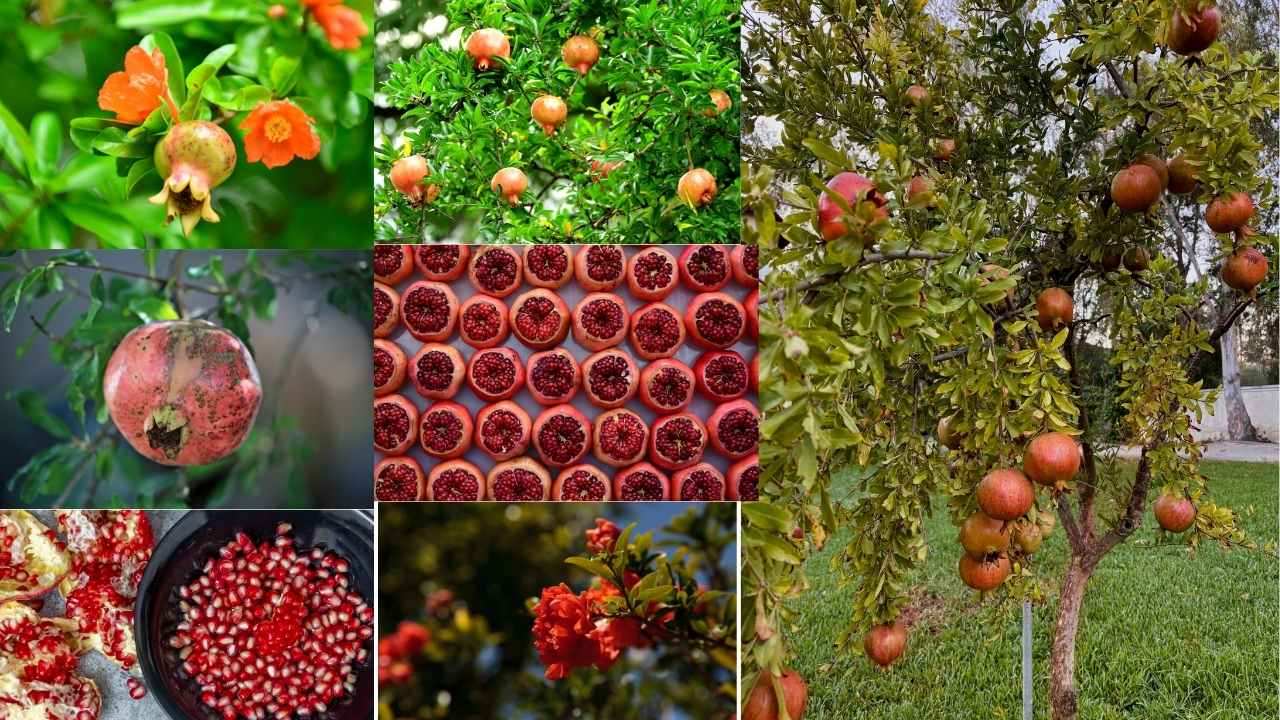
The good side of pomegranate is that it is usually not overly fussy. Its soil pickiness is limited; it is relatively drought-tolerant, but regular irrigation improves fruit quality. In pruning, pomegranate’s tendency to grow “shrubby” matters. Single trunk or multi-trunk? This changes depending on garden use. In a small garden, keeping pomegranate multi-stemmed gives a decorative form and makes access easier; but for a neat maintenance and harvest rhythm, you need to thin out some shoots each year. When grown in the right place, pomegranate becomes a long-lived, characterful garden element.
Quick selection note: In regions with harsh winters, it’s more sensible to place pomegranate not in the “risky corner” of the garden but in the most sheltered point—like a kind of winter insurance.
Suitable for a small garden?
Very suitable. Even in multi-stem form, pomegranate can look elegant in a small garden; it can even be used like a boundary element. If you prefer a shrubby form instead of a broad crown, it becomes both decorative and easy to harvest. In colder regions, however, site selection for pomegranate is more critical.
Hard for beginners?
Generally easy in mild regions. Pomegranate “manages,” but if you care well, it shows the difference. In places with harsh winters, it can become harder for beginners; because measures like a sheltered location and perhaps trunk protection against winter damage may be needed.
Most common mistake
Planting pomegranate in an exposed, wind-hit spot in a cold climate. Then each year shoots freeze back and the tree regresses. Another mistake is leaving pomegranate completely on its own; crowded inner shoots can reduce ventilation and lower productivity.
A quick decision logic for your garden
When choosing a fruit tree for your garden, it can be better to put “my garden conditions” ahead of “the fruit I like” as the first priority. If winters are harsh, apple and some pear cultivars may sit on a safer line. In mild and warm regions, species like pomegranate become a strong choice in both aesthetics and yield. Cherry can give perfect results in the right place, but you need to accept pollination and care sensitivity from the start. Plum gives early joy—yet you must account for frost risk.
Duru ÖTÜKEN – Agricultural Engineer


