

Hızlı Git
We want to see some “green” in our homes through indoor plants, yet most of the time we swing between two extremes: either we choose a species that is too demanding and quickly lose enthusiasm, or a plant bought because it is “easy to care for” slowly fades away in the wrong light, the wrong pot, and the wrong corner. In this article, I discuss the same 5 indoor plants most commonly preferred on the market (Pothos, Lucky Bamboo, Aloe Vera, Snake Plant, and Areca Palm) through both the logic of care and their harmony with interior décor.
There is also a care card for each type of indoor plant, and at the top you will find a summary table so you can compare them quickly. Prices, however, do not behave like “one fixed number”; they vary depending on size, pot diameter, the fullness of the plant, whether it is locally grown or imported, and even the season. Here I share the typical ranges seen in online sales as of January 2026; think of these as something like an “average with room for bargaining.”
Quick selection guide
If you want a quick direction in a single sentence:
- Low light + low maintenance: Snake Plant (and Pothos too, if placed well)
- Bright living room + big impact: Areca Palm
- Minimal home + a “botanical sculpture” feel: Aloe Vera or Snake Plant
- Shelf/hanging display + soft cascading form: Pothos
- Desktop, entrance hall, office desk: Lucky Bamboo
Summary table: care + style + price
| Plant | Light | Watering | Best décor match | Style suggestion (pot/vase) | Average price range (TR) |
|---|---|---|---|---|---|
| Pothos | Medium to bright indirect light (also adaptable to low light) | When the soil partially dries | Boho, Scandinavian, soft minimal | Hanging ceramic pot / wicker basket / macramé | ~150–1,200 TL (most products 250–600 TL) (Trendyol.com) |
| Lucky Bamboo | Bright indirect light | If grown in water, keep the water fresh; if in soil, water moderately | Modern, East Asian-inspired, entrance hall | Tall cylindrical glass vase + white pebbles (with a red accent) | ~200–1,400 TL (depending on number of stalks/set) (Trendyol.com) |
| Aloe Vera | Bright indirect light / morning sun | Water when dry, infrequently | Japandi, industrial, minimal | Raw terracotta / concrete-textured pot | ~170–500 TL (most products 240–350 TL) (akakce.com) |
| Snake Plant (Sansevieria) | Low to medium light (its form becomes more beautiful in bright indirect light) | Very infrequently | Modern, monochrome, loft | Tall, elegant matte black/smoky vase-look planter | ~300–1,500 TL (depending on variety/size) (akakce.com) |
| Areca Palm | Bright, indirect light | Regularly but without overwatering | Mediterranean, tropical, spacious living room | Large textured pot + wicker outer basket | ~650–3,600+ TL (jumps as the size increases) (akakce.com) |
1) Pothos — “a soft green flow”
Pothos is one of those indoor plants that gives a space a real “plant-like plant” feeling. Its leaf texture is glossy and lively; especially when it cascades from the edge of a shelf or softens a wall corner in a hanging pot, it makes the room feel more lived-in. From a landscape architect’s perspective, the strongest feature of pothos is that its form defines a space without dividing it: it does not create a hard mass, it breaks rigid lines, and it fills emptiness. indoor plants

Pothos care card
| Topic | Recommendation |
|---|---|
| Light | Bright indirect light is ideal; growth slows in low light |
| Watering | When the top 3–4 cm dries out; less often in winter |
| Soil | Peat + perlite (well-draining) |
| Tip | Overwatering → yellowing; underwatering → dry leaf tips |
Décor compatibility
- Boho / natural tones: Next to cream walls and light oak furniture, use pothos in a simple pot placed inside a wicker basket. If you are hanging it, a warm beige macramé hanger looks especially good.
- Modern minimal: In white and grey homes, use a single moss pole to guide pothos upward so it does not look “messy.” That way, it reads less like a trailing vine and more like a “botanical column.”
- Color suggestion: In light-toned interiors (off-white, stone tones), a variegated pothos works better; in darker interiors (anthracite, walnut), a pothos with richer green leaves appears stronger.
Price note
Pothos products among indoor plants can start out affordable in small pots, then rise quickly as size and fullness increase. In the January 2026 review, examples ranged from around 150 TL to over 1,000 TL; in practice, most buyers choose within the 250–600 TL band. (Trendyol.com)
2) Lucky Bamboo — “small footprint, big message”
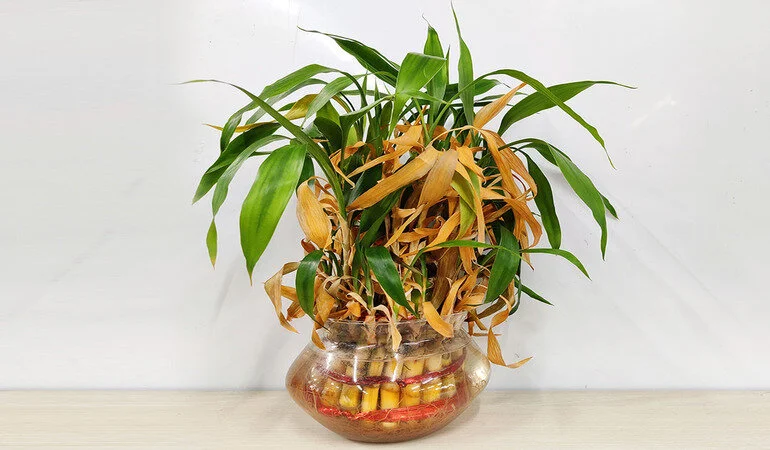
Among indoor plants, lucky bamboo is not actually bamboo; it is often sold as Dracaena sanderiana. Still, it has a strong symbolic language: in an entrance hall, on a work desk, even in a waiting area, it conveys a sense of order and balance. In some homes it can look a little too much like a “gift item,” so maturing it through the choice of pot and accessories usually gives better results.
Lucky bamboo care card
| Topic | Recommendation |
|---|---|
| Light | Bright indirect light; direct sun may scorch the leaves |
| Water/Soil | If grown in water, refresh the water regularly; if possible, use rested water |
| Cleaning | If algae forms in the glass vase, wash the pebbles and reset the arrangement |
| Tip | The water level should cover the roots but not drown the stalk |
Décor compatibility (interior note)
- Tall cylindrical glass vase + white pebbles: This gives the cleanest look. The transparency of glass creates lightness in the space, and the white pebbles reflect light back, especially in entrance areas.
- Red accent: Red ribbons/accessories are often used in Feng Shui narratives; however, in a modern home it is better to keep red as a small detail. For example, placing a small object with a red lid beside the vase feels more refined. (Trendyol.com)
- Color and décor pairing: In homes with navy and brass details, lucky bamboo can look very elegant; the green stalk contrasts beautifully with navy, while brass enriches the “zen” atmosphere.
Price note (approximate)
There is a wide range depending on the number of stalks and the size. In January 2026, many options between 200–1,400 TL appeared on popular marketplaces; smaller 2–3 stalk sets are generally more accessible. (Trendyol.com)
3) Aloe Vera — “a botanical sculpture, low maintenance”
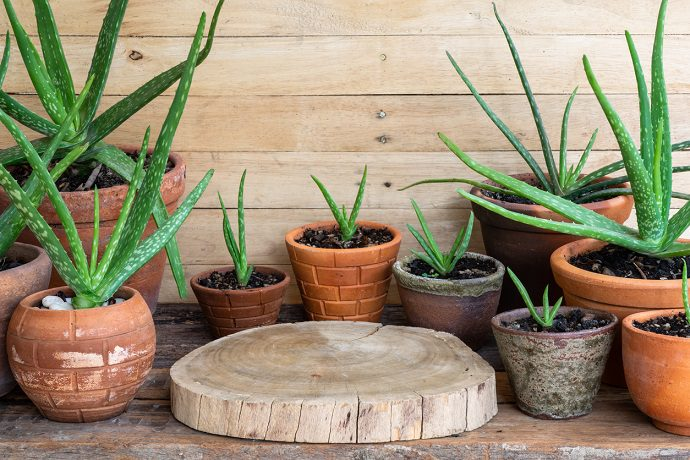
Among indoor plants, Aloe is visually very clear-cut. It stands in one place and gives a room a “designed” feeling; that is why it is no coincidence that it is so loved in Japandi, minimal, and industrial interiors. The geometry of its leaves is firm, but its color is soft; it feels both technical and aesthetic at once, something like that.
Aloe vera care card
| Topic | Recommendation |
|---|---|
| Light | Bright setting; morning sun can be beneficial |
| Watering | Only when the soil is completely dry; very infrequently in winter |
| Soil | Succulent/cactus mix (very fast-draining) |
| Risk | Too much water → root rot and softening leaves |
Décor compatibility (interior note)
- Raw terracotta pot: This is the most natural match for aloe. Terracotta breathes and also softens aloe’s rigid form.
- Concrete-textured pot: In industrial-style homes, aloe works beautifully with concrete texture; grey tones make the green appear more premium.
- Color suggestion: In homes with beige–stone–cream palettes, aloe feels “quiet yet strong.” If your home is entirely white, place aloe in a dark grey pot; the plant suddenly becomes a focal point.
Price note (approximate)
Prices are generally mid-range. On comparison sites, there are examples in the 240–500 TL range; smaller nursery pots are more affordable. (akakce.com)
4) Snake Plant — indoor plants with “vertical lines, clean composition”
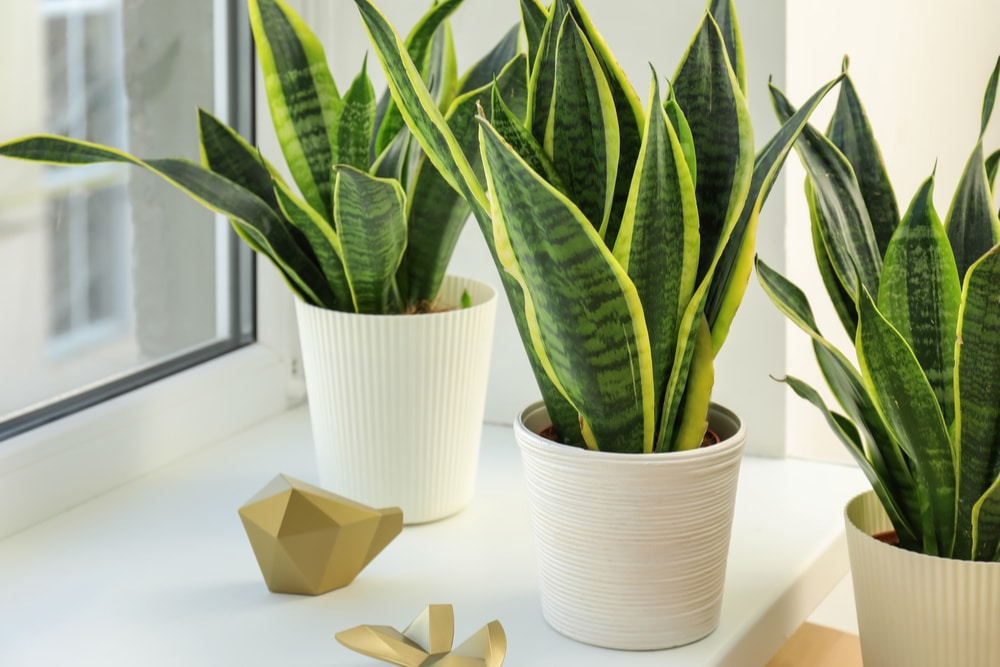
Among indoor plants, the snake plant works almost like a “line element” in interior design. Like a slim column; especially in narrow halls, beside a TV unit, or in those odd gaps between a windowsill and a wall… It pulls the place together. The more you appreciate this plant, the more you notice something: beyond being easy to care for, it also has an effect that disciplines the space.
Snake plant care card
| Topic | Recommendation |
|---|---|
| Light | Tolerates low light; grows more attractively in bright indirect light |
| Watering | Very infrequent; it is safer to let the soil dry completely before watering again |
| Soil | Well-draining mix; avoid standing water under the pot |
| Tip | If the leaves go soft, it is usually due to overwatering / root problems |
Décor compatibility (interior note)
- Your exact example is here: Use the snake plant in a tall and elegant matte black or smoky “vase-form” planter. (Not a real vase, but a planter with drainage holes that looks like a vase.) It emphasizes the vertical line even more and turns the plant into a “design object.”
- Monochrome homes: In black–white–grey interiors, the snake plant looks especially good because its leaf lines already read like a graphic pattern.
- Wood-heavy homes: If you have warm woods like walnut or oak, choose the planter in off-white or stone to make the plant read more softly.
Price note (approximate)
Because there are many varieties, the price range is wide. In January 2026, on comparison sites and marketplaces, examples were seen starting around 300 TL, and going above 1,000 TL for larger sizes and special varieties. (akakce.com) indoor plants
5) Areca Palm — “tropical freshness in the living room”
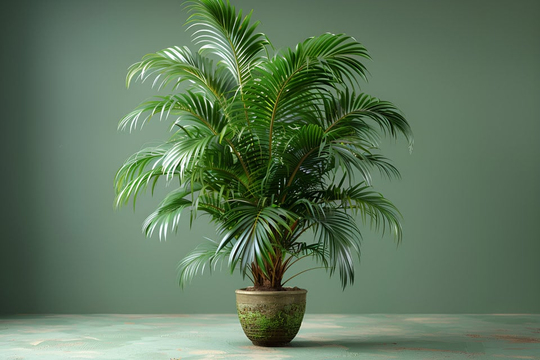
Among indoor plants, the areca palm is incredibly effective in the right place, and one of those plants that sulks quickly in the wrong one. What makes it a true “living room plant” is not its height, but its relationship with light: in a bright room, the rhythm of its leaves genuinely makes the space feel larger. The way we read tree shade in landscape design, we read the shadow pattern of areca indoors too; especially in afternoon light filtering through curtains.
Areca care card
| Topic | Recommendation |
|---|---|
| Light | Bright, indirect light; it weakens in dim conditions |
| Watering | Regular but controlled; when the top layer dries out |
| Humidity | Likes medium to high humidity; it is better kept away from radiators |
| Tip | If leaf tips turn brown, it is usually due to dry air + irregular watering |
Décor compatibility (interior note)
- Mediterranean / natural homes: Move the areca into a large pot and place a wicker basket around it. Wicker refines the tropical feeling; it creates something like a “hotel lobby” effect, but at home scale.
- High-ceiling living rooms: Rather than leaving areca on its own, create a balancing element nearby: for example, a floor cushion or a small side table. Otherwise the plant can feel like “a lonely tree.”
- Color suggestion: If you have a light grey sofa and light oak flooring, areca works beautifully. The green softens the grey and prevents the room from becoming harsh.
Price note (approximate)
Among indoor plants, areca prices jump as the size increases. There are more accessible options in the 80–110 cm range, while “large/XL” products can show price tags of 2,500–3,600 TL and above. (akakce.com)
A small but useful care routine (works for all of them)
Sometimes it is better to think of them as “one plant” rather than separate ones: if you forget to check each indoor plant individually, create a small rhythm at home.
- Once a week: Check the soil (finger test). The watering decision usually becomes clear right away.
- Once every 2 weeks: Wipe the leaves (especially snake plant and areca). Dust can noticeably reduce light absorption.
- Once a month: Check under the pot (has water accumulated in the saucer?). This is one of the most common indoor mistakes.
- At seasonal transitions: Even moving a plant by 30–50 cm can make a difference; in winter, window cold, and in summer, heat behind glass, create a kind of “hidden stress.”
Placing indoor plants according to the home’s color palette (practical examples)
Let’s think like an interior designer here: a plant is not just a plant, but a color accent and texture.
- White–grey minimal home: Snake Plant (matte black pot) + Aloe (concrete pot). A graphic and clean arrangement.
- Beige–cream–wood (Japandi/Scandi): Pothos (wicker/macramé) + Areca (wicker outer basket). Warm and natural.
- Dark-toned home with anthracite walls: Areca is very effective here, because the leaves seem to glow against the dark background. Adding brass/gold details beside it increases the sense of luxury.
- Colorful, eclectic home: Use lucky bamboo as a small accent. If you keep it simple in a glass vase, it helps gather the visual chaos.
Frequently Asked Questions
Is snake plant really one of the easiest indoor plants?
Generally yes; especially if you tend to overwater, its ability to cope with little water is a major advantage. Still, it is better not to throw it into a completely dark corner and expect miracles.
Which one makes more sense in a low-light home?
Snake plant is the first option; pothos comes second. Areca and aloe need more light.
Is it risky if there are pets at home?
Some indoor species (pothos, aloe, lucky bamboo, snake plant) are known to carry irritation/toxicity risks for pets; if your cat or dog tends to chew plants, keeping the plant on a higher surface out of reach may be a safer approach. Areca is generally considered more “pet-friendly,” but the safest route is still to follow a veterinarian’s advice.
Your “one plant” recommendation for a beginner?
Snake plant. If you choose the right spot and keep watering infrequent, it will not tire you out.
Why does areca get brown leaf tips?
In most homes, the cause is “dry air + irregular watering.” Moving it away from radiators and regularizing watering usually helps it recover.
Author: Rukiye ÖZDENER


