
Hızlı Git
Every day, you walk along the same route. You step on the same pavement and pass by the same trees.
But have you ever stopped to think?
Is the ground beneath your feet really just a standard path, or is it a space that contains many layers of design?
For most people, landscape means a few trees, a bit of lawn, perhaps a park. In reality, however, landscape involves a systematic infrastructure, a planned technical order, and a multi-layered design logic. In this article, I want to explain this through photographs I took from my own professional experience.
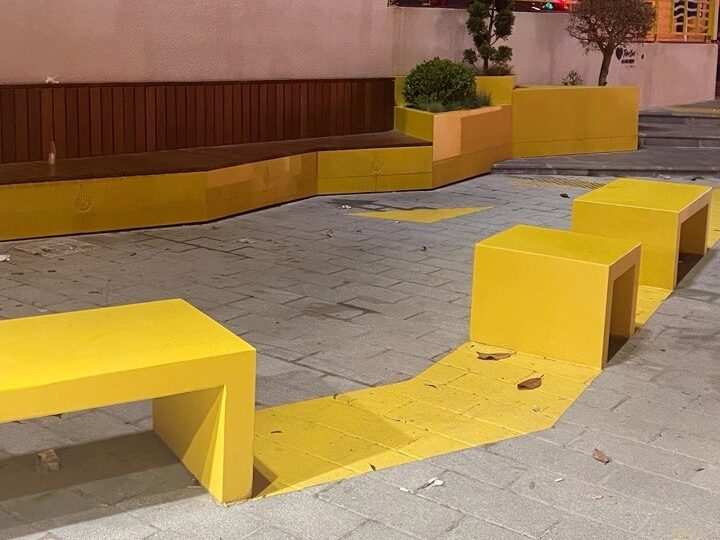
The path you walk on guides you without you realizing it. It draws your attention to certain points.
In fact, with details you often do not even notice, it manages water and prevents it from accumulating on the surface of the paths you walk on. That is why landscape does not only design space, but also human behavior. It slows you down, speeds you up, or makes you stop. Sometimes it makes you sit under a tree, sometimes it leaves you feeling alone in a wide open space, and sometimes it makes you lift your head and look around through striking elements.
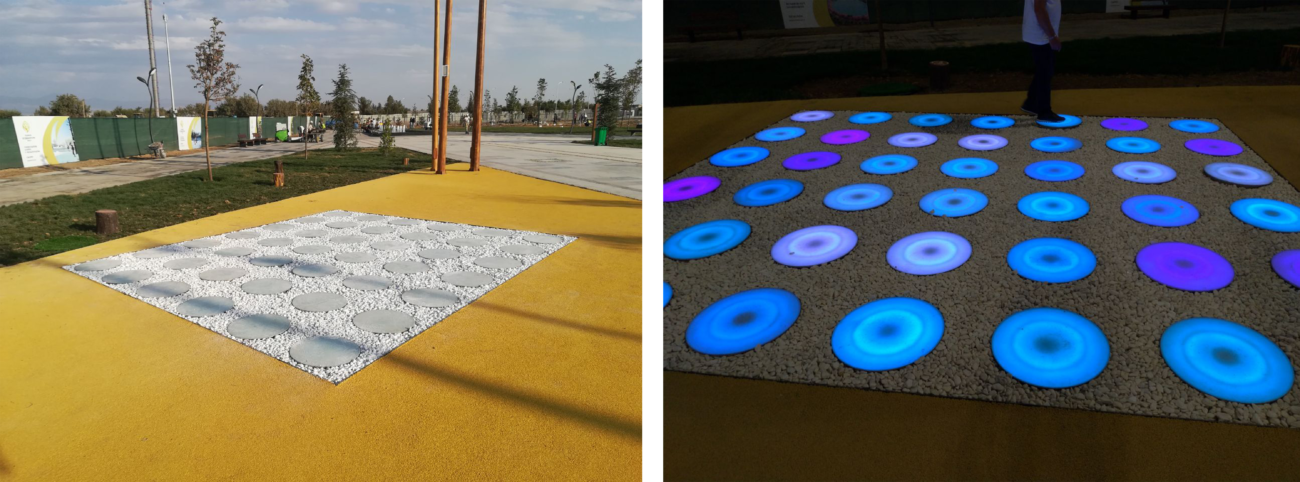
Throughout the years I worked in the field, the clearest thing I observed was this:
In a well-designed landscape, people do not adapt themselves to the design. The design guides people naturally, within an intuitive flow. While people move forward without thinking about where they step, they are actually moving within a scenario drawn by design. The most successful projects are those in which people do not conflict with space; rather, the space intuitively reads human behavior and makes it easier.
How Do the Paths We Walk On Actually Work?
In daily life, when we look at a pedestrian path, we usually see only the surface:
A granite stone, a neat paving pattern, and clean joint lines… Yet this surface is only the visible part of a multi-layered system.
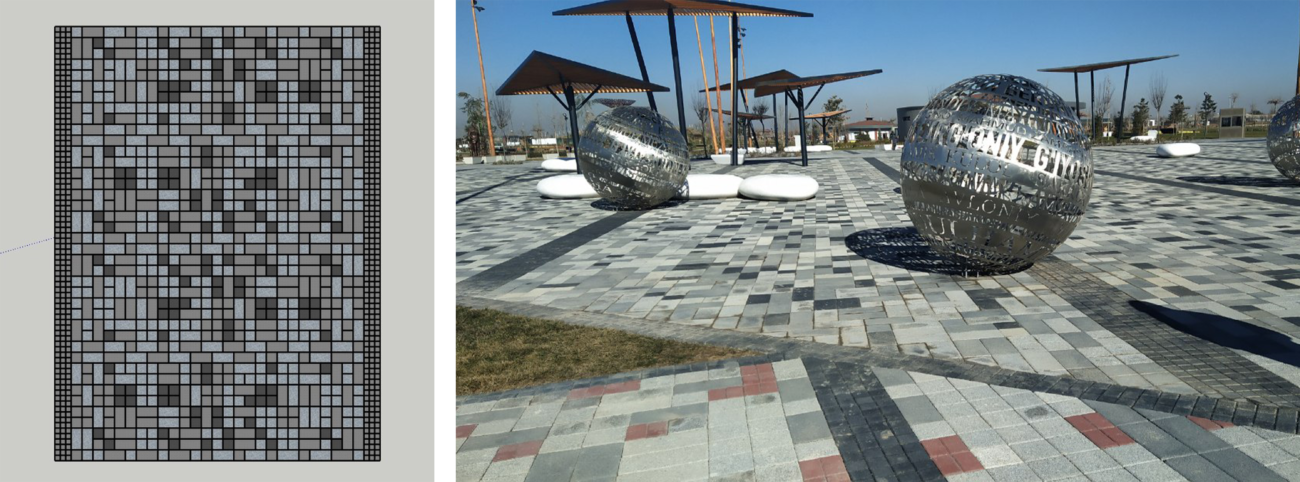
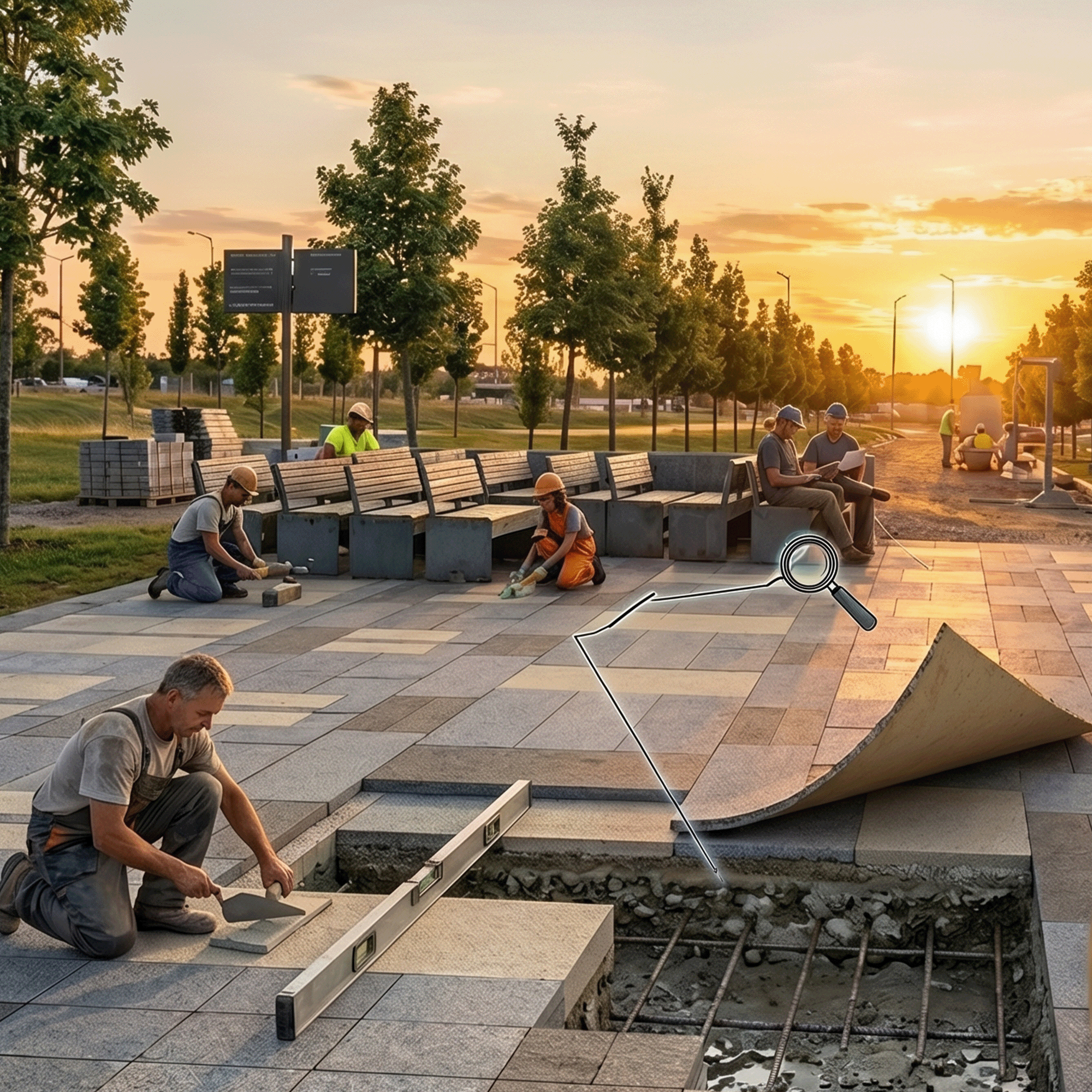
Take a granite-covered pedestrian path, for example. At first, we design the granite paving for that path. The stone covering we see on the surface provides aesthetics and durability. Yet the real elements that determine the performance of this surface are the layers underneath it.
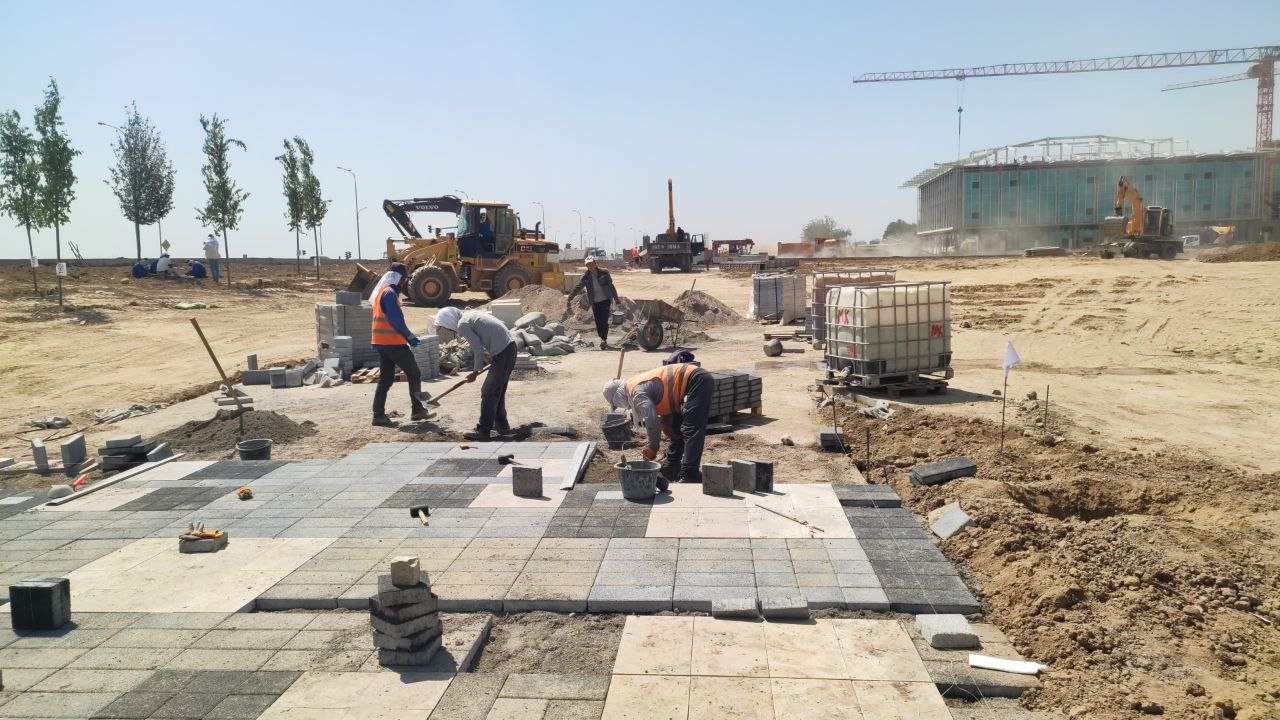
A typical system can be constructed as follows; we can show it with an example sequence:
- Granite paving stone
- Bedding layer (sand or fine aggregate)
- Base course (stabilized material)
- Compacted subgrade
Water Management: The Invisible Design
In this system, one of the details that is often overlooked yet plays a critical role is water management. One of the tools we can mention in water management is the joint. The joint allows the surface to function, balances stress, and helps water move in a controlled way.
One of the most common problems encountered on site is the omission or faulty application of one of the layers. Most of the time, the problem appears on the surface; the stone becomes loose, breaks, or collapses. But the real problem is usually underneath.
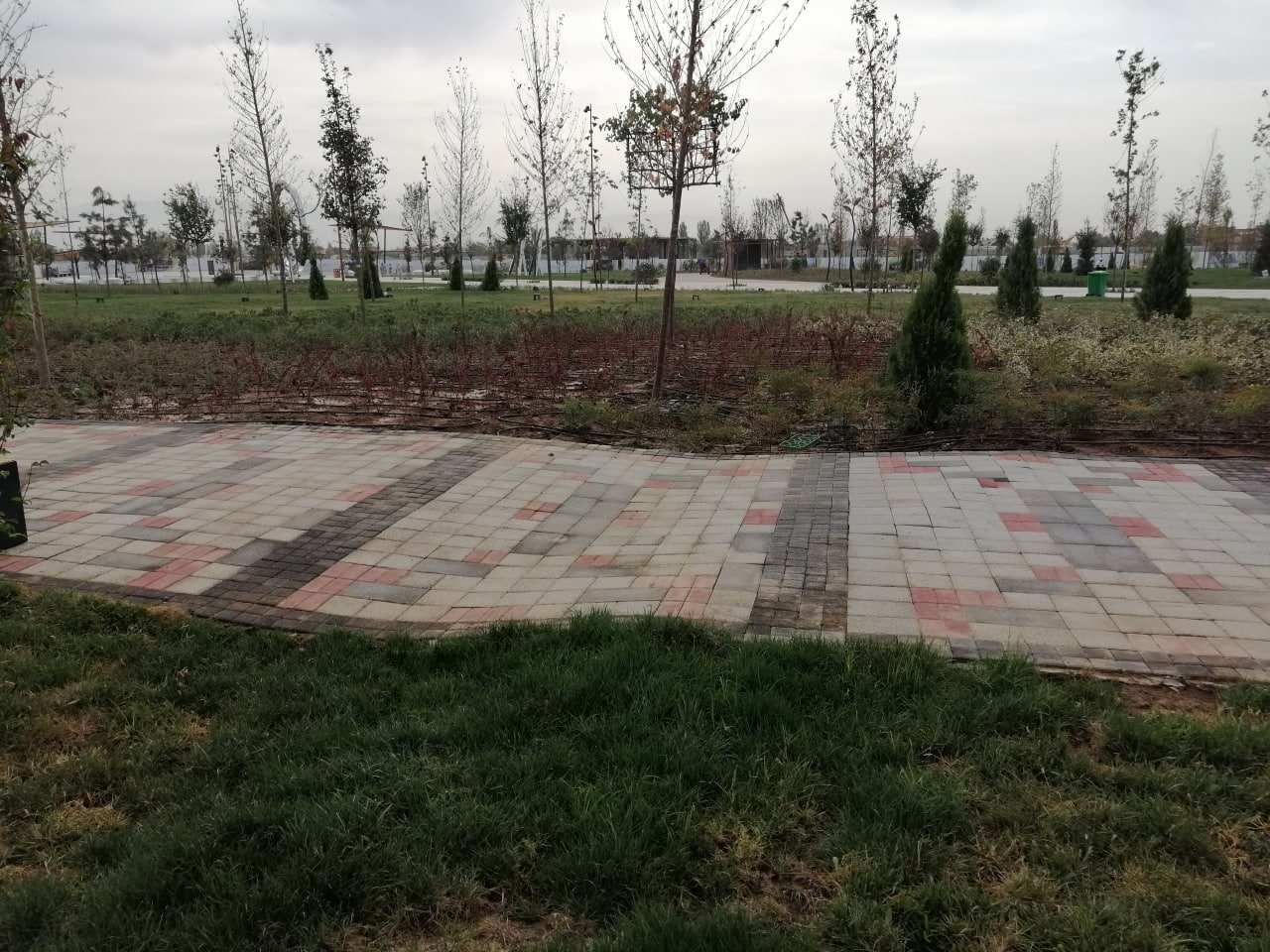
The condition seen in the photograph occurs when the soil layer beneath the finished stone paving shifts due to the effect of water; this ground movement then causes the paving above to deteriorate as well.
Landscape elements are not only aesthetic objects, but also performance-based ones. The performance of a pedestrian path is measured by its load-bearing capacity, water permeability, resistance to freeze-thaw cycles, and deformation behavior over time.
Invisible Systems
Just as with hardscape, planting design is not limited to the visible surface. The health and sustainability of a green area are directly related not only to plant selection, but also to the system constructed beneath it. In planting applications, just as in hardscape systems, there is a layered structure.
One of the situations I most frequently observed on site is irregular plant growth occurring in different parts of the same project. At first glance, this may look like a design flaw, but in most cases the problem stems from drainage elevations, compacted soil, or faulty irrigation zoning. In other words, the problem lies not in aesthetics, but in the invisible layers of the system.
For a healthy planted area:
- Suitable soil mixture (a balance of organic and mineral content)
- Drainage layer (for the removal of excess water)
- Irrigation infrastructure
- Appropriate volume and depth for root development
- and many other technical criteria must be evaluated together.
Especially in tree applications, the root zone is a critical issue. A compacted ground that cannot breathe or has limited access to water directly affects plant development. For this reason, in a properly designed landscape, not only the visible upper form of the plant but also the invisible space necessary for root development is planned.
One of the common problems encountered on site is that this infrastructure is not adequately taken into account. Plants that initially appear healthy may fail to develop over time or begin to show signs of decline.
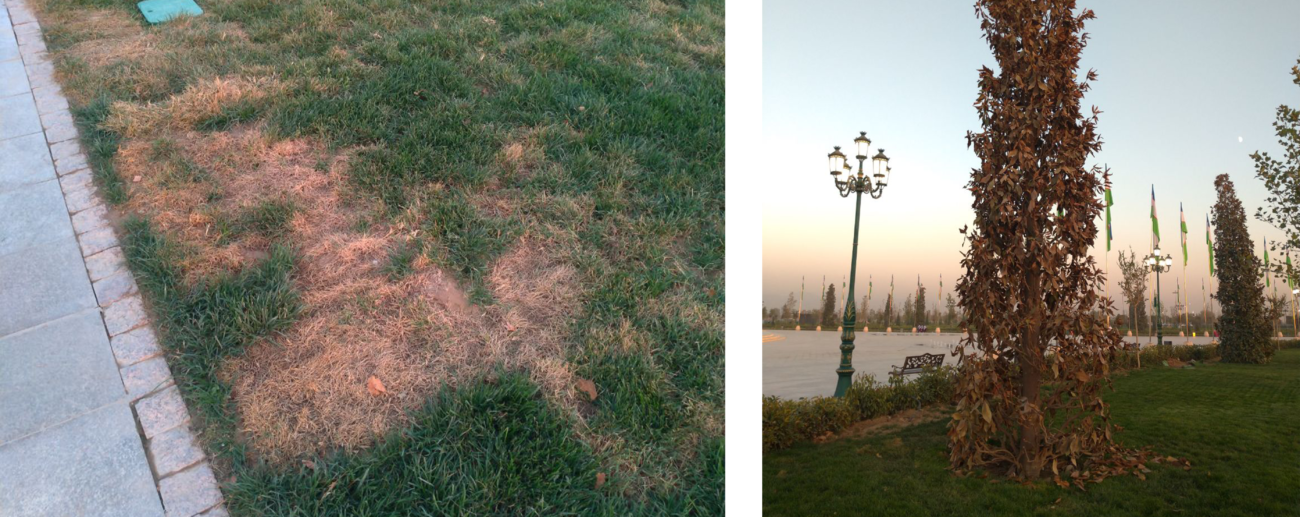
The structure of the soil, how much water it retains or how quickly it drains away, how far the roots are able to spread… all of these directly affect how the plant will appear above ground. That is why sometimes, in the same area, one patch of grass can look healthy while another beside it dries out. Or a newly planted tree may look fine at first but gradually weaken over time.
What Could Be the Possible Causes?
• Drainage problem: Water accumulating in some areas while remaining insufficient in others negatively affects root development. Patchy drying patterns like the ones seen in the photograph are usually signs of non-uniform drainage.
• Soil compaction: Especially in areas with heavy pedestrian traffic, the soil becomes compacted over time. This prevents the roots from receiving air and makes it harder for water to infiltrate the soil.
• Irregular irrigation system performance: Due to sprinkler placement or pressure differences, some areas may not receive enough water while others may receive too much.
• Sub-layer problems: An inadequate or poorly designed base layer prevents water from being distributed properly. This then appears on the surface as irregular drying or weak growth.
The same situation can also be observed in trees. The general drying seen in the tree in the photograph is usually caused not by a single factor, but by a combination of planting errors, root zone problems, and deficiencies in water management.
• Insufficient root zone volume or compacted soil: If roots cannot find enough space to develop, the tree quickly enters stress.
• Lack of drainage or water accumulation: If tree roots remain constantly in water, they become deprived of oxygen and begin to rot.
• Wrong species selection or adaptation problem: If the plant is not suitable for the climate and soil in which it is placed, its development is directly affected.
• Irrigation errors: Insufficient or irregular irrigation is a critical problem, especially for newly planted trees.
In many cases, this situation originates not from the plant itself, but from the system constructed beneath it.
That is why reading landscape only as the visible green surface or the hard ground is an incomplete approach. Beneath every step lies engineering, beneath every surface lies a system, and behind every plant lies an ecological balance.
The ground you step on is actually the result of a design you hardly notice.
So do not dismiss the places you step on as simply “landscape.” Because if there is a properly designed infrastructure beneath that surface, then the quality you see above is not a coincidence.


