
Hızlı Git
Best Hedge Plants for Gardens: Practical Choices and Key Tips
Today, many people try to create a small “natural boundary” wherever they can, just to step away from all that concrete. At this point, hedge plants are not only something that encloses the garden; they work like a living design tool that increases privacy, breaks the wind, tidies up the view, and gives the space a structural backbone. So, when choosing hedge plants, it is not only about evergreen foliage and being easy to prune; climate adaptation, maintenance rhythm, and the future form of the plant are equally decisive. In this article, I updated the best hedge plants for gardens by removing unnecessary details and focusing on a more practical framework.
Best Hedge Plants for Gardens
Thuja occidentalis ‘Smaragd’ (Emerald arborvitae)
- Its narrow, upright form creates a “clean boundary” effect even in small gardens.
- It generally stays green year-round and keeps its shape with regular pruning.
- It grows in sun and partial shade, but can become sparse in deep shade.
- If the soil stays too dry, tip dieback may appear; watering routine matters in the first years.
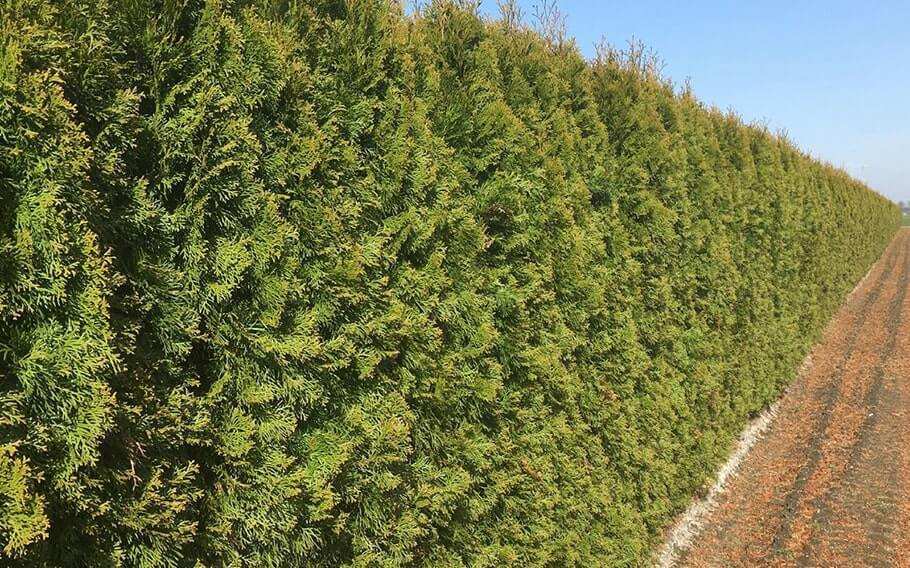
x Cupressocyparis leylandii (Leyland cypress)
- Because it grows fast, it can create a tall privacy screen in a short time.
- It is often preferred in large gardens for privacy and windbreak purposes.
- The critical issue is pruning; if pruning is delayed, control becomes difficult and the hedge can turn into a rough mass.
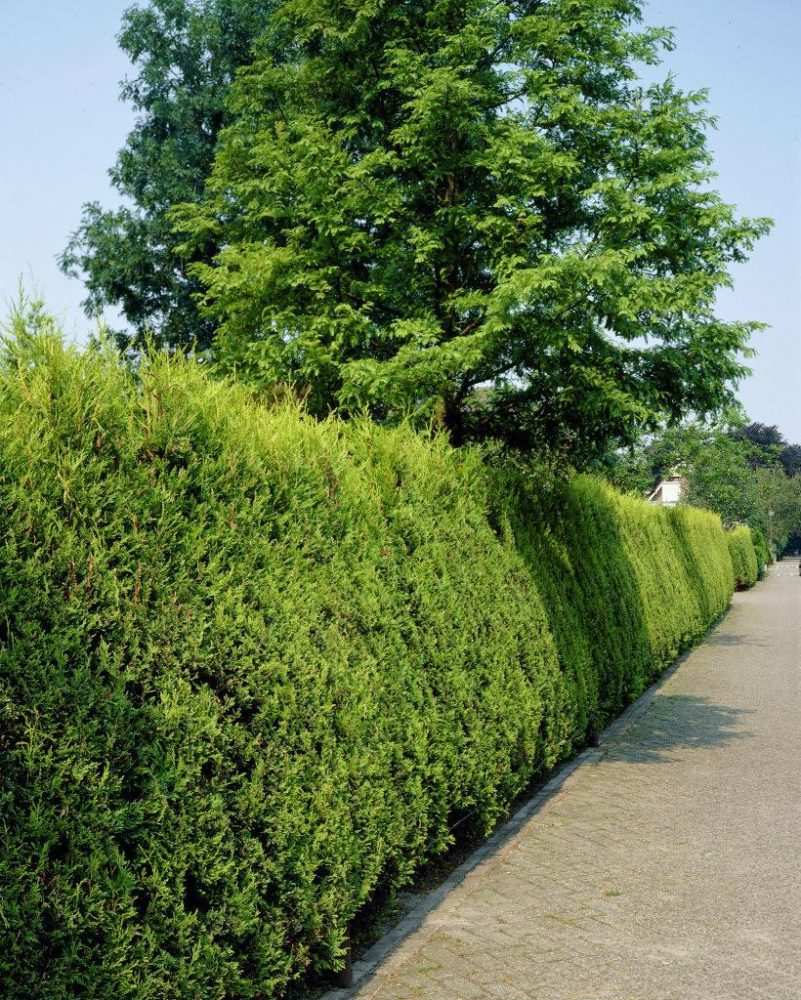
Cupressus arizonica (Arizona cypress)
- It responds well to shaping and is a solid candidate if you want a clean-lined hedge.
- It can grow in sun and partial shade.
- It is often described as more drought-tolerant, but still needs regular watering in the first years.
- It may struggle in very heavy, water-holding soils; drainage is the key factor here.
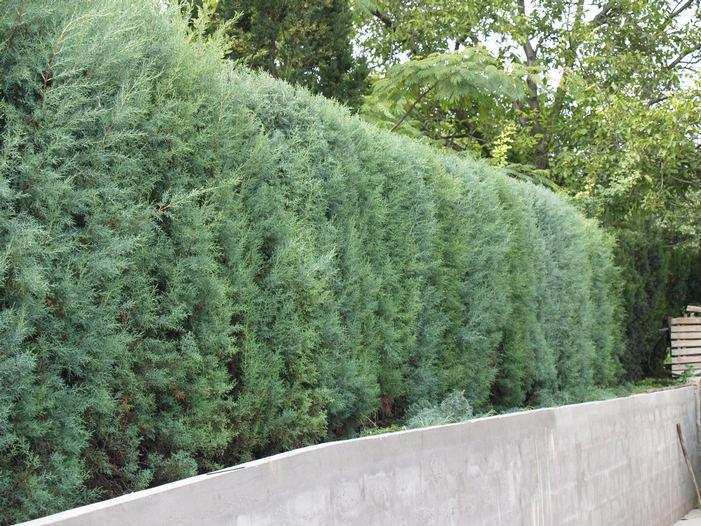
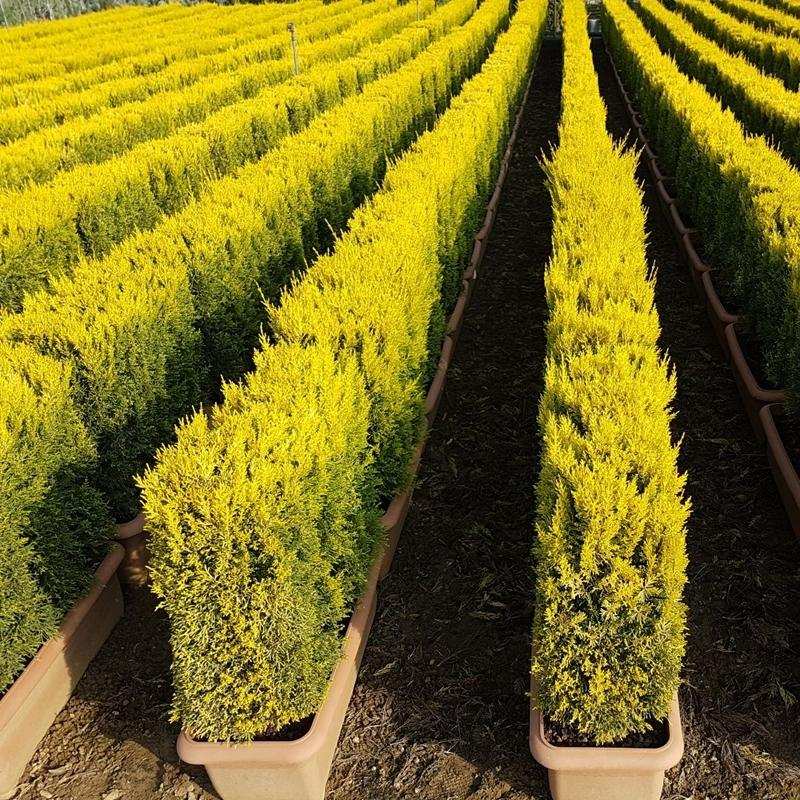
Cupressus macrocarpa ‘Goldcrest’ (Monterey cypress ‘Goldcrest’)
With its bright yellow-green tone, it is often used on entrance lines and in short-to-medium hedges where a clear “color effect” is desired.
- It grows in sun and partial shade, but the color can dull in shade.
- It does not like excessive water; root problems may occur in waterlogged soil.
- In regions with harsh winters, choosing a sheltered micro-location is usually healthier.
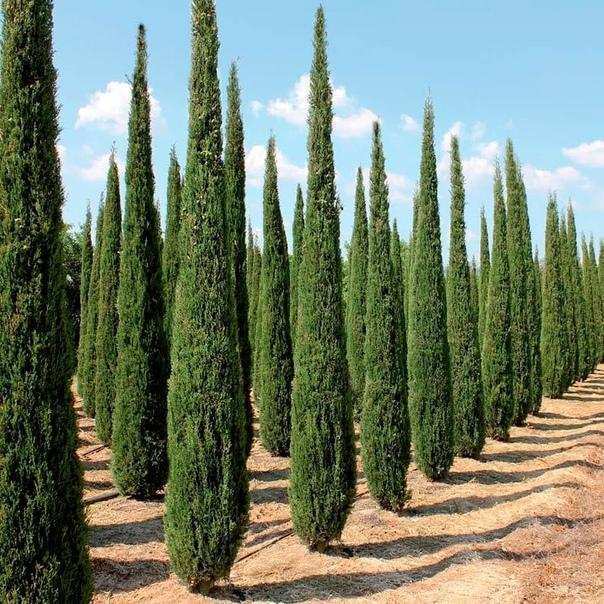
Cupressus sempervirens (Italian cypress)
- Its vertical form emphasizes axes and can be used as a wind screen.
- It can adapt to many soil types, but may struggle in constantly wet ground.
- In areas with strong cold winds, it may be damaged; micro-location matters.
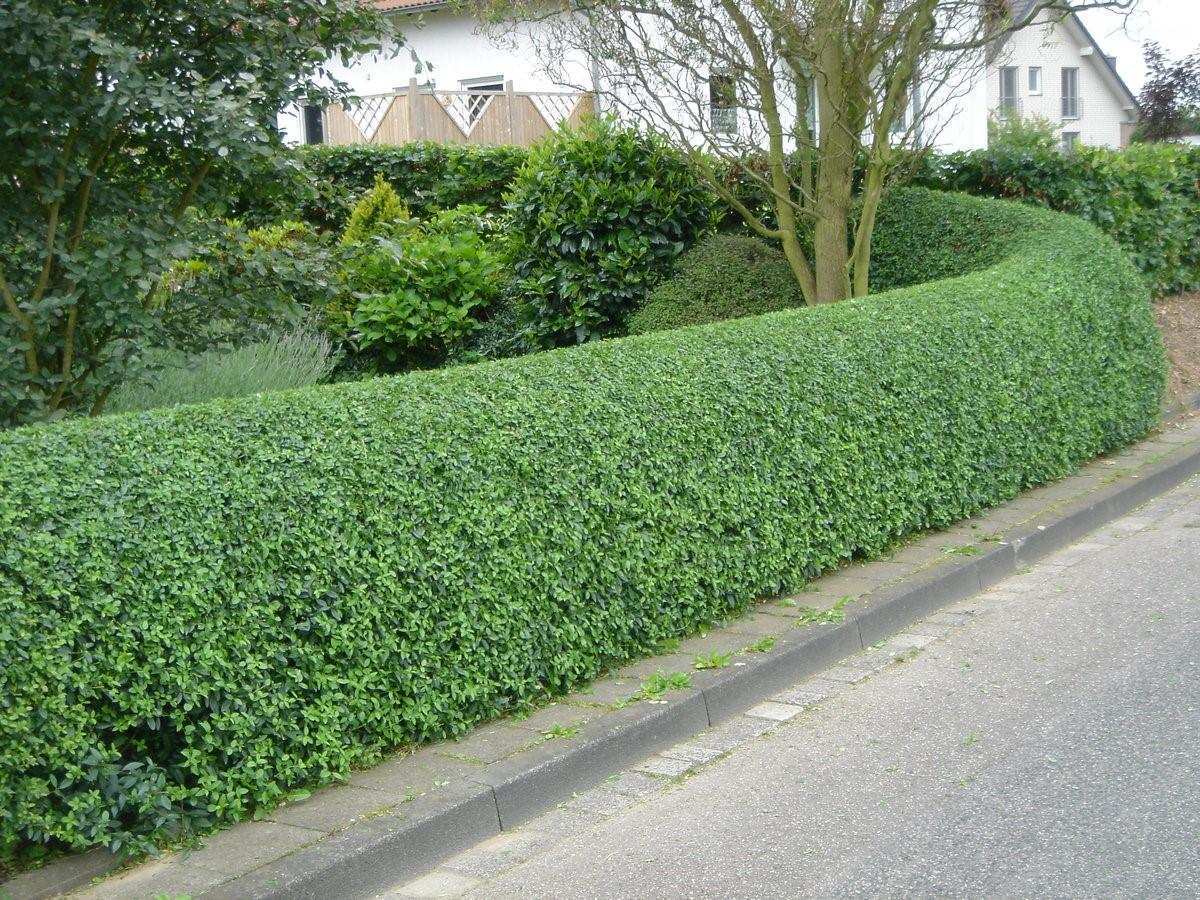
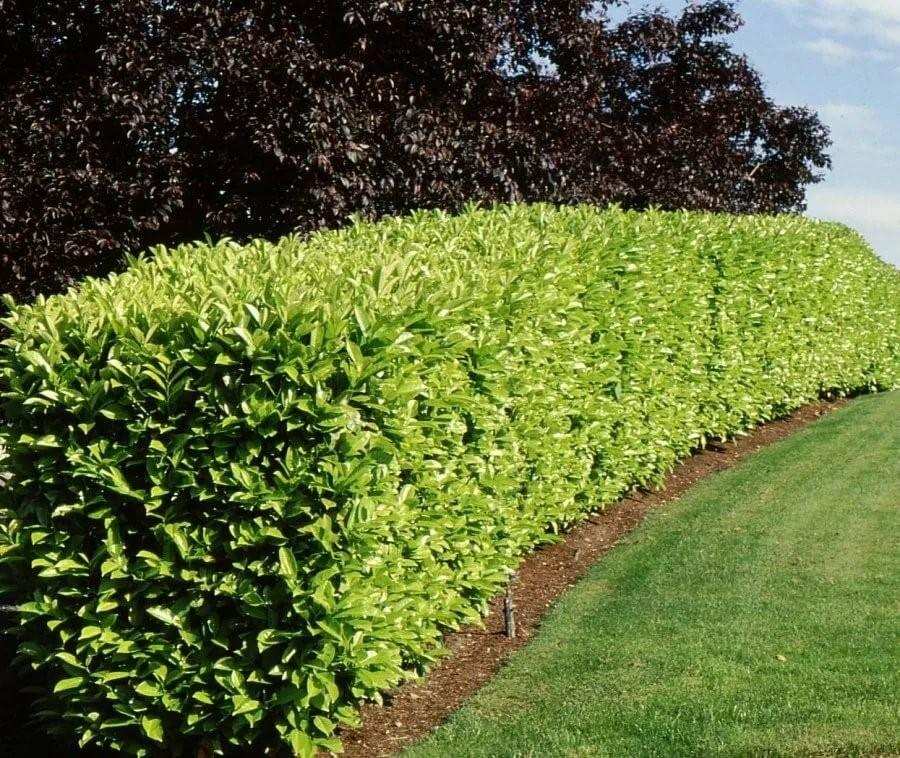
Ligustrum vulgare (Common privet)
- Very suitable for pruning, so it creates a dense and clean hedge surface.
- It grows in sun and partial shade.
- It is relatively low-demand in soil, which makes it a “lower-risk” choice.
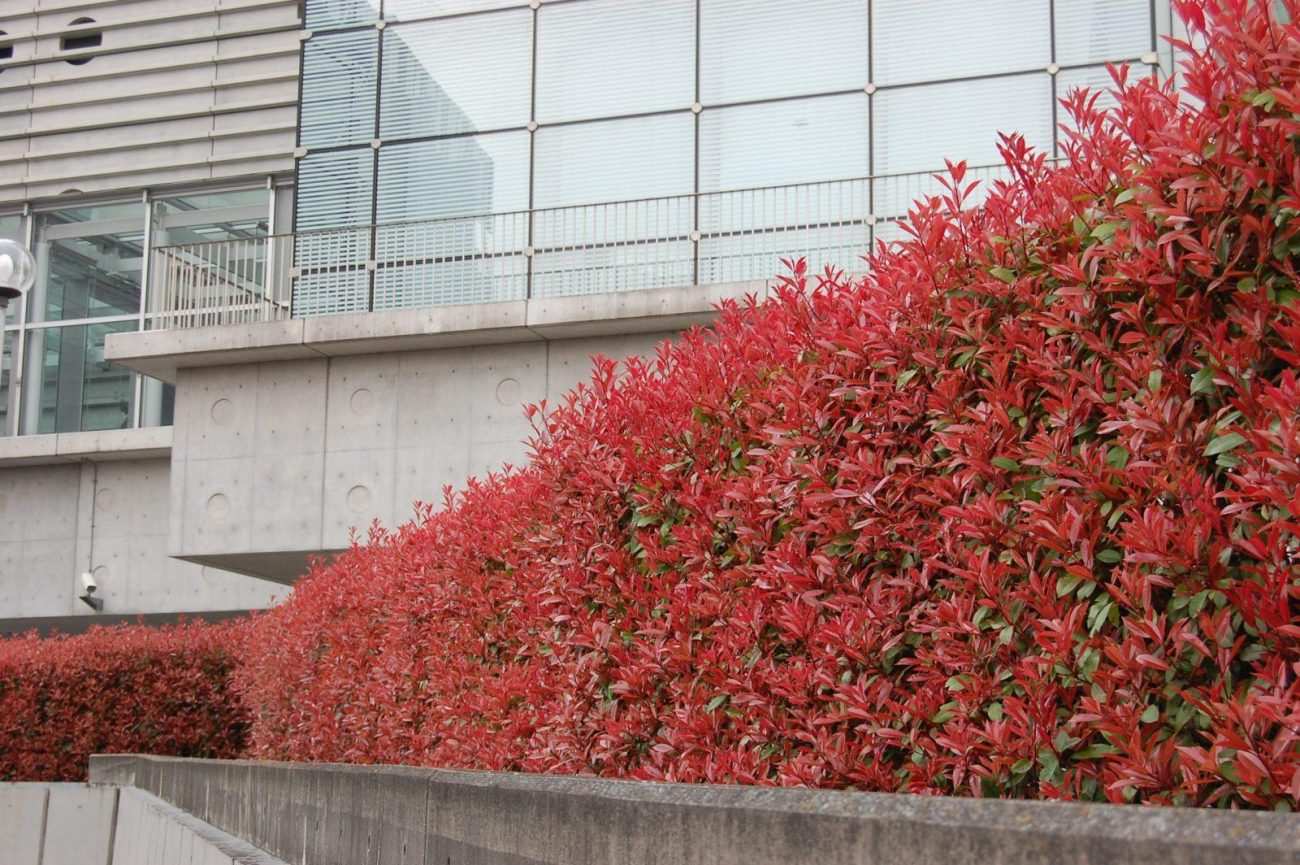
Photinia fraseri ‘Red Robin’ (Red tip photinia)
- The bright red new growth after pruning makes it very strong for decorative hedges.
- Color impact increases in sun, but it can also live in partial shade.
- Because it may be damaged in cold windy spots, sheltered placement usually performs better.
- Soil drainage should be good; performance may drop in overly wet ground.
Viburnum tinus (Laurustinus)
- It can form a dense, textured hedge.
- It likes partial shade and shade, but can also live in sun.
- With correct pruning, it can keep its form for a long time.
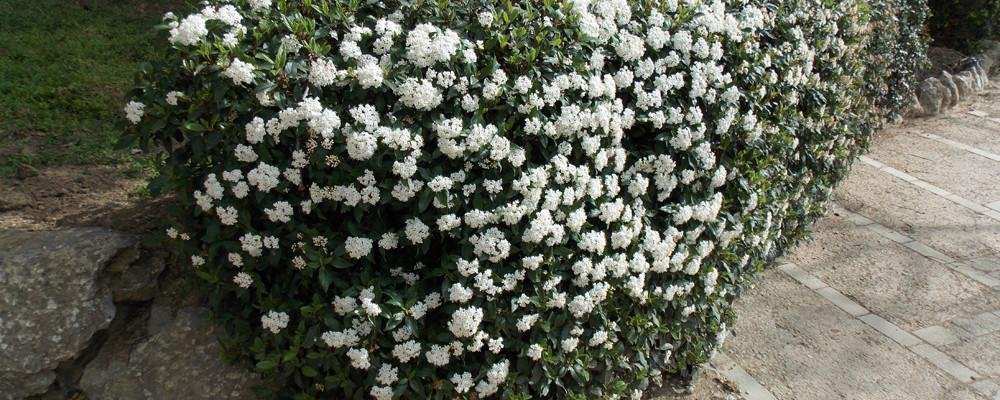
Viburnum lucidum (Glossy viburnum)
It forms hedges similarly to Viburnum tinus, but the leaf texture and glossy effect can be more pronounced. It performs well in shade and partial shade.
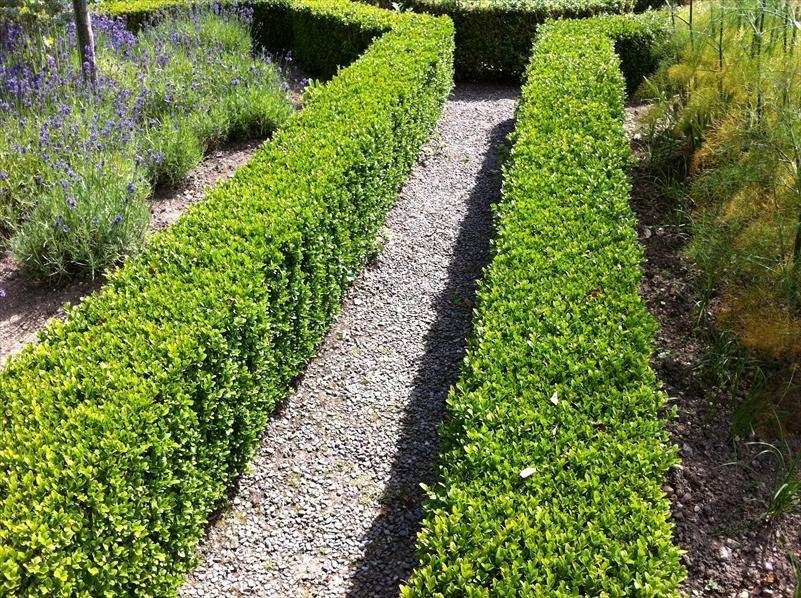
Buxus sempervirens (Common boxwood)
- A classic choice for low hedges, borders, and topiary where a very clean form is desired.
- It grows slowly, so form control is easier, but it requires patience.
- It likes partial shade and can also grow in sun; regular watering checks matter during summer.
What Are Hedge Plants Used For?
Hedge plants are preferred for setting boundaries, building spatial structure, screening unpleasant views, increasing privacy, strengthening a sense of security, creating windbreaks, guiding movement, adding color impact, and filtering dust and noise to a certain extent. Especially in narrow gardens, a well-chosen hedge can make even the overall “plan” of the garden look more organized.
What to Check Before Choosing Hedge Plants
- Space size and target hedge height (low, medium, or tall)
- Winter conditions in your region (frost, wind, dry cold)
- Light conditions (full sun, partial shade, shade)
- Soil structure and drainage (heavy water-holding soil or fast-draining sandy soil)
- Maintenance rhythm (can you prune regularly, do you have a watering routine)
- Hedge function (privacy, windbreak, decorative boundary, security)
If the garden is small, creating a “wall effect” with very large and fast-growing species can sometimes make the space feel tighter than it is. In small areas, finer-textured and more controlled growers usually feel more balanced. In larger gardens, building a stronger screen with more voluminous species is easier.
Short Notes on Planting and Maintenance
Success with hedge plants is determined less by planting itself, and more by how you manage the first two years. In year one, regular establishment watering and controlled moisture in the root zone matter; in year two, timely pruning helps the hedge thicken. The goal in irrigation is not to wet the entire area, but to keep the root zone evenly and consistently moist. If the soil holds water heavily, drainage is usually the most critical factor for a long-lived hedge.
When to Prune Hedge Plants
Giving one pruning calendar can be misleading, because species, climate, and the target hedge form change the outcome. Still, it is easier to think of two pruning types: a shaping prune in late winter or early spring (depending on the region), and then 1–2 light maintenance trims during the growing season (often late spring and late summer). If you do very hard pruning in the active growth period, you may weaken new shoots. That is why “little but regular” pruning usually produces cleaner hedge results.
How to Prune a Hedge
For hedge pruning, you can use pruning shears, hedge trimmers, or powered tools. The basic logic is simple: do not leave the top too wide, and keep the bottom slightly fuller (a mild cone shape) to reduce thinning at the base. Also, instead of cutting like a hard line, trimming as if you are “combing” the surface can create a more natural and fuller look. For tool selection, you can also check this guide: Pruning Shears Selection Guide.
Frequently Asked Questions
Quick Summary
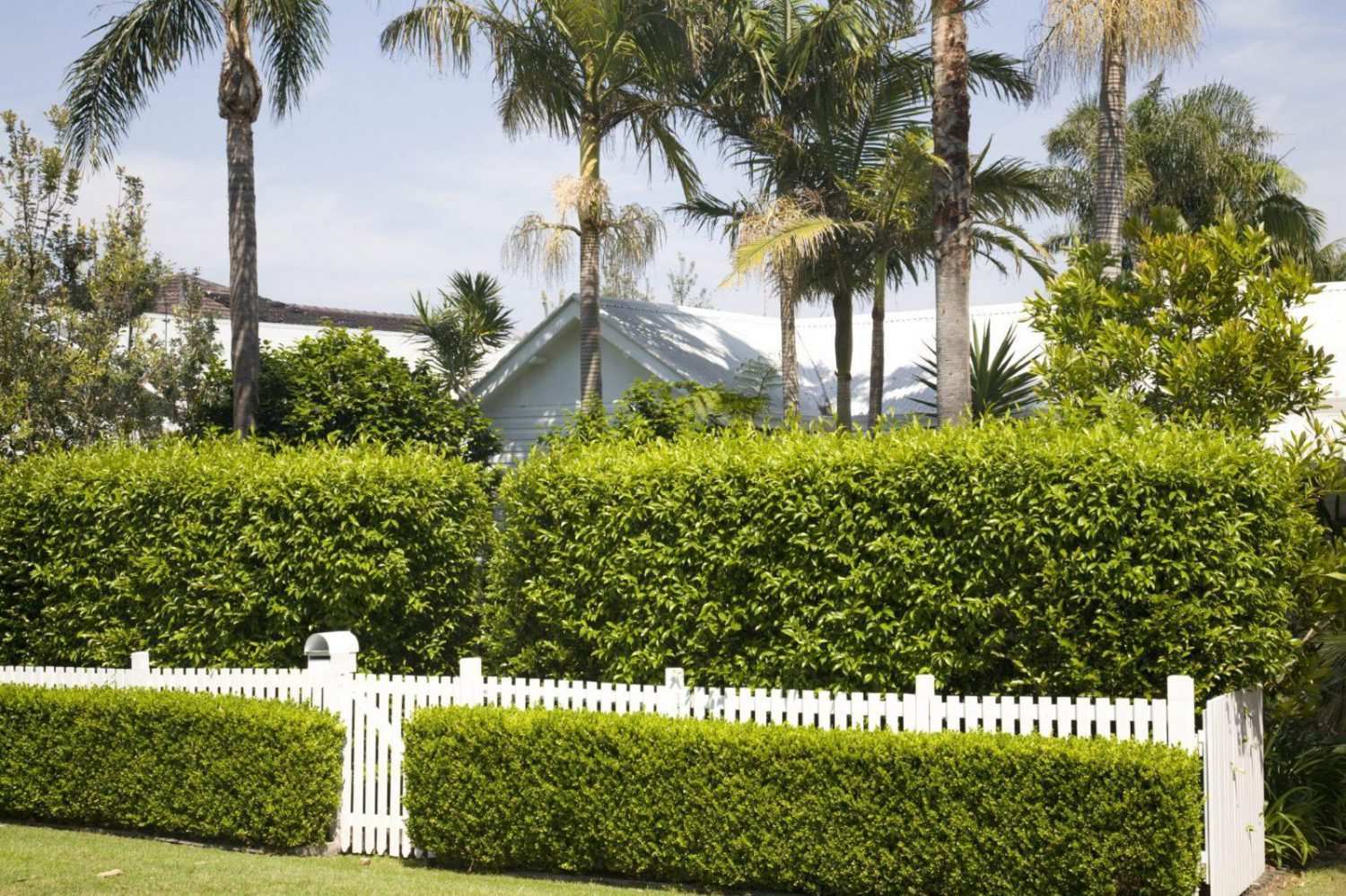
Below, you can find photos of hedge plants. The table is prepared to compare the most preferred species at a glance. I go into details one by one after the table.
| Plant | Use type | Light | Water need | General cold tolerance | Approx. spacing |
|---|---|---|---|---|---|
| Thuja occidentalis ‘Smaragd’ (Emerald arborvitae) | Narrow, upright form; medium and tall hedge | Sun, partial shade | Medium | Generally good; may need shelter in strong wind and dry cold | 60–80 cm |
| x Cupressocyparis leylandii (Leyland cypress) | Fast-growing tall hedge, screen effect | Sun, partial shade | Medium | Generally good; regular pruning is essential | 80–120 cm |
| Cupressus arizonica (Arizona cypress) | Shapeable; medium and tall hedge | Sun, partial shade | Low to medium | Good; may be more drought-tolerant | 80–120 cm |
| Cupressus macrocarpa ‘Goldcrest’ (Goldcrest) | Accent hedge, low to medium hedge, color effect | Sun, partial shade | Medium | Moderate; can be damaged in hard frosts | 60–80 cm |
| Ligustrum vulgare (Common privet) | Dense, durable hedge; medium hedge | Sun, partial shade | Medium | Generally good; very pruning-friendly | 40–60 cm |
| Photinia fraseri ‘Red Robin’ (Red tip photinia) | Colorful new growth; medium hedge | Sun, partial shade | Medium | Moderate; prefers sheltered spots in cold and wind | 60–90 cm |
| Viburnum tinus (Laurustinus) | Dense texture; medium hedge | Partial shade, shade; also works in sun | Medium | Moderate; leaf scorch may occur in hard frosts | 60–90 cm |
| Buxus sempervirens (Common boxwood) | Low, very clean form; border and low hedge | Partial shade, sun | Medium | Generally good; needs regular watering checks in summer heat | 25–40 cm |
Which Hedge Plant Grows Fastest?
If speed is your priority, Leyland cypress often delivers quick results. But fast growth also means regular pruning and space management. When you buy “a fast hedge,” you also buy the maintenance load—this part should not be ignored.
Which Hedge Plants Work Better in Shaded Areas?
In partial shade and shade, Viburnum species usually feel more comfortable. Boxwood can also keep a clean form in partial shade. In deep shade, you may need to plant a bit more densely to prevent the hedge from becoming sparse.
What Is the Most Critical Mistake When Building a Hedge in Cold Climates?
The most critical mistake is planting sensitive species in an exposed line without considering wind and drying cold. In cold climates, micro-location matters as much as species selection. Lines close to a building and more sheltered placements typically create fewer problems.
How Do You Make Hedge Plants Thicken?
Thickening starts with light pruning early on. Instead of letting it stretch too much and then cutting hard, small regular trims that encourage branching often work better. Also, balanced watering and consistent root-zone moisture in the first two years make a real difference for dense structure.
What Is the Most Practical Rule in Hedge Pruning?
Do not keep the top too wide, and let the bottom receive light. A mild cone shape reduces bare lower sections. This small detail is one of the factors that shapes the hedge look over the years.


