

In Ancient Greek, the term “mythology,” with a meaning close to “the repetition of what was said before,” is used to describe the full body of legends that aim to explain, within a certain religion, belief system, or culture, the creation and nature of humanity and the universe, as well as the reasons behind tradition-specific beliefs and practices (Çayır 2020). In the dictionary of the Turkish Language Association, mythology is defined as “the discipline that interprets and examines myths, their origins, and meanings; and the whole of myths and legends belonging to a nation or a religion, especially those of Greek and Latin civilization” (Anonymous 2020a).
In many mythological stories transmitted from prehistory to the present, plants appear very frequently. Plants, treated as the most valuable gifts that gods offer to people, have been associated with ongoing events, and different stories and meanings have been attached to them. Mythological narratives therefore have an important place in researching and interpreting such events.
In the first of this series, we examined the mythological story of the olive tree, which appears at times as the championship crown of a successful athlete, at times as a symbol of peace between two countries, at times as a means for illuminating temples, and at times as an elixir that Aphrodite applies to her face to become more beautiful. Enjoy your reading.
Let the olive tree whisper in your ear…
You will take living so seriously that even at seventy, for example, you will plant an olive tree, not because it will be left to the children or anything, but because although you fear death, you do not believe in it, because the weight of living outweighs everything.
Nazım Hikmet Ran
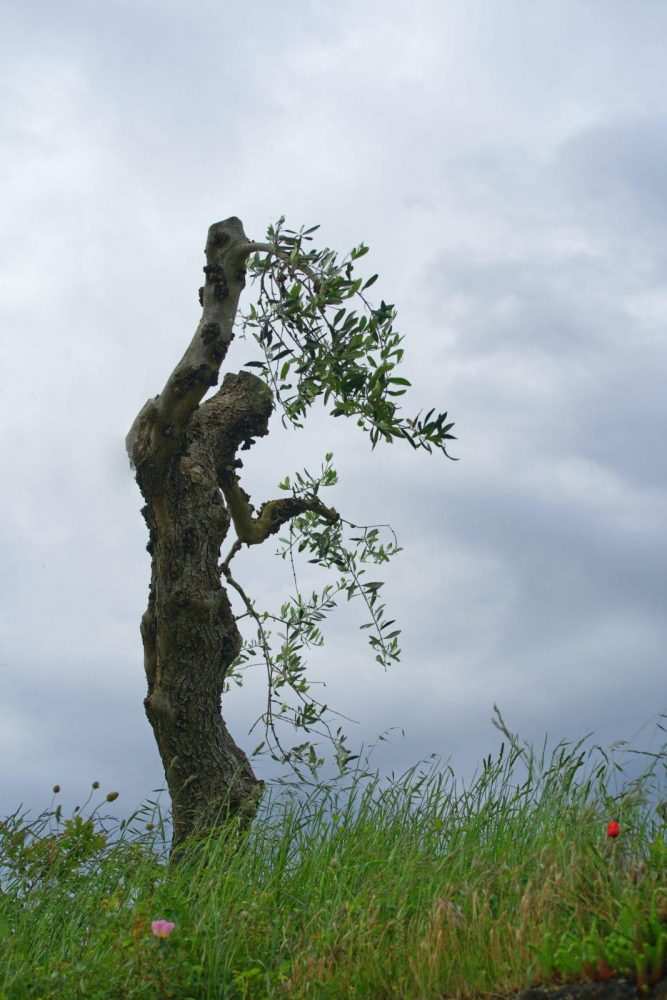
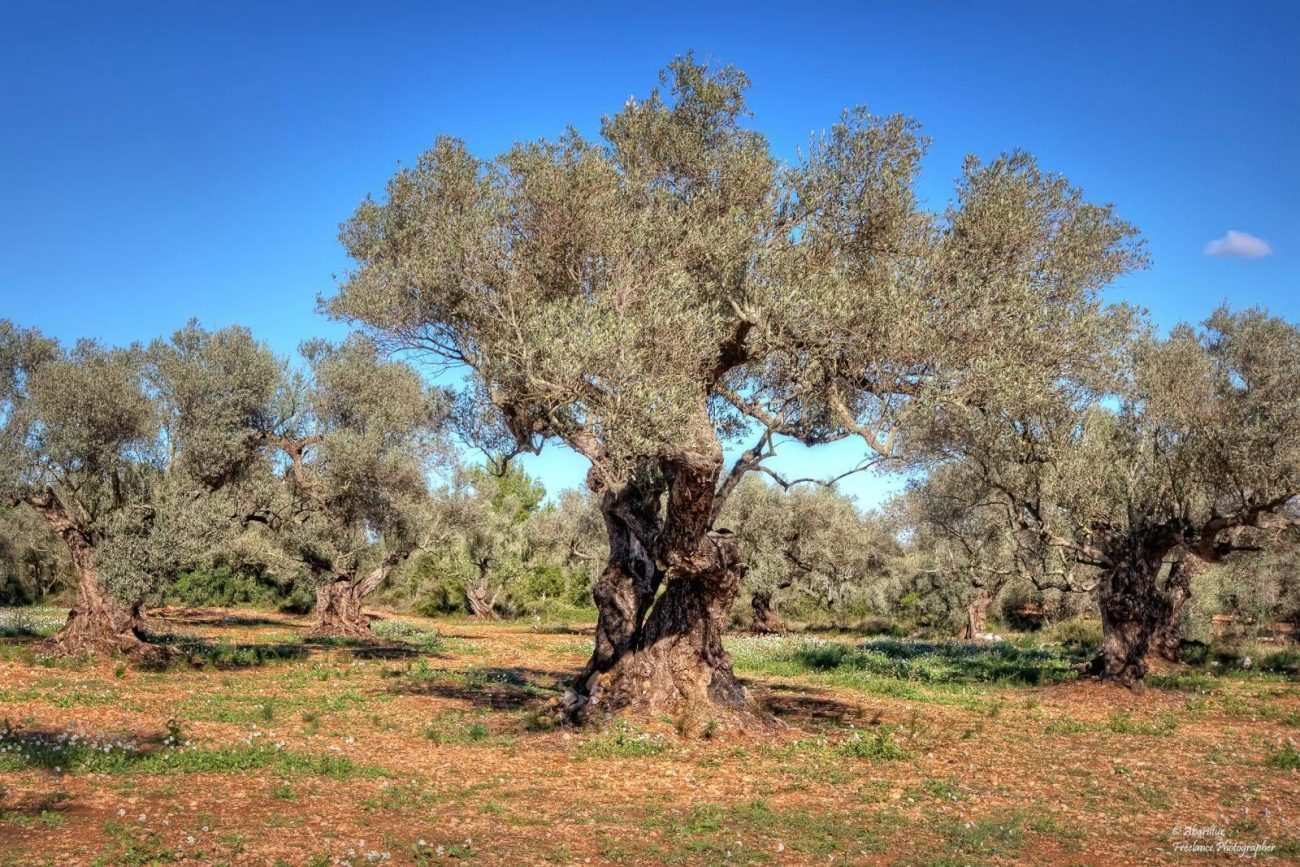
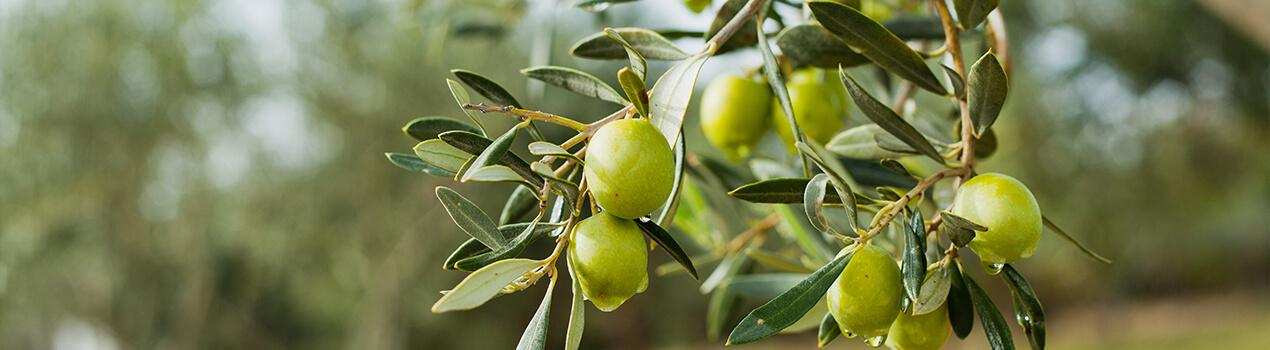
Olive (Olea europaea) is a tall shrub or a tree up to 10 meters, from the olive family (Oleaceae), native to the Mediterranean climate; it is densely branched, has a broad crown, evergreen leaves, and an edible fruit (Anonymous 2020b) (Figure 1).
The olive tree (Olea europaea) is long-lived and resilient despite its heavy and demanding growth. For this reason, the ancient Romans called the olive tree “vivax oliva,” meaning “seven-lived.”
Olive Tree Mythology
In mythology and botany, it is known as the “Immortal Tree.” In the Iliad, the poet Homer describes the immortality of the olive as follows: “I belong to everyone and to no one; I was here before you arrived, and I will be here after you are gone” (Anonymous 2020c).

Meaning of the Olive Tree
As a symbol of sacredness, abundance, fertility, justice, health, peace, purification, and rebirth, in short, of virtues and values that matter for humanity, the olive tree is described as a sacred tree in the three holy books of the Abrahamic religions: the Qur’an, the Bible, and the Torah. In the Qur’an, there are verses that praise the olive tree, its fruit, and olive oil and accept its sacredness (verses praising the olive). According to the Bible, it is believed that the olive trees in the garden on the Mount of Olives, where Jesus’ ascension took place, are trees from that time, and that eight olive trees still standing today witnessed the crucifixion. In the Torah, when “fairness and righteousness” are explained to people, the olive tree is pointed to, and attention is drawn to the virtue of this sacred tree (Efe et al. 2013).
Because the olive has a wide range of uses, many stories involving olives are told, from prophets to kings, from Greek gods to pharaohs.
“Olea prima omnium arborum est.”
“The olive is the first of all trees.”
When Adam grows old and feels that he will die, he decides to ask God to forgive him and all humanity. For this purpose, he sends his son Seth to the gardens of paradise. The angel guarding the garden gives Seth three seeds taken from the Tree of Knowledge of Good and Evil and tells him that when Adam dies, he should place these three seeds in his father’s mouth and bury him that way. When Adam dies and is buried on Mount Tabor, three trees sprout from the soil: olive, cedar, and cypress. Among these three trees, which are symbols of the Mediterranean climate, the first to sprout is the olive tree (Efe et al. 2013).
…and humanity is reborn with the olive.
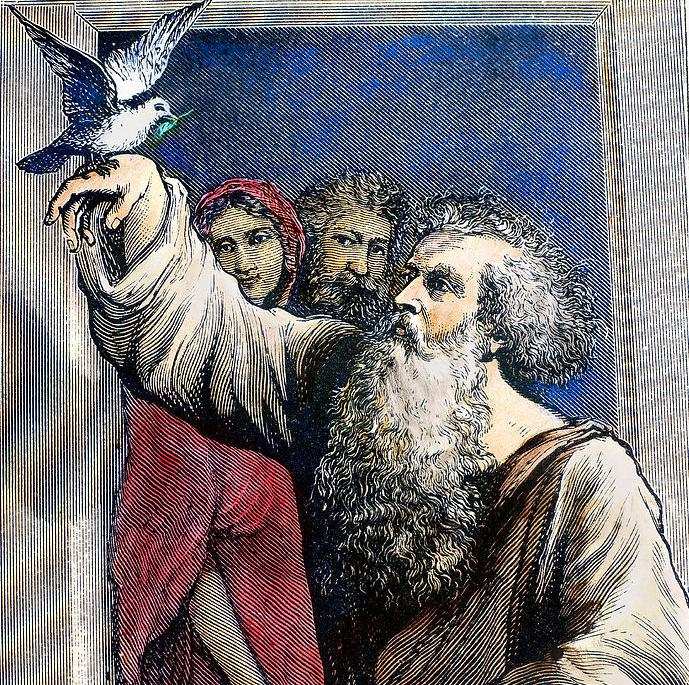
According to the story in Genesis chapter 6, because people’s wrongdoing and cruelty increased day by day, God decides to destroy the earth together with the humans and animals He created. He tells Noah to build an ark and to take into it seven pairs of male and female animals considered clean, one pair of animals considered unclean, and seven pairs of birds, so their line will not vanish from the earth (Genesis 7:2–3, 23). Then the great flood begins, and everything living on earth is destroyed except Noah and the living beings in the ark. To find out whether the waters have receded, Noah sends out a dove. The dove returns with an olive branch in its beak; because this is seen as the good news of peace restored between God and humankind, throughout history the olive branch and the dove have been accepted as “symbols of peace” (Dursun and Tuna Oran 2015) (Figure 2 and Figure 3).

The “king of trees”
According to the story in the Book of Judges: “One day the trees wanted to anoint a king over themselves; they went to the olive tree and said, ‘Come, reign over us.’ But the olive tree said to them, ‘Should I leave my oil, with which gods and mortals are honored, and go to sway over the trees?’” (Judges 9:8–14).
The fruit of the goddess Isis.
The symbol of enlightenment for the god Ra.
In ancient Egyptian civilization, it is claimed that the olive tree began to be planted in the Nile Delta around 1600 BCE (Kaplan and Karaöz Arıhan 2011). Egyptian beliefs suggest that Egyptians knew how to produce olive oil much earlier than Greeks and Palestinians. According to the story, 6,000 years ago the goddess Isis taught Egyptians how to grow olive trees and benefit from their products (Sarı 2016) (Figure 4). The presence of figures depicting olive pressing on the walls of the Saqqara Pyramid built around 2500 BCE (Kaplan and Karaöz Arıhan 2011), and the discovery of an olive mill in excavations in Haifa, are seen as supporting these beliefs (Sarı 2016) (Figure 5 and Figure 6).


(Anonymous 2020g).

The wreath of olive branches belonging to the Egyptian pharaoh Tutankhamun (1333–1323 BCE) is accepted as a symbol of justice. It is known that Egyptians used the precious oil obtained by crushing olive leaves in the mummification of pharaohs.
It is said that Pharaoh Ramesses III (1186–1156 BCE) established special olive groves to provide the olive oil that would be used as a light source in the temple he built for the sun god Ra (Ünsal 2011). Presenting olive branches, the symbol of enlightenment, to the sun god Ra, Ramesses III expresses his pride as follows: “I adorned your city Heliopolis with olive trees. From their fruits pure olive oil is obtained. This is the oil that feeds the lamps illuminating your temple” (Sarı 2016).
It is the gift of the goddess Athena, who represents abundance and peace.
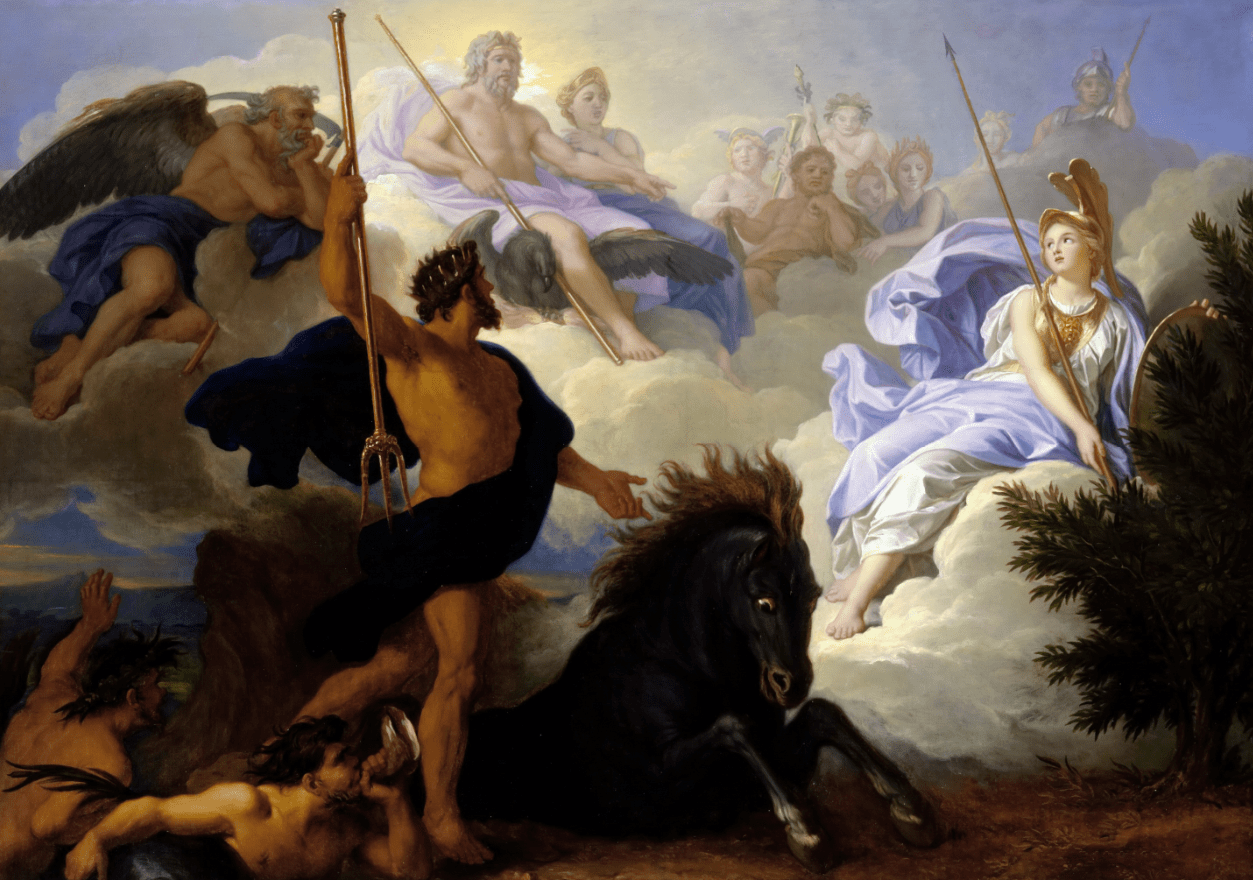
According to Greek mythology, the olive tree emerges as a result of a contest between the goddess of wisdom Athena and the sea god Poseidon. In the story, Poseidon and Athena want the city founded by Cecrops to be named after them. Zeus says that whichever god or goddess does a more suitable and beneficial deed for humanity will give their name to the city. As soon as Poseidon strikes a rock with his trident, water gushes forth and a fierce horse appears (Figure 7). Athena, however, strikes the rock with her spear and an olive tree appears, its branches full of fruit (Figure 8).
According to Kaplan and Karaöz Arıhan, the symbolism here has two meanings: first, the horse that would pull war chariots could never be as beneficial as the olive tree; and second, the olive as a symbol of peace prevails over the horse as a symbol of war. Because people see peace as more auspicious than war, Athena wins the contest, and the city is named after her: Athens, today the capital of Greece. In mythology, Athena gifts the olive tree to people because it symbolizes peace and civilization. In Ancient Greece, Athena is also considered the protective goddess of the olive tree.

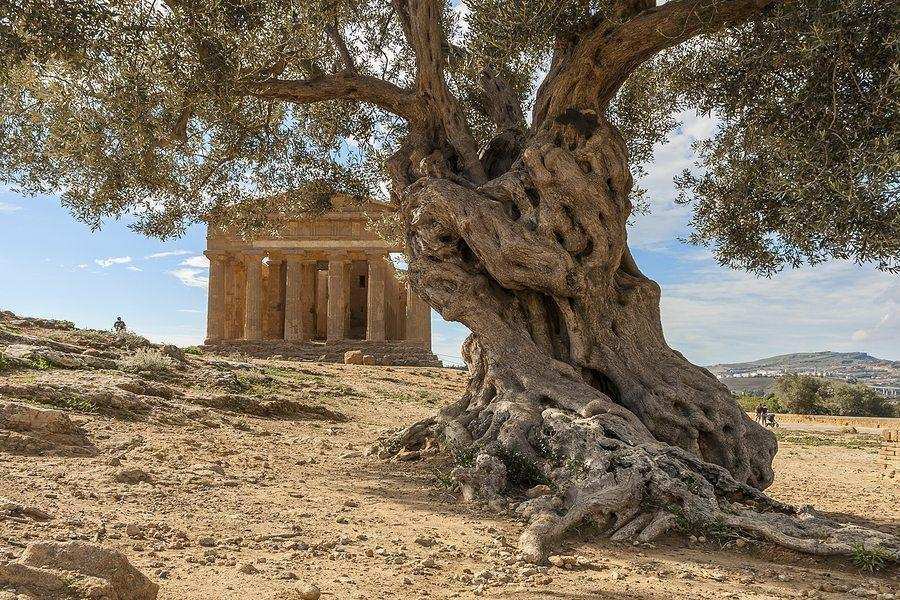
It is said that the ancient Greeks and Romans cultivated olive trees in memory of their dead. In Roman practice, olive oil is used in funerary and religious ceremonies, and the face of the deceased is anointed with olive oil as a form of blessing. Olive trees are planted in temple gardens, and these gardens are considered sacred (Figure 9 and Figure 10).
Among the laws established by Solon, one of the seven sages of Ancient Greece, heavy penalties for cutting olive trees are included. “Regardless of whether it is state property or private property, anyone who cuts down or fells an olive tree will be tried in court. If found guilty, they will be punished by execution” (Aristotle, Constitution of the Athenians). This is described as the first olive tree protection law in the world (Kaplan and Karaöz Arıhan 2011).

(Anonymous 2020h).
According to Greek and Roman mythology, gods and demigods are born under the branches of the olive tree. It is said that Zeus’ twin children, Apollo and Artemis, were born in an olive grove (Efe et al. 2013). In the Olympic Games of antiquity, athletes who achieved success were reportedly rewarded with crowns made from olive branches and with amphorae containing oils pressed from olives.
It is also noteworthy that in Greek, the last letter of the alphabet, Z (zeta), is said to symbolize immortality and to relate to olive (Kalkan and Çuha 2017).
For now, this is where we pause with the stories about the olive tree shared in this article, both from ancient times in Greece and from the holy books. If there are other olive-tree myths you know that we may not know or may have forgotten, please write them in the comments section below. See you in another article.
References
- Anonymous. 2020a. Website: https://sozluk.gov.tr/ Access date: 09.06.2020.
- Anonymous. 2020b. Website: http://tr.wikipedia.org/wiki/Zeytin Access date: 11.06.2020.
- Anonymous. 2020c. Website: http://www.forazeytin.com.tr/blog/zeytin-agaci-ile-ilgili-7-gercek/ Access date: 11.06.2020.
- Anonymous. 2020d. Website: https://www.flickr.com/search/?text=olive%20tree Access date: 11.06.2020.
- Anonymous. 2020e. Website: http://celinesymbiosis.blogspot.com/2015/10/brak-zeytin-agac-kulagna-fsldasn.html Access date: 12.06.2020.
- Anonymous. 2020f. Website: https://kayasedatt.blogspot.com/2019/11/zeytin-agaci-ile-karacalinin-hikayesi.html Access date: 12.06.2020.
- Anonymous. 2020g. Website: http://fidaninbahcesi.com/zeytin/zeytin-agaci/) Access date: 12.06.2020.
- Anonymous. 2020h. Website: https://zeytinfuari.com/zeytinagaci-insanligin-39-000-yillik-dostu/ Access date: 11.06.2020.
- Çayır, M. 2020. The Creation of Humankind in Ancient Mesopotamian Mythology. Antropoloji, 39, online first. DOI: 10.33613/antropolojidergisi.684530.
- Dursun, Ö. and Tuna Oran, N. 2015. Olive Oil and Health. Sidas Publishing. İzmir, Turkey.
- Efe, R., Soykan, A., Cürebal, İ. and Sönmez, S. 2013. Olive and Olive Oil in the World, in Turkey, and Around the Edremit Gulf. Edremit Municipality Cultural Publications No: 7. 978-605-62253-0-7. Balıkesir.
- Kalkan, A. and Çuha, O. 2017. Immortal Flavors of the “Immortal Tree”: Local Foods Prepared from Olives and Olive Oil in Didim. Akademik Sosyal Araştırmalar Dergisi, Year: 5, Issue: 52, September 2017, pp. 252-286.
- Kaplan, M. and Karaöz Arıhan, S. 2011. A Healing Source from Antiquity to Today: The Medical Use of Olive and Olive Oil. VIII International Turkish Folk Culture Congress. 21-24 November 2011. İzmir, Ödemiş.
- Sarı, İ. 2016. The Sacred Food: Olive. Net Medya Publishing. Antalya, Turkey.
- Tarhan, N., Arslan, M. and Şar, S. 2016. Some Medicinal Plants and Their Myths. Lokman Hekim Journal. 6(1):1-9.
- Ünsal, A. 2011. In Search of the Immortal Tree: Olives and Olive Oil in Turkey. Yapı Kredi Publications. İstanbul, Turkey.


