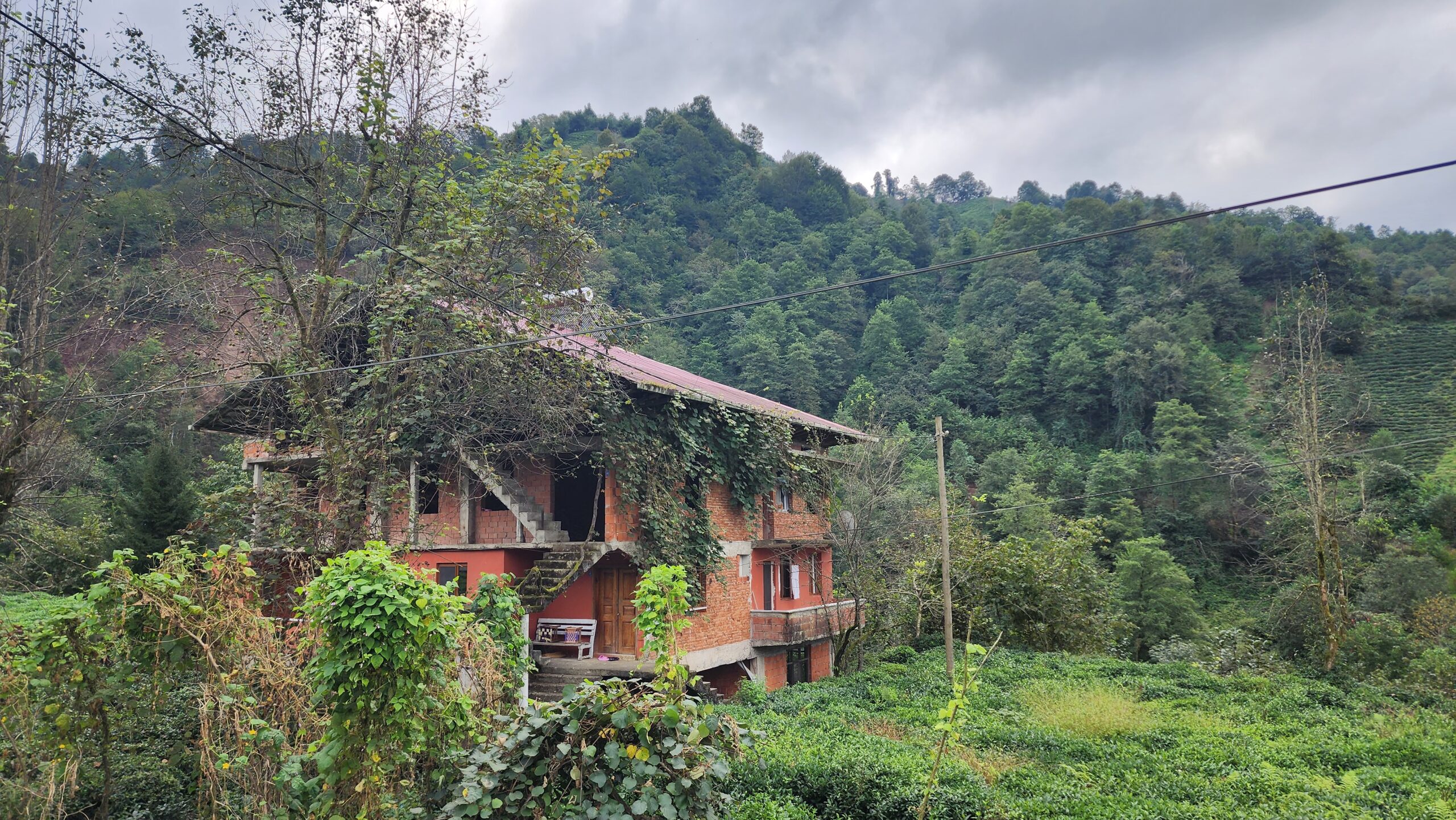

When walking in a forest, the soil beneath our feet looks silent and still at first glance. Yet behind that silence lies a vast communication network, hidden from the human eye[1]. This underground network, where delicate fungal threads (hyphae that form the mycelium) wrap around tree roots, is almost like the soil’s invisible nervous system. Scientists call this underground communication line that connects plants to one another a “mycorrhizal network.” Because fungi and roots build a shared living web, it is also described—by analogy to modern communication technologies—as the “internet of trees” or the “web of forests”[2]. So how does this silent dialogue in the plant world actually work, and what kinds of lessons might it hold for landscape architecture?
A Silent Dialogue Among Plants
It has been discovered that there is a dialogue in the plant kingdom that long went unnoticed. About a quarter of a century ago, ecologist Suzanne Simard at the University of British Columbia showed that trees “signal their needs to one another and share essential nutrients” through fungal networks spread under the soil—in other words, that they can, in a sense, “talk”[4]. This finding reshaped how we see forest ecosystems by revealing that trees, while silent on the surface, are in continuous interaction through their roots. Truly, there is no tree that stands entirely alone in a forest; each one exchanges chemical signals and nutrients with its neighbors through fungi[2].
One of the most striking aspects of this silent network is that it can function like a system of solidarity and warning. For instance, in a field experiment it was observed that a Douglas fir attacked by insects sent a chemical “warning signal” through the fungal network to a nearby Scots pine (a pine species); the alerted neighbor began producing defense enzymes against insects[5]. Similarly, it has been reported that large, mature “mother trees” transfer carbon and nutrients to young seedlings via fungal networks, almost as if they are feeding them[6]. These findings suggest that trees in a forest practice not only competition but also cooperation, and that they can survive by quietly signaling and supporting one another.
The ecological benefits of this dialogue, mediated by fungi, are also deeply intriguing. Through fungal networks, plants can share not only nutrients but also stress and danger signals[2]. A water-stressed tree may receive water or nutrient support from neighbors; a sick plant can warn others with chemical signals so they can prepare[5][2]. This is like a language of nature—inaudible to human ears, yet critical for the health of the entire forest ecosystem.
How Does the “Internet of Trees” Work?
So how does this mycorrhizal network—the so-called “internet of trees”—actually function? At its core, it is a symbiotic partnership. Specialized fungi in the soil (mycorrhizal fungi) settle on plant roots and form a two-way exchange. The fungal mycelium absorbs water, nitrogen, and phosphorus from soil zones that roots cannot reach—even from relatively distant points—and delivers them to the plant[7]. In return, the plant transfers a substantial share of the carbon-based sugars it produces through photosynthesis (in some studies, up to around 30%) to the fungus[8]. The fungus acts like the tree’s “remote arms” for mining minerals and water; the tree shares the energy it captures, almost like a solar panel system. Both sides benefit: this is a mutualistic partnership.
But the significance of mycorrhizal networks goes beyond an individual tree and fungus. A single fungal species can colonize the roots of multiple trees at once and build a shared network. It has even been found that hundreds of trees (of the same or different species) in a forest can be indirectly connected through these shared fungal webs[9]. For this reason, mycorrhizal networks behave like a hidden communication infrastructure that holds a forest ecosystem together. Scientists have even coined the term “Wood Wide Web,” comparing this widespread web to the human nervous system or the global internet[3]. Indeed, nearly 90% of vascular plant species on Earth develop this kind of mycorrhizal partnership; it is an ancient collaboration that has persisted since life first colonized land (roughly 400 million years ago)[10]. Some sources even suggest that more than half of the total biomass in forest ecosystems (around 60%) may consist of fungi[11]. Through such a widespread and ancient web, every plant in a forest becomes part of a surrounding community.
Communication and exchange through this “web of forests” is a key mechanism that increases ecosystem resilience. Fungal networks enable nutrient and information sharing among trees, allowing the community to resist stress as a whole. For example, when a deep-rooted tree can reach water, it may transfer water and nutrients through the fungal web to nearby shallow-rooted plants. Likewise, under environmental stress such as drought, salinity, or disease, this underground infrastructure can activate and increase plant resilience[12]. Research suggests that forests where different tree species are connected by shared fungal networks can recover more quickly from drought and disease[13]. In a sense, fungal mycelium provides a kind of infrastructure that makes communication and mutual support easier among trees; when this infrastructure is disrupted, forest health can be seriously harmed. Simard has warned that intensive logging and climate-change-driven stress may damage these vital underground networks and weaken forests[14].
The scale of these networks is also hard to grasp. For example, a fungus in the genus Armillaria was found in an Oregon forest (USA) to have formed a massive mycelial network spanning about 965 hectares (roughly 10 km²)[15]. This network—produced by a single fungal organism—covers an area comparable to hundreds of football fields and is considered one of the largest living organisms on Earth. It is a striking example of just how widely fungal networks can extend.
New Horizons in Ecosystem Design
The discovery of this “silent web” beneath the soil has begun to shift not only ecology, but also landscape architecture and ecosystem design. For many years, landscape architects and environmental designers often treated plants as individual elements and considered soil primarily as a support and nutrient medium. Yet newer research suggests that soil is not an inert substrate; rather, it is a zone of intense interaction and cooperation between roots and fungi[16]. This awareness opens the door to approaches that explicitly consider the rhizosphere (the root zone) in the design of natural ecosystems and in the planning of urban green spaces.
We now understand that the success of trees in a forest is strongly tied to the underground network that links them. For this reason, ecosystem design should treat plants not as isolated individuals, but as interconnected communities. Especially in urban tree planting and park design, creating layouts in which trees can share a common soil volume and microbial network may offer major advantages. In this context, the following design principles and suggestions can be noted:
- Enriching the soil microbiome: Rather than using sterile soil in landscape works, incorporating mycorrhizal spores and other beneficial microorganisms—ideally sourced in a locally appropriate manner—into new planting areas can accelerate the formation of a healthy underground network. Studies suggest that suitable mycorrhizal inoculation during planting can improve seedling establishment and growth success[17][18].
- Protecting “mother trees”: In forest rehabilitation or park design, conserving existing large and old trees (trees that can act like hubs in the ecosystem) can be critical for the survival of newly planted young trees. These hub trees, through extensive fungal networks, may support and “guide” seedlings; therefore, in land development projects, care should be taken not to damage these hub trees and their fungal partners[6].
- Plant diversity and modular green spaces: Instead of planting a single tree type, creating plant communities that include different species (especially native ones) and can be connected belowground by fungal networks tends to produce a more resilient ecosystem. Plants associated with different mycorrhizal fungi can form “modular” subnetworks, and this modular structure can help the system continue even if one part is damaged[19]. A campus-scale study emphasized that designing landscape areas in nearby clusters, similar to modularity in fungal networks, can help urban green infrastructure become more resilient to climate change[19][20].
- Continuous soil volumes: A common mistake in urban tree planting is to isolate each tree in a separate pit. Instead, leaving shared and continuous soil volumes in urban planning allows roots and fungal networks to spread more freely. This not only supports water and nutrient sharing among trees, but also improves overall urban forest health. By creating green infrastructure corridors (corridors that link parks, gardens, and wooded areas), a connectedness resembling the “web of forests” can be achieved within cities.
In sum, the silent network fungi build beneath the soil is the hidden backbone of natural ecosystems. Without mycorrhizal networks enabling plant communication, forests might not be as lush and resilient as they are today. This scientific reality also inspires human-centered design and architecture: listening to nature, and integrating this invisible underground dimension into our designs, may help us create landscapes that are more sustainable and more resilient. Understanding fungi’s silent web is one of the keys to designing in cooperation with nature.
Author: Selim YÜCEL


