

Hızlı Git
Why is it important for us to choose lawn-alternative plants in our gardens? As groundcover, we often use turfgrass because it keeps its form underfoot, has a dense texture, and looks visually neat. Yet there are areas we don’t want to use for walking, or we may want a color alternative other than green… Or, since turfgrass often needs frequent irrigation, we might prefer alternative species for water saving and lower maintenance. That’s exactly when lawn-alternative groundcovers come into play.
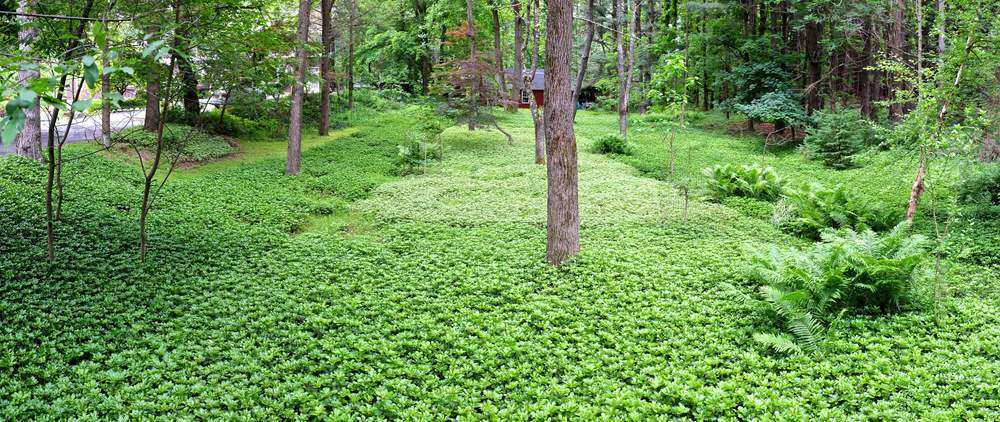
What Are Groundcover Plants?
In general terms, groundcover plants are plant species that stay close to the ground (on average 10–75 cm), develop in a horizontal form, have a dense and intricately branched habit, can adapt to various ecological conditions, and cover the soil surface.
When we think of groundcovers in landscape design, the first plant that comes to mind is turfgrass. Indeed, turfgrass has been appreciated since ancient times for its soothing, pleasant appearance. Beyond its looks, its tolerance to trampling, its ability to create a smooth surface, and its excellent soil-covering capacity have made it a consistently desired plant. Today, turfgrass still holds its place in all types of landscape works—from the smallest home garden to city parks and sports fields.
Groundcovers as Lawn Alternatives
However, we may not always want to use turf areas. So which plants can we use as alternatives to grass?
In this article, we reviewed 9 groundcover plant species that can be used as alternatives to turfgrass.
1. Dichondra repens – Mouse-ear groundcover as a lawn alternative and its features
- A delicate, perennial herbaceous creeping groundcover that can reach an average height of 5 cm; it has heart-shaped leaves and spreads quite quickly via stolons.
- A mild-climate plant; it is not tolerant of cold and frost. It can grow in shaded and partially shaded areas, is undemanding in terms of soil, but has a high water requirement.
- The most important reasons it is used as a lawn alternative are its tolerance of shade and the fact that it does not require frequent mowing; however, it is not very resistant to stepping and trampling. It can be comfortably preferred in parks and gardens in mild regions.


2. Cerastium tomentosum – Snow-in-summer and its features
- A perennial herbaceous plant that can reach 5–10 cm; leaves are gray-silvery, narrow, and elliptic. It blooms with white flowers in May–June.
- It performs well in well-drained soils, is quite tolerant of frost and cold, and can grow in sunny to partially shaded areas. Being undemanding, it can survive even in dry soils.
- It is very suitable for rock gardens, borders, and natural-style gardens. Because it has low water demand and does not require mowing, it is preferred as a cost-effective lawn alternative.


3. Ajuga reptans – Bugleweed and its features
- An evergreen perennial groundcover that reaches about 20 cm. Its blue flowers start in March and line up in a spiral-like arrangement, supported by purplish foliage.
- A mild-climate plant; it likes sunny, bright places and tolerates partial shade. It is sensitive to frost. Although it adapts to many soils, it grows well in moist soils. Water demand is not high, but watering needs to be consistent.
- In landscape design, it can be used in rock gardens, as groundcover, as an edging/border plant, and for color contrast.


4. Arenaria verna – Irish moss and its features
- A herbaceous perennial with moss-like dark green foliage, about 10–15 cm tall. In summer it produces small white flowers that are not especially showy.
- It can adapt to many climates and performs well in sunny areas. It is a very hardy species, but because its roots are close to the surface, watering should be light and frequent.
- It can be used as a lawn alternative groundcover; it can also be used between stepping stones, in rock gardens, along borders, and as an accent in wooded settings.


5. Trifolium repens – White clover and its features
- A low-growing, attractive perennial herb that covers the soil surface. It spreads by forming stolons and produces white to pink flowers in summer.
- A cool-climate plant, tolerant of cold and frost. Because it needs little water and has some shade tolerance, it can be considered a lawn alternative, and it is quite resistant to foot traffic.
- Landscape architects use it frequently in parks and gardens; it is also preferred in pastures for its nutritional value. It is a good groundcover.


6. Vinca major – Greater periwinkle and its features
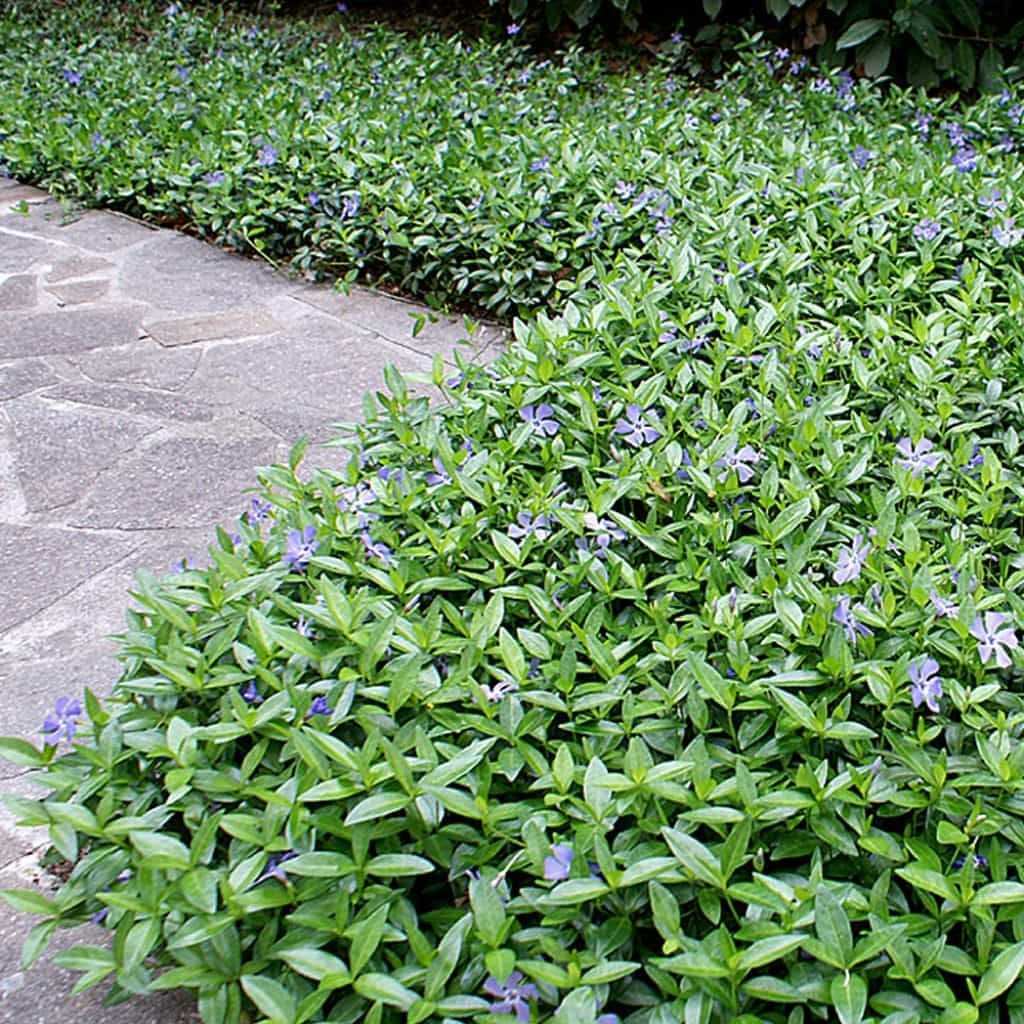
- A perennial herbaceous plant that can grow about 15–20 cm tall and is covered with purple flowers for a long part of the year. It has dark green, ovate leaves and begins spreading from its shoots in early spring.
- A cool-climate plant, tolerant of frost. It can adapt to many climates and tolerates shade. It is undemanding about soil and does not need much water, so it can be considered as an alternative to turfgrass.
- Its use areas include softening borders; it can be used in gardens, especially under trees.



7. Pachysandra terminalis – Japanese spurge and its features
- A strong groundcover, reaching about 15–20 cm in height. It keeps its green cover in both winter and summer. It is a perennial herbaceous groundcover that produces small white flowers in spring (not very showy).
- It has high shade tolerance and can be used as groundcover under trees—even under pine trees. It is resistant to cold and does not require much water. For this reason, it can be used as a lawn alternative.
- Use areas include garden entrances, borders, and low-maintenance spots. Because many plants cannot grow under trees due to limited shade tolerance, Pachysandra terminalis stands out as a shade plant that can be used under almost any tree. It is not suitable for regular foot traffic and it is drought-tolerant.


8. Thymus vulgaris L. – Common thyme and its features
- An aromatic groundcover with a dense, compact form, reaching 20–30 cm and staying green year-round. It blooms with strongly fragrant flowers between May and June; its leaves are fragrant as well.
- A mild-climate plant; it grows naturally in mountainous Mediterranean regions. It is tolerant of heat and drought, but can be affected by frost and cold. It grows best in well-drained soils.
- Use areas: due to its scent, it can be used in sensory/fragrance gardens; it can be planted at residential entrances and borders, and it is suitable for rock gardens.


9. Ruschia lineolata – Carpet of stars and its features
- An evergreen perennial succulent groundcover, 5–10 cm tall. Its small, blue-green leaves creep along the soil surface and root as they spread, which is how it multiplies. In spring, its purple flowers can cover almost the entire surface of the plant.
- A warm-climate plant, but it also has some tolerance to cooler conditions. It performs well in permeable soils and has high drought tolerance. It can handle light foot traffic as long as it is not constant.
- It is preferred in rock gardens, as a groundcover lawn alternative, in dry regions, and for suppressing weeds.


