
Hızlı Git
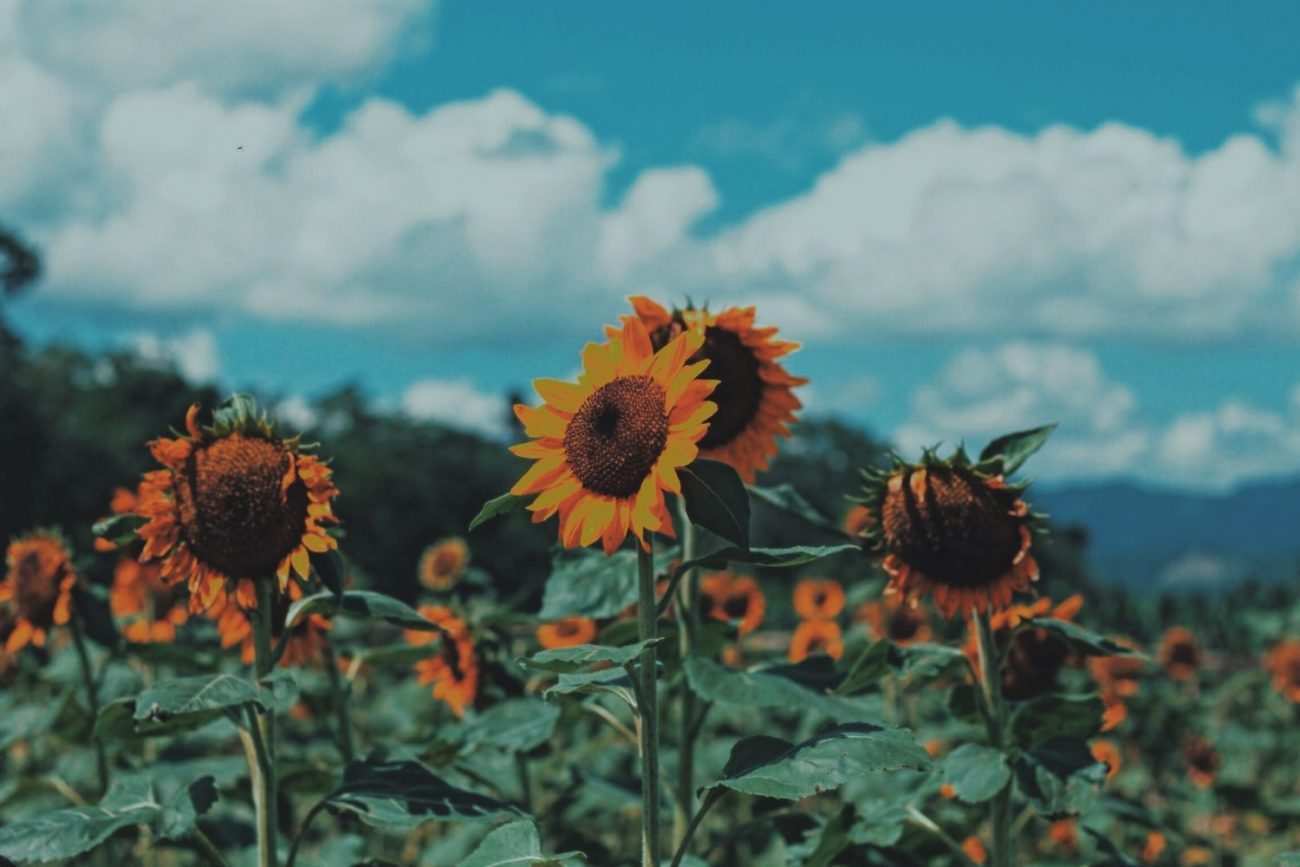
In written Turkish, it is called “ayçiçeği” by being associated with the “moon”; and in the compilation dictionary it corresponds to many words such as “günebakan çiçeği, aydın çiçeği, çiğdem, devranber, devriamber, günâşık, güneâşık, günçiçeği, gündöndü, güntabak, günetapan, simişka, şakkalgan, şemşamer, vardıyan, aydede” (1). It is the flower that recalls the warmth of summer, the sun, beauty, and a little bit of our childhood; it brings joy and a soft heat to wherever it grows; it plants hope inside a person; it stretches along the roads and turns its face to the sun; it inspired engineers in solar-panel fields; it was one of Vincent Van Gogh’s most enthusiastic and favorite themes; it is also Can Yücel’s flower.
Günebakan, the one that looks at the sun.
Turning with delight toward the rays slipping through the clouds…
“Ah, time-weary günebakan, counting the sun’s footsteps. Seeking that beautiful golden country where travelers end their road.”
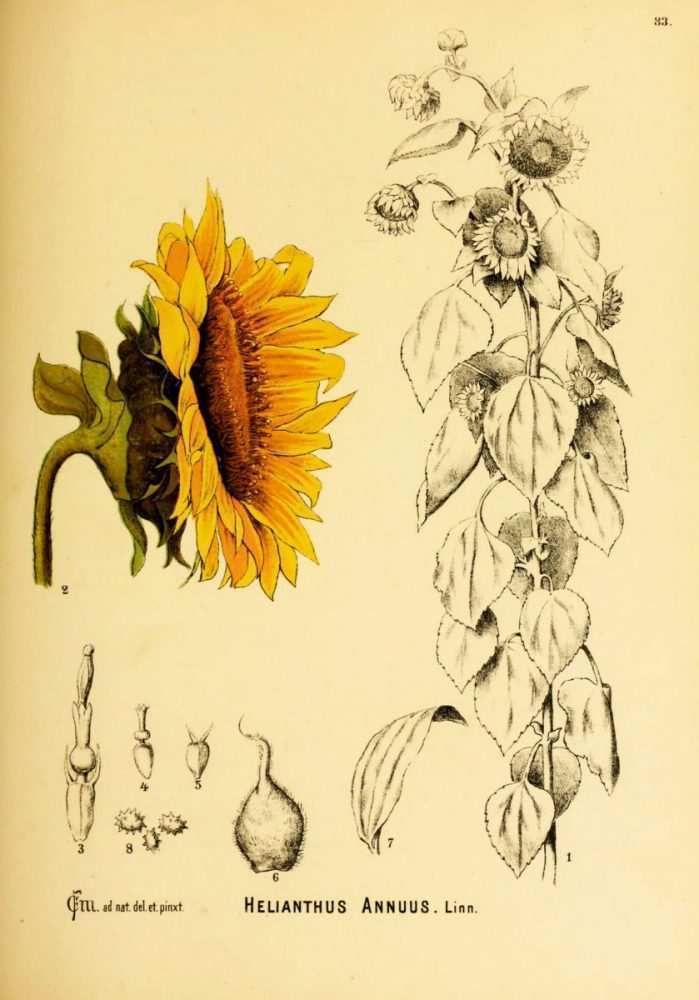
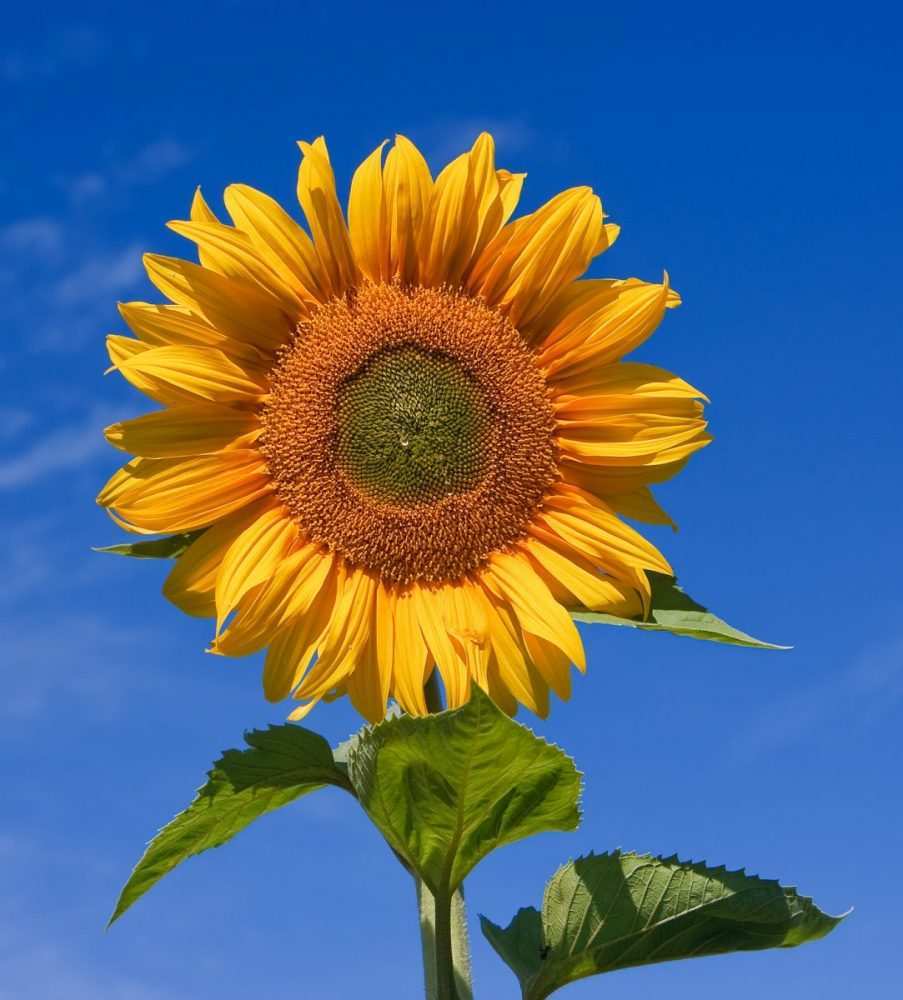
The günebakan flower (Helianthus annuus) belongs to the genus Helianthus in the family Asteraceae (daisy family), within the order Asterales, and it is an annual plant.
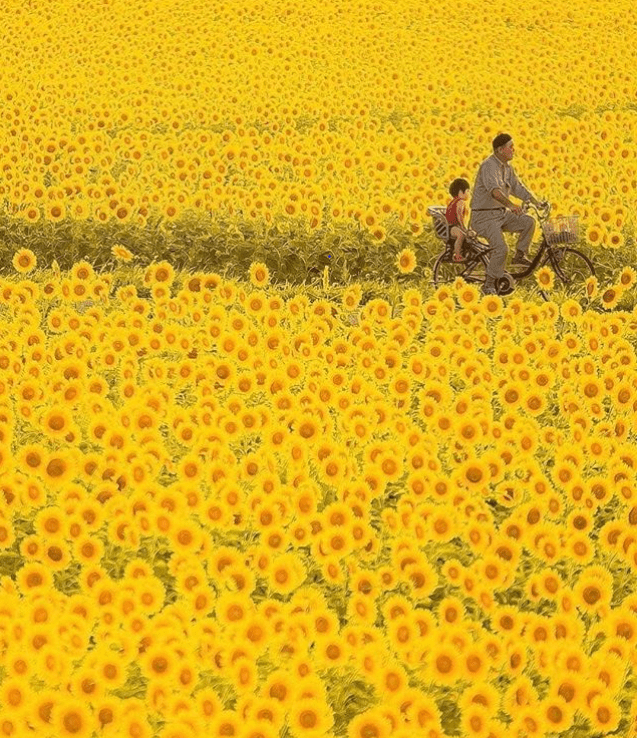
Story of the Günebakan Flower
Because it grows quickly and can be stored easily, the günebakan flower fit well into nomadic life, and its history goes far back. According to archaeological data, its homeland is identified as North America. It is known that Indigenous peoples living in the Americas used it in bread-making; they obtained red and pink dye from the husk, yellow dye from the flowers, and green dye from the leaves. It is also said that they used the head and roots of the plant for medicinal purposes.
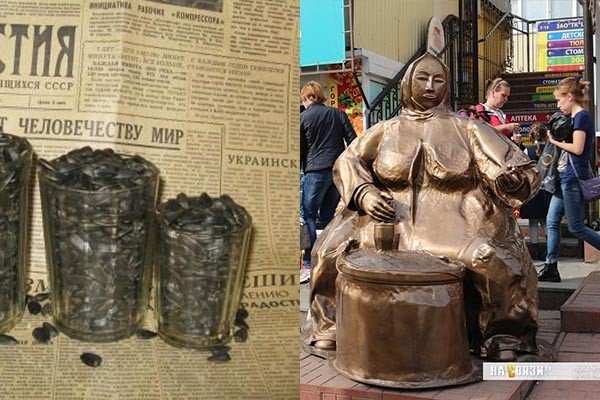
According to sources, sunflower seeds collected from North America by Spanish travelers in the 1500s gradually spread across Europe. At first, sunflowers were used for decorative purposes; by the 1700s they became a preferred oil plant in Europe. Reaching Russia in the 1800s, sunflowers were quickly embraced because sunflower oil was not included on the list of oily foods the Russian Orthodox Church banned on holy days (5). Russians call the seed “semeçki,” accept it as a “national snack,” and in Cheboksary there is a statue known as the “Grandma Cracking Sunflower Seeds” (6).
In our country, “seed cracking,” which has also become an environmental issue, spread to Russia with the 1917 October Revolution and turned into a rural pastime for Russians. Witnesses of the period describe people in Petrograd cracking seeds in crowds at rallies while listening to speakers (6).
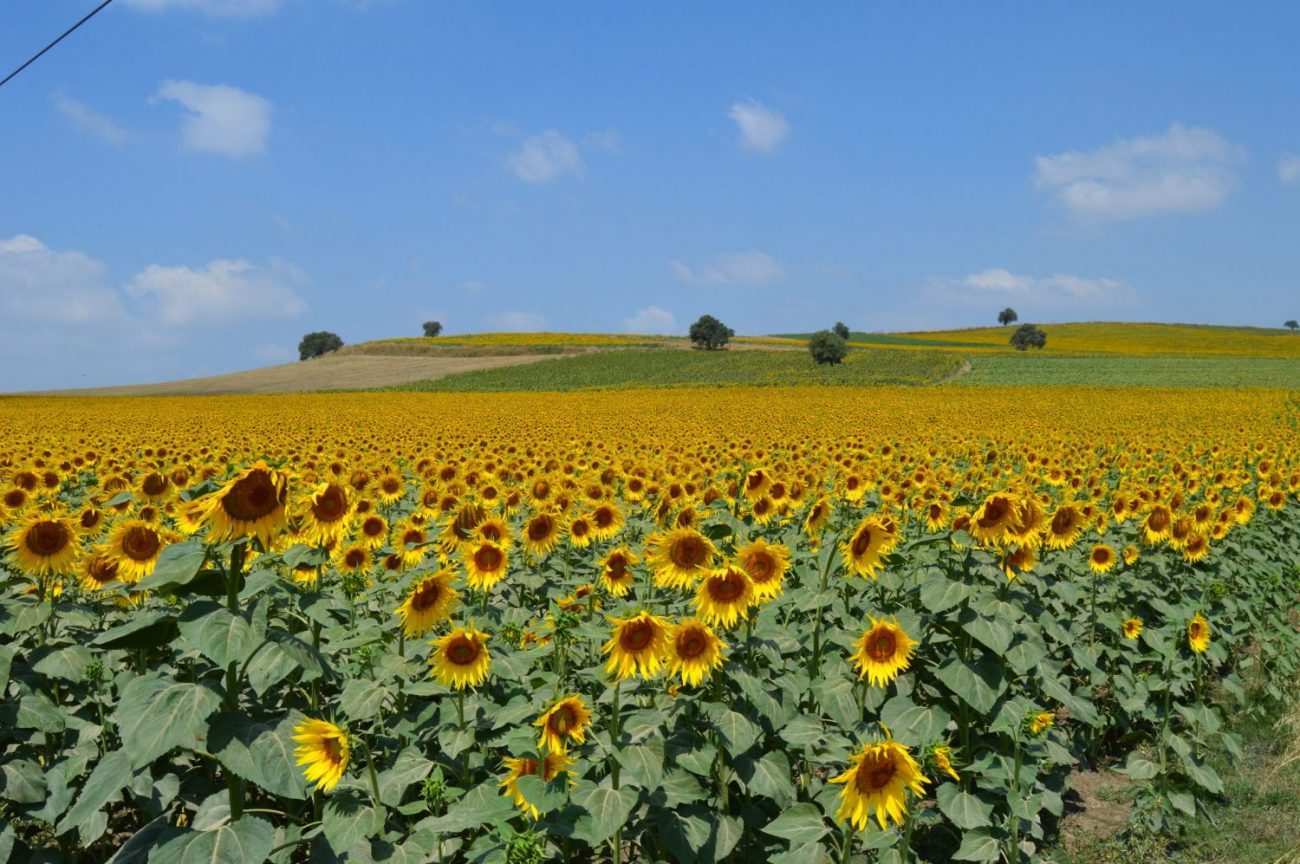
It was brought to Turkey after World War I by immigrants coming from Romania and Bulgaria, and it became one of the most cultivated plants in the Aegean and Thrace–Marmara regions.

The “Grandma Cracking Sunflower Seeds” statue in Cheboksary (7)
Why Is a Plant Called “Sun Flower” in Many Languages Called “Ayçiçeği” in Turkish?
Helianthus annuus (the günebakan flower) is formed from the Ancient Greek words “helios” (sun) and “anthos” (flower). Because the flower turns toward the sun during the day, many languages use words meaning “sun flower,” yet in Turkish it is named ayçiçeği.
Meaning of the Günebakan Flower
In the Turkish Language Association dictionary, ayçiçeği is defined as: “A plant from the daisy family with a very large yellow flower, widely cultivated in our country; also called günçiçeği, günebakan, gündöndü, günâşık (Helianthus annuus); and its seed from which oil is extracted and which is also eaten as a snack” (8).
It is observed that the word ayçiçeği did not appear in the first Spelling Dictionary prepared by the Turkish Language Association in 1928; and that it entered the first Turkish Dictionary prepared in 1944 through lexicography efforts (1). In that dictionary, ayçiçeği is explained as: “ayçiçeği, -ni (noun). A plant from the daisy family whose flower is very large, plate-shaped, and yellow; oil is extracted from its seed and it is widely cultivated in our country. Because its flowers turn toward the sun, it is also called ‘günebakan’.” In the same dictionary, besides ayçiçeği and günebakan, “günçiçeği” is also given as an equivalent (1).
Among the public, the plant is often called “günçiçeği” or “gündöndü” because it resembles the sun and appears to follow it throughout the day. Why, in written Turkish, it was linked to the moon rather than the sun and named “ayçiçeği” is not fully known; yet it is said that the name may have been given because the head is round like the moon and evokes light. Another possibility is that it may have emerged through shortening from forms such as “aydın, aydın çiçē, aydın çiçeği, aydın gülü, aygın çiçeği, aygün, aygün aşığı, aygün çiçeği” (1).
The Fascinating Seed Pattern of the Günebakan
The sunflower head forms a spiral that follows the golden ratio. When the seeds are counted from the center outward, clockwise and counterclockwise, the numbers obtained correspond to consecutive terms of the Fibonacci sequence, and the ratio between successive terms approaches the golden ratio. This striking arrangement is said to have inspired engineers working on solar power plants.
Three students at the Massachusetts Institute of Technology (MIT) conducted a study on solar panels built to benefit from solar energy. Aiming to obtain more energy, they continued their investigations to create a similar structure by using the sunflower’s remarkable pattern and placed mirrors on the panels to detect sunlight. By arranging the mirrors in solar power plants so that they can move and placing them according to the Fibonacci rule, it becomes easier to direct sun rays toward the central electricity-generating tower; it also helps prevent shading and allows maximum efficiency from these panels.
The designed panels were installed in the garden of a school in Malibu in recent months. It was observed that the system produced approximately 260 kilowatts of energy per day and met about 75–90 percent of the school’s energy needs through solar energy (9).


Why Does the Günebakan (Sunflower) Follow the Sun?
The flower parts of the plant track the sun’s position during the day and move from east to west. At night, they move in the opposite direction and return to their morning position. This daily movement is seen in developing sunflower buds and stops once the flowers complete their development. Mature sunflowers generally face east.
In the sunflower’s turning toward the sun, the auxin hormone plays a role; it regulates the plant’s growth form, amount, and direction, and it accumulates more on the side that does not receive light. Because that shaded side grows faster, the plant bends toward the side receiving light.
Do Günebakans (Sunflowers) Move Actively?
To understand exactly how the east–west movement works, scientists set up experiments in closed growth chambers and in potted plants placed outside to create observation conditions. Stacey Harmer, a professor at UC Davis, told the LA Times that it is a common belief that mature sunflowers track the sun, but that this is not actually correct: mature sunflowers face east, and in developing sunflowers those that face east in the morning warm up faster and therefore attract five times more pollinators than those facing west.
In the study, scientists also observed that when young sunflowers are exposed to a 30-hour light cycle, they do not move back toward the beginning of the cycle; but when a 24-hour cycle is provided, the plants appear to follow the “sun” direction. Published in Science in 2016, this research suggests that sunflower orientation is not only driven by daylight but is also tied to the circadian rhythm (10).
Van Gogh and Sunflowers
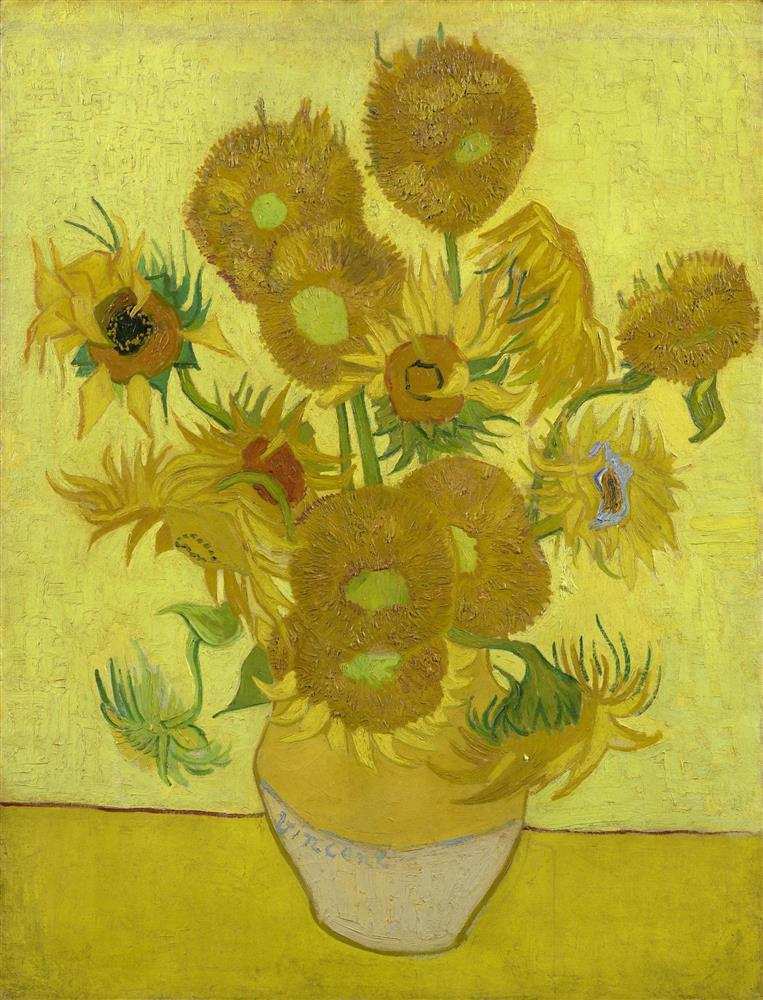
Vincent van Gogh and his Sunflowers… The sunflower became a motif he returned to repeatedly: for some, it expressed his gratitude to painter Paul Gauguin; for others, it was linked to his association of yellow with happiness; and some connect it to the side effects of medications he used due to epilepsy. Van Gogh spoke of his “ownership” of sunflowers in a letter to his brother Theo, saying: “You know, Jeannine’s flower is the peony, Quost’s is the hollyhock, and the sunflower is perhaps a little bit mine…”
Van Gogh’s passion for sunflowers begins in the late 1880s. His famous “Sunflowers” actually refers to two series of still-life paintings. The first series consists of four paintings he made in Paris in 1887. In these works, mature cut sunflowers are depicted on a surface (11).

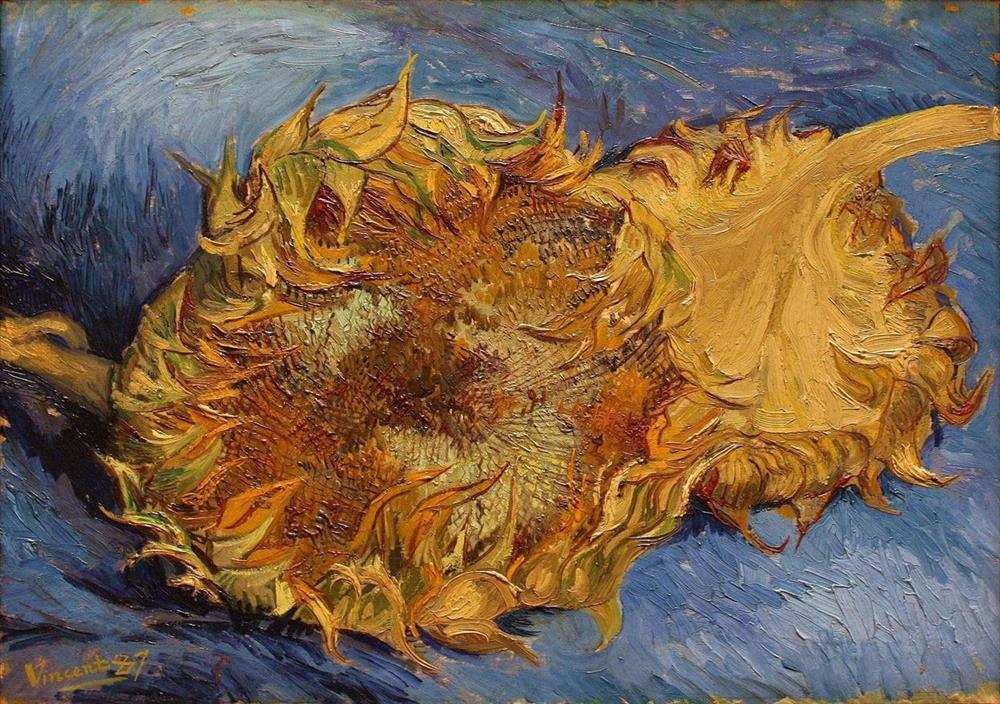

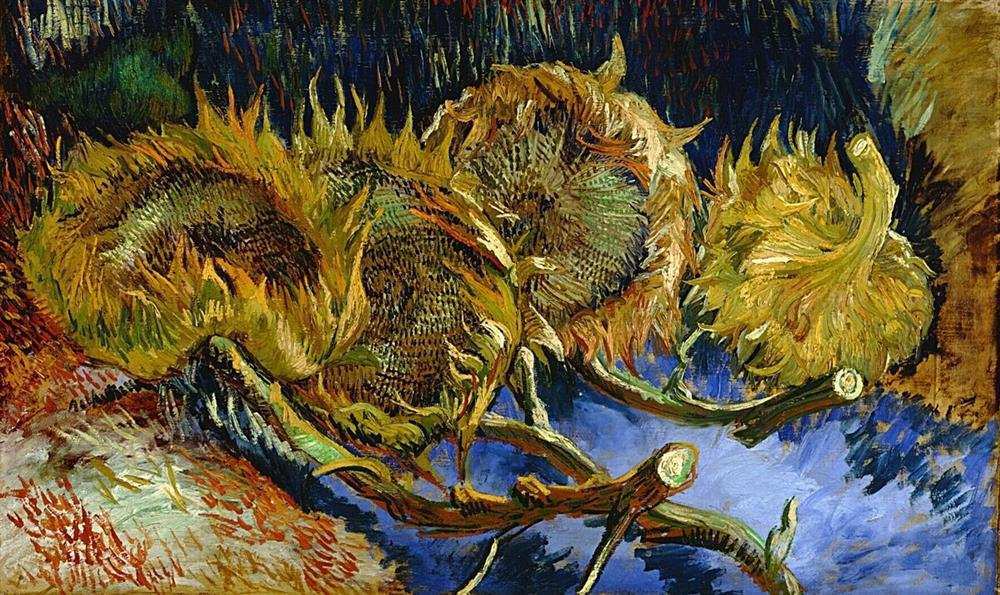
The second series, the “sunflowers in a vase,” consists of seven paintings with compositions of 3, 5, 12, or 15 flowers (11). Van Gogh completed this second series, dominated by yellow tones, in 1888–1889 in the studio he set up in his Yellow House in Arles. Wanting to share the studio with the French painter Paul Gauguin, whom he admired, he contacted Gauguin through various means and invited him to Arles.
When Van Gogh learned that Gauguin accepted the invitation and would come to Arles, he decided to paint a few works to decorate the room where his friend would stay. To impress Gauguin, who admired two of the first sunflower paintings, he began a second sunflower series. He designed it as a composition of sunflowers of different sizes placed in a vase. Waiting eagerly for his friend, Van Gogh wrote to his brother Theo about the sunflowers he painted in the Yellow House studio (11):
“I am working very hard; I paint with the enthusiasm of a Marseillais eating bouillabaisse. When you learn that I’m painting huge sunflowers in oils, you won’t be surprised at my enthusiasm.”
“I have three canvases in progress: the first, three very large flowers in a green vase on a light background (canvas no. 15). The second, three flowers: one gone to seed, one losing its petals, one in bud; dark blue background (canvas no. 25). The third, a dozen flowers and buds in a yellow vase (canvas no. 30). The last is light on light; I hope it will be the best. I probably won’t leave this subject here. Since I’m dreaming of sitting in our own studio with Gauguin, I want to prepare decorations for the studio. Always huge, huge sunflowers… You know, I keep thinking about that sunflower that stood in the window at the restaurant next to your shop.”
“If I realize this idea, there will be twelve separate paintings; together they will form a symphony in yellow and blue. Every morning I start working on it at dawn, because the flowers fade quickly, and each painting must be finished in one sitting.”



Mythology of the Günebakan Flower
The günebakan, a flower of the genus Helianthus, is associated with Helios, the sun god in Greek mythology, because of its sun-facing character (14). In Greek mythology, the sunflower is said to represent being a servant or slave; in Chinese culture, it is a symbol of immortality.
Legendary Story of the Günebakan Flower
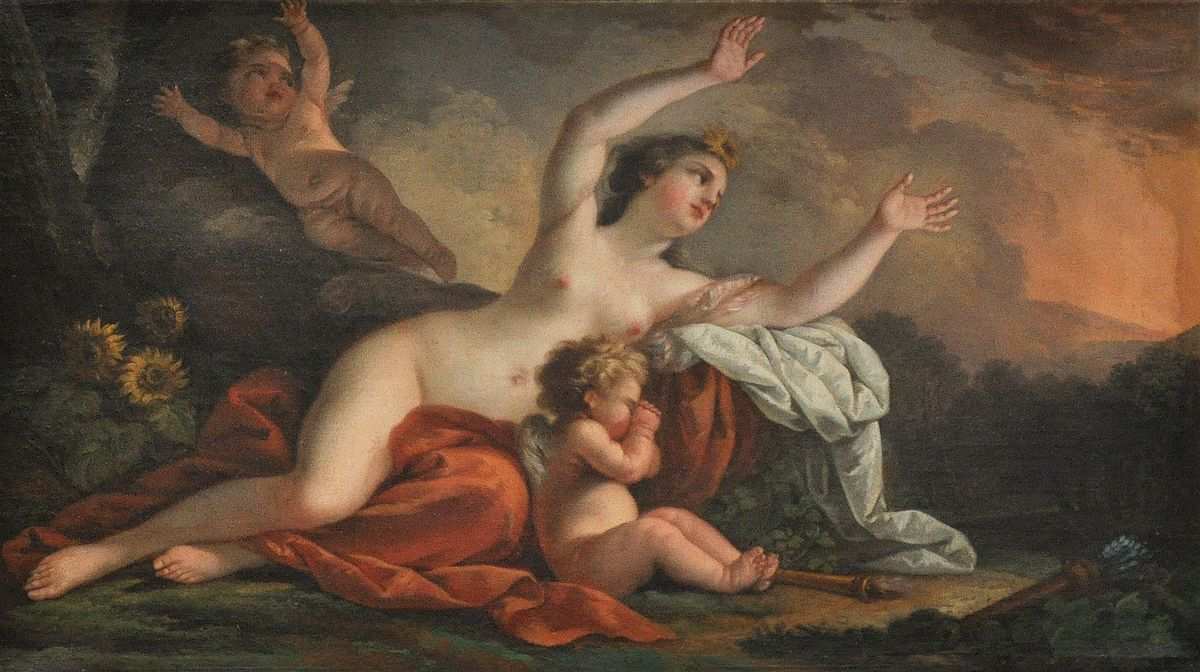
According to the legend, one day the sun god Helios, feeling tired one evening, descends to the shores of Phthya. As he walks along the coast, a song’s enchanting melody reaches his ear, and he listens until it ends. Wanting to meet the owner of the voice, Helios makes himself invisible and moves forward. The singer is the sea nymph Clytie, beautiful in a way Helios has never seen before.
Unaware that Helios is watching her, Clytie begins to hum a new song. Unable to take his eyes off her, Helios feels he cannot stay away any longer and approaches. Clytie cannot understand what is happening and is frightened by Helios suddenly appearing before her. Helios calms her and tells her not to be afraid. With his words, Helios impresses Clytie; and each day, leaving his chariot in the sky with the sun, he descends to earth to spend time with her.
One day Clytie begins to wait for Helios at the place where they first met. Days pass; Clytie continues waiting, but Helios does not come. She waits, and waits, and waits… Thetis, the sea goddess, pities Clytie’s exhausted state and transforms her into a sunflower.
Charles de La Fosse, Clytie Transformed into a Sunflower, 1688 (15) Nicolas-René Jollain, Clytie, 1769 (16)

References
- Özçoban, Y. 2015. Dünya Dillerinde Güneş Çiçeği Olarak Adlandırılan Bitki Türkçede Neden Ayçiçeği. Balıkesir University, Faculty of Arts and Sciences, Department of Turkish Language and Literature. Balıkesir, Turkey.
- Anonymous 2020. Website: https://en.wikipedia.org/wiki/Helianthus
- Anonymous 2020. Website: https://www.flickr.com/photos/mustafaciftci/36145900540/in/photolist-29DiFiA-X56bVJ-26QUTu1-26a8hAy-nYhfex-bDuPYr-2844NAo-bVtCNv-fP5wtE-Ki5M5M-NsCZqU-oH9prx-6YKwrS-M2ynWo-2cYhGHA-aic2Vn-JwKhcw-27RdUKU-9vAMk-8zb1jv-vPR9da-Q4zaq-27dypSr-fNMX2H-6NyMmR
- Anonymous 2020. Website: https://www.instagram.com/mozartculturestr/
- Tosun, A. ve Özkal N. 2000. Helianthus species: Chemical content and biological effects. Journal of Ankara University Faculty of Pharmacy. 29 (2) 49-74. Ankara, Turkey.
- Anonymous 2020. Website: http://medyagunlugu.com/haber/turk-rus-ortak-tutkusu-44029
- Anonymous 2020. Website: https://www.turkrus.com/668311-ortak-tutkumuz-cekirdek-rusyayi-nasil-fethetti-cennet-o-gittigi-gun-gelecek-xh.aspx
- Anonymous 2020. Website: https://sozluk.gov.tr/
- Anonymous 2020. Website: https://services.tubitak.gov.tr/edergi/user/yaziForm1.pdf?cilt=48&sayi=887&sayfa=4&yaziid=37955
- Anonymous 2020. Website: https://www.sozcu.com.tr/2016/dunya/aycicekleri-gunesle-beraber-hareket-ederken-sirkadiyen-ritmleri-kullaniyor-1346372/
- Anonymous 2020. Website: https://www.pivada.com/vincent-van-gogh-aycicekleri
- Anonymous 2020. Website: https://tablolarinanlamlari.blogspot.com/2013/09/aycicekleri-tablosunun-anlami-nedir.html
- Anonymous 2020. Website: https://tr.wikipedia.org/wiki/Vincent_van_Gogh
- Gezgin. D. 2010. Bitki Mitosları. 3rd edition, Sel Publishing. Istanbul.
- Anonymous 2020. Website: https://en.wikipedia.org/wiki/Clytie_(Oceanid)
- Anonymous 2020. Website: https://commons.wikimedia.org/wiki/File:Clytie-DelaFosse-Trianon.jpg


